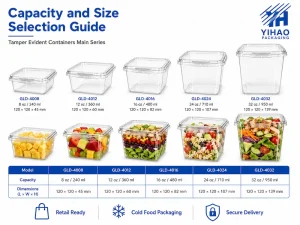
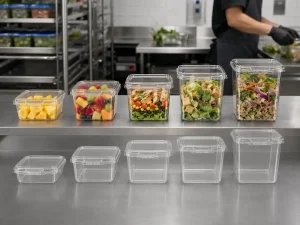
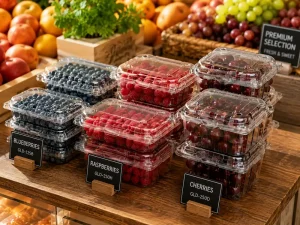
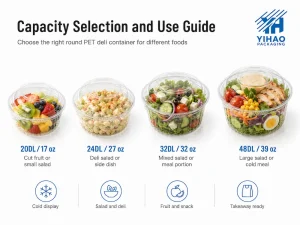
For restaurants, supermarkets, delis, foodservice distributors, meal-prep brands, and takeaway operators, packaging is not only a disposable box. It controls food safety perception, reheating convenience, delivery stability, customer experience, shelf presentation, and repeat purchasing. When the food is hot, oily, saucy, or designed for microwave reheating, the material choice becomes even more important.
This is where heat resistant PP containers become a practical solution. PP, short for polypropylene, is widely used for hot food packaging because it offers stronger heat tolerance than many clear cold-display plastics, better moisture resistance than ordinary paperboard, and more convenient microwave reheating performance than aluminum trays in typical takeaway use.
For buyers comparing microwave safe containers with alternative packaging formats, the real question is not simply which material is cheaper. The better question is: which packaging material protects the meal, supports the sales channel, reduces complaints, and remains stable in wholesale supply?
YIHAO works with food packaging buyers who need practical container systems for hot food, prepared meals, deli foods, chilled ready meals, fresh produce, bakery items, and foodservice packaging programs. This guide explains how heat resistant PP containers compare with PET, paper, aluminum, molded fiber, and other packaging alternatives so professional buyers can choose with fewer mistakes.
Fast Buyer Decision Table: Which Packaging Should You Choose?
| If Your Food Is… | Best Packaging Direction | Why It Fits |
|---|---|---|
| Hot, oily, saucy, or reheated | Heat resistant PP containers | Better heat tolerance, grease resistance, and microwave suitability |
| Chilled fruit, salads, or bakery display | PET or rPET containers | High clarity and strong refrigerated shelf visibility |
| Dry takeaway food | Paper containers | Good branding surface and short-contact convenience |
| Oven-ready meals | Aluminum trays or ovenable trays | Better performance for conventional oven heating |
| Short-hold natural-look meals | Molded fiber or bagasse packaging | Fiber-based appearance where moisture demand is controlled |
Why Heat Resistance Changes the Packaging Decision
Cold food packaging and hot food packaging follow different rules. A clear PET container may look beautiful on a refrigerated shelf, but that does not automatically make it suitable for hot meals or microwave reheating. A paper bowl may communicate a natural look, but it may require coating to resist oil, moisture, or sauce. Aluminum trays handle oven heat well, but they are not the same as everyday microwaveable takeout containers used for office lunches, deli meals, and quick reheating.
Heat resistant PP containers are designed for situations where the food itself creates thermal stress. Hot rice bowls, pasta, curries, noodles, roasted vegetables, deli sides, cooked proteins, steamed foods, and hot takeaway meals all challenge packaging in different ways. Steam softens weak materials. Grease attacks poor coatings. Heavy sauces test lid security. Microwave reheating creates uneven hot spots. Delivery movement tests closure strength and stack stability.
That is why buyers should evaluate packaging based on the complete use environment, not only on the material name. A good hot food container should match the food temperature, serving style, lid structure, stacking requirement, delivery method, and customer reheating habit.
What Makes PP Suitable for Hot Food Packaging?
Polypropylene has stronger heat resistance than many common plastics used mainly for cold display. In practical food packaging, this makes PP food containers suitable for hot-fill, warm holding, deli takeaway, and microwave reheating applications when the container is specifically designed and specified for that intended use.
PP also has a higher heat tolerance profile than PET packaging commonly used for chilled display. That difference matters because hot meals and microwave reheating expose packaging to steam, oil, sauce, and localized heat. PET is excellent for clarity and cold merchandising, while PP is more practical when heat performance is the priority.
The main advantages of polypropylene microwave containers include:
- Better heat resistance than many cold-display plastic containers.
- Good moisture and grease resistance for sauced meals, oily foods, deli sides, and hot dishes.
- Microwave suitability when the container is manufactured and specified for microwave reheating.
- Lightweight structure that supports takeaway, delivery, and wholesale distribution.
- Flexible design options, including separate lids, deli formats, portion containers, and prepared meal packaging.
For buyers sourcing from a manufacturer, the key point is not to assume every PP container performs the same. Resin grade, wall thickness, molding quality, lid design, sealing edge, venting logic, and intended-use testing all affect real performance. A thin PP container made for light cold food is not the same as a stronger hot meal container designed for takeaway and microwaveable meals.
Heat Resistant PP Containers vs PET Containers
PET and rPET containers are excellent for chilled display, fresh produce, bakery items, salads, cold desserts, and grab-and-go foods. They offer high clarity, strong shelf appeal, and good rigidity. For foods where visual merchandising drives sales, PET often wins. That is why buyers commonly use PET for fruit cups, deli salads, bakery clamshells, and refrigerated retail display.
However, PET is not the first choice for hot food or microwave reheating. When a meal is packed hot or expected to be reheated, heat resistant PP containers usually provide a more reliable material direction. PP tolerates hot food conditions better and supports microwaveable formats more naturally, while PET is better kept for chilled foods and room-temperature display applications.
For example, a supermarket may use PET hinged containers for fresh fruit, salads, sandwiches, or chilled bakery items, but switch to hot food container formats for warm deli meals and prepared food counters. This prevents one material from being forced into every use case.
| Buyer Question | PP Containers | PET Containers |
|---|---|---|
| Best for hot food? | Yes, when designed for hot food and microwave use | Usually not the best choice |
| Best for chilled display? | Practical but usually less clear than PET | Excellent clarity and retail visibility |
| Microwave reheating? | Strong option when specified as microwave safe | Generally not preferred for microwave heating |
| Greasy or saucy meals? | Strong fit for many hot meal applications | Better for cold or chilled foods |
| Main buying logic | Thermal performance and meal function | Clarity, display, and cold shelf appeal |
Heat Resistant PP Containers vs Paper Food Containers
Paper packaging has strong branding appeal. It feels familiar, printable, and convenient for many takeaway foods. For dry foods, bakery items, fries, wraps, snacks, and short-contact items, paper packaging works well. But hot wet foods are more demanding. Soup, sauce, oil, steam, and prolonged holding time expose the limits of ordinary paperboard.
Many paper food containers require plastic coating, dispersion coating, or lining to resist moisture and grease. This can complicate recyclability and performance claims. For high-moisture meals, heat resistant PP containers often provide more predictable resistance against leaking, softening, and deformation.
Buyers should choose paper when branding, dry food use, and short holding time are priorities. They should choose PP microwave safe containers when the food is wet, oily, saucy, or likely to be reheated by the end customer.
Heat Resistant PP Containers vs Aluminum Trays
Aluminum packaging has one clear advantage: it performs well in oven heating and high-temperature cooking applications. It is commonly used for baked meals, roasted dishes, catering trays, and ready meals designed for conventional ovens. It also provides strong barrier properties and a premium prepared-meal feel in some markets.
But aluminum is not a simple replacement for microwaveable takeout containers. Standard aluminum trays are not used like plastic microwave containers in typical consumer microwave settings. For buyers serving office lunches, convenience-store meals, school meals, quick-service takeaway, or delivery meals, microwave convenience matters. Customers often expect to remove or vent the lid and reheat directly in the container.
This gives heat resistant PP containers a strong advantage for everyday reheatable meals. A prepared meal container supports practical takeaway and reheating workflows without requiring customers to transfer food to another dish.
Heat Resistant PP Containers vs Molded Fiber and Bagasse Packaging
Molded fiber and bagasse packaging are popular in many takeaway and foodservice channels because they communicate a natural, fiber-based appearance. They work well for certain dry, fried, and moderately moist foods. Some buyers also prefer them for brand positioning when they want a more paper-like or compostability-oriented message.
However, molded fiber packaging needs careful evaluation for wet meals, oily sauces, and extended delivery times. If the food releases steam or liquid, the container may soften, stain, absorb moisture, or lose structure. Some fiber containers also require barrier coatings for grease and liquid resistance. These coatings should be reviewed honestly before making sustainability claims.
For hot meals where lid fit, sauce control, stacking, and reheating are priorities, heat resistant PP containers often provide stronger functional reliability. Molded fiber can be a good brand-led alternative, but it should be tested with real food, real time, and real delivery conditions before being used at scale.
How Buyers Should Match Container Material to Food Type
The fastest way to make a better packaging decision is to start with the food, not the container. Food temperature, oil content, sauce level, portion weight, reheating behavior, and sales channel determine the right material much more than marketing preference.
| Food Type | Best Packaging Direction | Reason |
|---|---|---|
| Hot rice bowls and noodles | Heat resistant PP containers | Better heat tolerance, moisture resistance, and microwave suitability |
| Chilled salads and fruit | PET or rPET containers | High clarity and strong refrigerated display appeal |
| Dry bakery items | PET clamshells or paper boxes | Visibility or branding can matter more than heat resistance |
| Oven-ready meals | Aluminum or ovenable trays | Conventional oven performance is the priority |
| Hot deli sides | PP containers with secure lids | Sauce, oil, and steam require stronger structure |
| Eco-positioned dry takeaway foods | Molded fiber or paperboard | Works when moisture and reheating demands are controlled |
For deli counters and prepared-food programs, buyers often need several PP shapes rather than one universal box. A deli food container may suit larger takeaway meals, while smaller separate-lid formats may work better for side dishes, cooked vegetables, proteins, or portioned meals.
Microwave Safety Is an Intended-Use Question
One common buying mistake is assuming that all PP containers are automatically microwave safe. PP is a strong material direction for microwaveable packaging, but a finished container still needs to be designed and specified for that use. Wall thickness, geometry, lid material, venting, food type, heating time, and temperature exposure all matter.
Professional buyers should ask suppliers direct questions:
- Is this container specified for microwave reheating?
- Should the lid be removed, loosened, or vented before heating?
- What food types were considered during intended-use testing?
- Does the container maintain shape after heating with oily or saucy foods?
- Is the material suitable for the target market’s food contact requirements?
This is especially important for polypropylene microwave containers used in supermarkets, meal-prep programs, delivery brands, and foodservice distribution. A container that survives a short warm-fill test may still behave differently under microwave reheating with dense food, oil, sugar-rich sauce, or uneven portion thickness.
Lid Design Matters as Much as Base Material
Many buyers focus heavily on base material but underestimate lid design. For hot food packaging, the lid controls steam, pressure, leakage, stacking, and customer experience. A strong PP base with a weak lid system still creates complaints.
Separate-lid systems are common for PP hot food containers because they allow a practical balance between filling, closing, stacking, and serving. A PP prepared food container with a separate lid supports mixed-use menus where some foods are warm, some are chilled, and some are sold as ready-to-eat meals.
For hot food, buyers should check:
- Rim strength — the rim should resist distortion during closing and stacking.
- Lid engagement — the lid should fit securely without excessive force.
- Steam handling — trapped steam should not cause dangerous pressure or lid pop-off.
- Stacking stability — filled containers should remain stable in delivery bags or retail displays.
- Customer handling — the lid should be easy to open without spilling hot food.
When Buyers Should Choose PP Over Alternative Packaging
Heat resistant PP containers are the stronger choice when a food business needs functional performance more than maximum crystal-clear display. They are especially useful for:
- Hot takeaway meals packed shortly after cooking.
- Microwaveable ready meals sold through retail or foodservice channels.
- Deli sides such as pasta, rice, vegetables, proteins, and cooked foods.
- Delivery meals that face movement, stacking, and temperature changes.
- Prepared food counters where one container family must support several menu items.
- Wholesale programs that need repeatable sizes, lid compatibility, and supplier consistency.
For example, a PP food container can support prepared food and takeaway programs where clarity is useful but heat performance is more important than a cold-shelf PET look.
Do Not Choose PP as the First Option When…
PP is practical, but it is not the answer to every packaging problem. Buyers should not automatically choose PP when another material better supports the sales channel, brand message, or heating method.
- The product requires premium cold-shelf transparency and maximum visual display.
- The meal is designed for conventional oven heating instead of microwave reheating.
- The brand needs paper-based printing as the main packaging presentation.
- The packaging claim depends heavily on compostability positioning.
- The food is dry, light, and consumed immediately without reheating.
- The buyer needs a fiber-based look more than heat-resistant plastic functionality.
PET may be better when the main goal is high-clarity cold display. Paper may be better when the food is dry and the brand wants a strong printed surface. Aluminum may be better when oven heating is required. Molded fiber may be suitable when the food is drier, the hold time is short, and the buyer wants a fiber-based appearance.
The point is not to force every food into PP microwave safe containers. The point is to use PP where heat, microwave reheating, and hot food handling make it the most practical option.
Wholesale Buying Checklist for Heat Resistant PP Containers
Before placing a wholesale order, buyers should test real samples with real food. A specification sheet is useful, but it cannot replace hands-on testing with the actual menu, actual filling temperature, actual delivery method, and actual customer reheating behavior.
| Checklist Item | What Buyers Should Verify |
|---|---|
| Food temperature | Test with hot-filled meals, warm foods, and reheated foods where relevant. |
| Microwave behavior | Confirm whether the base, lid, or full system is intended for microwave use. |
| Lid fit | Check closure strength after filling, stacking, and movement. |
| Oil and sauce resistance | Use real menu items, not only water-based testing. |
| Portion logic | Match container depth and capacity to actual serving size. |
| Stacking | Test filled containers in cartons, shelves, and delivery bags. |
| Labeling area | Confirm label placement without blocking opening or lid function. |
| Supplier consistency | Review sample quality, repeat production capability, and product family availability. |
For distributors and food brands, supplier depth matters. A single container may solve one problem, but a practical supplier should support multiple sizes, compatible lids, and related PP formats. This helps buyers build a stable product matrix instead of constantly changing packaging for every menu item.
How PP Containers Support Different Sales Channels
Restaurants and Takeaway Brands
Restaurants need containers that close quickly, hold hot food, stack well, and reduce customer complaints. Microwaveable takeout containers also support customers who reheat leftovers later. PP is a strong fit for rice meals, noodles, pasta, curry, cooked vegetables, and mixed hot dishes.
Supermarkets and Deli Counters
Deli departments often sell both cold and hot foods. A clear PET container may work for chilled salads, while PP formats are better for hot sides and prepared meals. A deli food container gives buyers a practical option for deli counters that need reliable portion control and takeaway performance.
Meal-Prep and Ready-Meal Brands
Meal-prep brands need predictable portioning, stackability, reheating guidance, and consistent presentation. Polypropylene microwave containers are especially useful when customers expect direct microwave reheating. Buyers should test container performance with proteins, sauces, grains, and vegetables because different foods create different heating patterns.
Foodservice Distributors
Distributors need packaging that sells across many customer types. A PP hot food range works for restaurants, delis, cafeterias, caterers, and prepared-meal operators. This makes heat resistant PP containers a valuable category for wholesale food packaging programs.
Cost Comparison: Cheap Packaging vs Smart Packaging
Some buyers compare packaging only by unit price. That approach is risky. A container that costs less per piece may cost more through leakage, returns, food waste, poor reviews, lid mismatch, slow packing speed, or inventory confusion.
For hot food, the hidden costs are usually operational:
- Containers deforming under heat.
- Lids popping open during delivery.
- Customers transferring food before reheating.
- Wet paper packaging weakening too quickly.
- Wrong material used for the wrong food temperature.
- Too many unrelated SKUs increasing inventory complexity.
Smart buyers compare total performance, not only unit price. In many hot meal programs, heat resistant PP containers reduce operational risk because they match the actual food environment better than cold-display packaging or basic paper formats.
Practical Decision Matrix for Buyers
Use this simple decision logic before choosing packaging:
| Decision Factor | Choose PP When… | Choose Alternative Packaging When… |
|---|---|---|
| Food temperature | The food is hot, warm, or microwaveable. | The food is cold, dry, or not reheated. |
| Customer use | Customers expect to reheat food directly. | Customers eat immediately or transfer food. |
| Display priority | Function matters more than maximum clarity. | Crystal-clear cold display is the top priority. |
| Food moisture | The meal contains sauce, oil, steam, or liquid. | The food is dry or lightly moist. |
| Heating method | Microwave reheating is expected. | Oven heating, cold display, or short-contact service is expected. |
| Procurement goal | The buyer needs a stable wholesale hot food range. | The buyer needs a narrow use-case package with specific branding needs. |
Supplier Questions Before Ordering PP Food Containers
Before selecting a manufacturer or wholesale supplier, buyers should ask practical questions that connect directly to food use. Avoid vague requests such as “send me your best food box.” Instead, provide the food type, temperature, portion weight, sales channel, and reheating expectations.
- Which PP containers are intended for hot food?
- Which items are intended for microwave reheating?
- Do lids need to be removed or vented before heating?
- Which sizes are suitable for rice bowls, pasta, deli sides, or prepared meals?
- Are matching lids available for repeat wholesale ordering?
- Can samples be tested before a larger order?
- Can the same supplier support cold food, hot food, and future custom packaging needs?
A practical supplier should help buyers narrow the choice instead of pushing every available container. For hot meal projects, prepared food containers and related separate-lid PP formats should be reviewed first, then compared against PET, paper, aluminum, and fiber alternatives only where those materials make sense.
Common Mistakes Buyers Should Avoid
Choosing PET for Heat Because It Looks Clear
High clarity does not equal heat resistance. PET is excellent for many chilled foods, but buyers should not use it as a default hot food material when PP is the better fit.
Assuming Paper Is Always More Sustainable
Paper packaging may need coatings or liners for hot, oily, or wet foods. Buyers should evaluate real disposal routes, coating structure, and performance instead of relying only on appearance.
Using Aluminum for Microwave Meals
Aluminum is strong for oven-ready meals, but it does not match the everyday convenience of PP microwave safe containers for typical microwave reheating.
Ignoring Lid Compatibility
Lid fit is one of the biggest drivers of customer complaints. Always test filled, hot, stacked, and transported containers before finalizing a wholesale order.
Skipping Sample Testing
Sample testing is not optional for hot food packaging. A container should be tested with the actual food, portion weight, holding time, delivery method, and reheating instructions.
Final Recommendation: Build a Material System, Not a Single-Box Decision
The best packaging buyers do not ask one material to do everything. They build a material system. PP handles hot food, microwaveable meals, and saucy deli items. PET handles chilled display and visibility. Paper supports dry foods and branded takeaway formats. Aluminum supports ovenable use. Molded fiber supports selected meals where moisture and holding time are controlled.
Within that system, heat resistant PP containers should be the first material buyers review for hot takeaway, prepared meals, and microwaveable foodservice packaging. They offer a practical balance of thermal performance, food contact functionality, lightweight handling, and wholesale repeatability.
FAQ
1. Are heat resistant PP containers suitable for microwave use?
Many heat resistant PP containers are suitable for microwave reheating when they are specifically designed and specified for that intended use. Buyers should confirm whether the base, lid, or complete container system is microwave safe and follow supplier instructions for venting or lid removal.
2. Are PP containers better than PET containers for hot food?
Yes, PP containers are generally a better choice for hot food and microwaveable meals, while PET containers are usually better for chilled display, clear visibility, fresh produce, salads, and cold bakery packaging.
3. What foods are best packed in PP microwave safe containers?
PP microwave safe containers are suitable for many rice bowls, noodles, pasta, deli sides, cooked vegetables, proteins, sauces, and prepared meals where heat tolerance and reheating convenience are important.
4. Should buyers choose paper containers instead of PP food containers?
Paper containers are useful for dry foods, branding, and short-contact takeaway applications. PP food containers are usually stronger for hot, wet, oily, saucy, or microwaveable foods where moisture resistance and structural stability matter.
5. How should wholesale buyers test heat resistant PP containers before ordering?
Wholesale buyers should test samples with real food, actual filling temperature, portion weight, lid closure, stacking, delivery movement, and microwave reheating conditions before placing larger orders.
References
- U.S. Food and Drug Administration, Packaging & Food Contact Substances
- U.S. Food and Drug Administration, Understanding How FDA Regulates Substances that Come into Contact with Food
- European Commission, Commission Regulation (EU) No 10/2011 on Plastic Materials and Articles Intended to Come into Contact with Food
- Britannica, Polypropylene: Properties, Definition, and Uses
- SpecialChem, Polypropylene PP Plastic Guide
- ScienceDirect Topics, Polypropylene Material Overview
- Food Packaging Forum, Food Contact Materials and Plastic Packaging Research
- Smithers, Food Packaging Market and Material Trend Analysis
Final Note / Practical Takeaway
Deep-Dive Insights: How Buyers Should Think About PP Hot Food Packaging
How do heat resistant PP containers reduce operational risk?
Heat resistant PP containers reduce operational risk by matching the real conditions of hot food service: steam, grease, sauce, movement, stacking, and reheating. When the container, lid, and portion size work together, buyers reduce leakage complaints, food transfer issues, and packaging failure during delivery.
Why should buyers avoid using one packaging material for every food category?
No single material is the best choice for every food. PET is stronger for chilled display, PP is stronger for hot and microwaveable meals, paper supports dry foods and printed branding, aluminum works for oven-ready applications, and molded fiber supports selected natural-look takeaway programs. A strong packaging strategy uses each material where it performs best.
What should buyers prioritize when comparing PP with alternative packaging?
Buyers should prioritize food temperature, reheating method, moisture level, oil content, lid fit, stacking stability, customer handling, and repeat supply capability. Unit price matters, but it should not override actual performance in hot food packaging.
Which buyer groups benefit most from PP microwave safe containers?
Restaurants, delis, supermarkets, meal-prep brands, cafeterias, convenience stores, and foodservice distributors benefit most from PP microwave safe containers because these channels often need hot-fill performance, takeaway convenience, microwave reheating, and wholesale supply consistency.
What is the most practical buying conclusion?
Choose heat resistant PP containers when the food is hot, saucy, oily, reheated, or delivered. Choose alternative packaging only when the application clearly favors chilled display, dry food branding, oven heating, or fiber-based presentation. This decision method helps buyers reduce packaging mistakes and build a more reliable food packaging system.
© YIHAO Packaging. All rights reserved. All articles, product images, packaging designs, technical specifications, and website materials are protected by copyright. Unauthorized copying, reproduction, redistribution, modification, or commercial use is strictly prohibited without prior written permission.