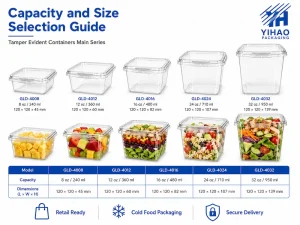
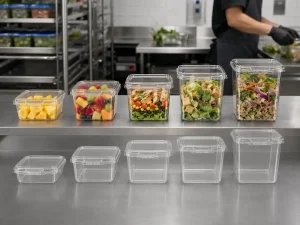
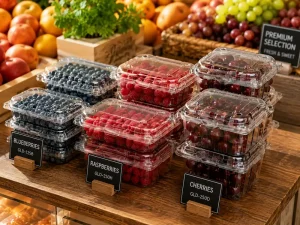
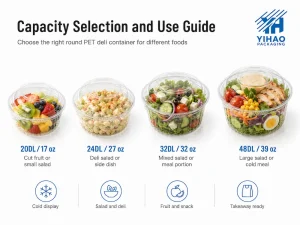
For restaurants, supermarkets, meal prep brands, deli counters, foodservice distributors, and prepared food manufacturers, microwave safe containers are more than simple takeaway boxes. They influence how food travels, how customers reheat meals, how portions stay organized, and how reliably a packaging program performs across repeat orders.
Unlike cold display packaging, microwave-ready food packaging must handle heat, moisture, sauce, oil, steam, lid interaction, and customer reheating behavior. A container that looks strong at room temperature may soften, warp, leak, or deform when used with hot meals or microwave reheating. That is why buyers need to evaluate material, structure, lid design, production consistency, and supplier communication before making bulk purchasing decisions.
YIHAO develops food packaging solutions for professional foodservice and retail buyers, including microwave safe containers for prepared meals, deli foods, takeaway dishes, and meal prep applications. This guide explains how to choose the right container type, what PP material means for microwave performance, how to compare lids and structures, and what procurement teams should confirm before wholesale orders.
What Are Microwave Safe Containers?
Microwave safe containers are food containers designed to hold suitable foods during microwave reheating under defined use conditions. In commercial packaging, they are usually made from materials that maintain better heat resistance than standard cold food plastics. For many takeaway and prepared meal applications, polypropylene, commonly known as PP, is the primary material used for microwave-ready containers.
The phrase “microwave safe” should never be treated as a decorative label only. For B2B buyers, it refers to a complete packaging decision: the container material, the lid material, the shape, the food load, the heating time, the temperature exposure, the venting method, and the supplier’s recommended use conditions. A container may be suitable for reheating food, while its lid may need to be loosened, vented, or removed depending on the lid design and material.
This is especially important for microwave safe food containers used in restaurant delivery, supermarket ready meals, institutional catering, office meal programs, school foodservice, and chilled prepared foods. The container must support both operational efficiency and end-user safety communication.
Why PP Is Commonly Used for Microwave Safe Food Containers
PP is widely selected for PP microwave containers because it offers a practical balance of heat resistance, toughness, food contact suitability, and production efficiency. Compared with many clear cold food plastics, PP performs better in reheating applications and is more suitable for warm or hot prepared foods.
For packaging buyers, the key advantage is not only the material name. The real value comes from how the container is engineered. Wall thickness, rim strength, lid fit, base stability, corner radius, stacking design, and sealing performance all influence the final result. A good PP container should hold its shape during normal foodservice handling, support secure closing, resist common takeaway pressure, and remain practical for reheating within the supplier’s stated conditions.
Many buyers choose PP prepared meal containers for meals that move from production to chilled display, then to takeaway or reheating. This format gives food teams a flexible option for rice dishes, pasta, cooked vegetables, proteins, sauced meals, and prepared deli foods.
PP vs PET for Hot and Microwave Applications
PP and PET serve different packaging roles. PET and rPET are excellent for clear cold display packaging, fruit, salads, bakery items, chilled desserts, and grab-and-go foods that need strong visibility. PP is the more practical direction when microwave reheating is part of the expected use.
| Packaging Need | PP Microwave Containers | PET / rPET Cold Food Containers |
|---|---|---|
| Main use | Hot foods, reheatable meals, takeaway, meal prep | Cold display, salads, fruit, bakery, chilled foods |
| Microwave suitability | Commonly selected for reheating applications when specified by supplier | Usually not the first choice for microwave reheating |
| Visual clarity | Usually semi-clear, translucent, or natural PP appearance | High clarity and strong retail display visibility |
| Best food fit | Cooked meals, rice, pasta, deli foods, warm takeaway dishes | Fresh-cut fruit, salads, cold desserts, bakery, chilled deli display |
| Buyer focus | Heat resistance, lid fit, venting, stacking, reheating performance | Clarity, anti-fog options, merchandising, chilled shelf appeal |
This difference matters when building a professional product range. A distributor may need PET packaging for chilled salad and fruit programs, while also carrying PP microwave containers for prepared meals and hot takeaway foods. Using one material for every application creates avoidable risk.
Main Applications for Microwave Safe Containers
Takeout and Delivery Meals
Microwave safe takeout containers are used for restaurant delivery, cloud kitchen meals, quick-service restaurant programs, and cooked food takeaway counters. These meals often include sauce, steam, oil, grains, noodles, cooked vegetables, or proteins. Packaging must support short-term transport, stacking, closing, and reheating communication.
For takeout, container shape is critical. Rectangular and oval formats work well for rice, pasta, noodles, and entrée meals. Round or deep containers support soups, curries, stews, sauced foods, and deli portions. Separate-lid systems often help improve handling because the lid can be designed for fit, visibility, or venting needs.
Foodservice buyers often use hot food containers when the product must move from kitchen preparation to customer reheating without changing packaging formats.
Meal Prep and Ready Meal Programs
Meal prep containers require consistency. A meal prep brand may pack hundreds or thousands of portions with the same rice, protein, vegetable, and sauce layout. If the container base flexes too much, if the lid fit changes across batches, or if stacking stability is weak, operational efficiency suffers.
For meal prep, buyers should evaluate compartment design, internal volume, stacking height, lid security, label space, and reheating instructions. Single-compartment containers work well for mixed meals, pasta, curries, and cooked dishes. Multi-compartment formats help separate proteins, grains, vegetables, and sauces when presentation matters.
When planning prepared food containers, procurement teams should request samples and test real menu items instead of only checking empty container appearance. Food weight, sauce level, oil content, and heating behavior are more important than catalog photos.
Deli Counters and Supermarket Prepared Foods
Microwave safe deli containers serve supermarket hot bars, chilled prepared meal sections, deli counters, food halls, and convenience store ready meals. These containers need to support both front-of-house presentation and back-of-house packing efficiency.
For deli and supermarket programs, buyers should pay close attention to lid visibility, label area, stacking performance, barcode placement, and leak resistance. Foods such as pasta salad, cooked grains, mashed potatoes, roasted vegetables, meatballs, casseroles, and sauced deli items benefit from packaging that is sturdy, practical, and easy for customers to reheat.
For deli-style programs, microwave safe deli containers give buyers a stronger fit than cold-only packaging when reheating is expected.
Institutional Catering and Office Meal Programs
Institutional foodservice requires predictable packaging. Schools, hospitals, workplace canteens, airline support kitchens, and corporate meal providers often need containers that are easy to fill, close, stack, transport, distribute, and reheat. The container must perform consistently across repeated handling routes.
In these settings, packaging failure causes more than a single customer complaint. It disrupts service flow, increases repacking costs, and damages trust in the meal program. A reliable container range should therefore be tested with the actual meals, transport process, storage condition, and reheating instructions used by the buyer.
How to Choose Microwave Safe Containers by Food Type
Dry or Low-Moisture Foods
Dry foods such as rice, noodles, roasted vegetables, dumplings, pancakes, or baked savory items create different packaging demands than liquid meals. The container must support food weight and reheating, but leak pressure is usually lower. For these foods, base stability, stacking strength, and portion size are often the first priorities.
Saucy and Moist Foods
Saucy foods create more risk. Curry, pasta sauce, gravy, braised dishes, stews, and oily meals may increase pressure inside the container during transport or reheating. Buyers should check lid fit, venting recommendations, rim design, and how the container behaves when the food is hot and heavy.
For saucy foods, never judge a container by empty handling alone. Fill the sample with the actual menu item, close the lid, stack it, transport it, chill it if relevant, and reheat it according to the intended customer instruction. This test gives a far more accurate result than a simple visual inspection.
Compartment Meals
Compartment containers are useful when food separation matters. Rice, vegetables, proteins, sauces, and side dishes can be divided to improve presentation and portion control. However, compartment design must be tested carefully because internal walls influence filling speed, food volume, and reheating consistency.
Buyers should confirm whether the container is designed for balanced reheating across sections. Dense foods and light vegetables heat differently. If the meal includes sauce in one section and dry food in another, reheating instructions should be clear and realistic.
Chilled Foods That Customers Reheat Later
Many meals are packed chilled but reheated later by customers. This is common in supermarket prepared food, meal prep, convenience retail, and office meal programs. The packaging must perform across cold storage, handling, delivery, and microwave reheating.
This use case requires a balanced container. It should stack neatly in chilled distribution, present the food cleanly on shelf, and support reheating without switching packaging. That is why many buyers combine PP bases with suitable separate lids for prepared meal programs.
Container Structure: What B2B Buyers Should Check
Base Rigidity
The container base must hold food weight without excessive bending. A weak base creates problems during filling, sealing, delivery, and customer handling. For meal prep and takeaway, the base should remain stable when filled with real menu portions.
Rim Strength and Lid Fit
The rim is one of the most important areas of a microwave container. It controls lid engagement, stacking contact, leakage risk, and user confidence. A strong rim supports better closing and reduces deformation during handling.
Stacking Performance
Wholesale buyers rarely handle containers one by one. They stack empty containers in storage, stack filled containers during production, and stack packed meals during transport. Good stacking design saves space and reduces shifting or collapse.
Venting and Steam Management
Microwave reheating creates steam. If steam cannot escape properly, pressure can build under the lid. Depending on the packaging design, users may need to loosen the lid, open a corner, use a vented lid, or remove the lid before reheating. This instruction must be clear.
For buyers, steam management is part of product responsibility. The container and lid system should be matched with practical reheating instructions, especially for saucy, moist, or high-fat foods.
Label and Branding Area
Retail and takeaway programs need space for product labels, date codes, barcodes, nutrition labels, reheating instructions, and brand stickers. A container that has excellent heat resistance but poor labeling space may still fail in a retail program.
Before bulk ordering, buyers should test the label position on actual filled samples. Labels should remain readable, not interfere with lid opening, and not cover important food visibility areas when visibility matters.
Microwave Safe Container Lids: A Common Source of Mistakes
Many packaging problems happen because buyers evaluate the base but ignore the lid. In a microwave-ready program, the lid is not a minor accessory. It affects transport security, steam control, customer instructions, stacking, and shelf presentation.
Some lids are designed mainly for transport and display. Some are suitable for controlled reheating conditions. Some should be loosened or removed before microwave use. The buyer must confirm the intended use with the supplier instead of assuming that the whole pack has the same microwave performance as the base.
When reviewing deli food packaging, ask the supplier to state clearly whether the lid is microwave suitable, whether it should be vented, and whether it should stay fully attached during reheating. This protects both the buyer and the end user.
Wholesale Microwave Containers and Microwave Container Manufacturer Checklist
When sourcing wholesale microwave containers, price is only one part of the decision. A low unit cost can become expensive if the container fails during filling, transport, reheating, or customer use. Professional buyers should evaluate the supplier’s ability to support repeatable production and application-specific guidance.
1. Confirm Material and Use Conditions
Ask whether the container is made from PP and what use conditions the supplier recommends. Confirm whether the base, lid, and any accessory parts are intended for the same reheating conditions. Do not rely on a generic “microwave safe” phrase without supporting product guidance.
2. Test Real Food Samples
Use actual menu items during sample testing. Test hot foods, chilled foods, sauced foods, oily foods, and dense meals separately. A container that works for rice may not perform the same way with curry or pasta sauce.
3. Check Lid Fit After Heating
Some containers fit well before heating but behave differently after exposure to food heat or microwave reheating. Test lid fit before and after use. Check whether the rim deforms, whether the lid loosens, and whether the container remains easy to handle.
4. Evaluate Packing Line Efficiency
For large foodservice operations, speed matters. Containers should separate smoothly from stacks, fill easily, close consistently, and work with the buyer’s labeling process. Packaging that slows the line increases labor cost.
5. Review Carton Packing and Storage
Wholesale buyers should evaluate carton strength, nesting efficiency, storage space, and warehouse handling. If containers arrive compressed, distorted, or inconsistent, the final packaging experience will suffer.
6. Choose a Supplier With Manufacturing Control
A reliable microwave container manufacturer should understand material selection, mold precision, production consistency, packaging application, and bulk order communication. Working directly with a factory gives buyers better support when they need stable quality, product matching, and repeat orders.
Questions Buyers Should Ask Before Ordering
| Question | Why It Matters |
|---|---|
| Is the base made from PP and designed for microwave reheating? | Confirms whether the container material matches the intended use. |
| Is the lid also microwave suitable, or should it be loosened or removed? | Prevents misuse during reheating and improves customer instructions. |
| What food types have been tested with this container? | Helps buyers match the container with rice, pasta, sauces, deli foods, or meal prep items. |
| Can the supplier provide samples before wholesale orders? | Allows the buyer to test real food, stacking, sealing, and reheating performance. |
| Can the supplier support stable repeat production? | Reduces quality variation across long-term procurement cycles. |
Not All Microwave Use Is the Same
For B2B buyers, “microwave safe” should always be connected with real use conditions. A container used for short reheating of a chilled prepared meal is not the same as a container exposed to long heating time, high-fat foods, sugary sauces, tightly sealed lids, or repeated reheating cycles. Microwave power, food density, fill weight, oil content, moisture level, and lid position all affect the final packaging performance.
This is why professional buyers should never approve microwave safe containers based only on a material name or catalog description. The safer approach is to confirm supplier guidance, test real menu items, and prepare clear customer instructions for reheating, venting, and lid handling.
Heat Resistant Food Packaging: What Performance Really Means
Heat resistant food packaging does not mean unlimited heat exposure. It means the packaging is designed for defined foodservice and reheating conditions. In real procurement, heat resistance must be matched with food type, heating duration, microwave power, fill weight, lid design, and user instruction.
Buyers should avoid vague assumptions. Instead, they should build a simple testing protocol:
- Fill the container with the actual food item.
- Store it under the intended condition, such as room temperature, chilled storage, or short transport.
- Reheat it according to the intended customer instruction.
- Check base stability, rim shape, lid behavior, leakage, surface feel, and handling comfort.
- Repeat the test across several samples from the same batch.
This process helps buyers move from theoretical claims to practical confidence. It also gives the supplier clearer feedback if adjustments are needed.
Microwave Safe Containers for Different Sales Channels
Restaurants and Takeaway Brands
Restaurants need containers that protect food quality from kitchen to customer. The right container should support hot filling, short delivery routes, reheating, and customer handling. For restaurants with heavy sauces or oily dishes, lid fit and rim strength become especially important.
Supermarkets and Convenience Stores
Supermarkets need packaging that works for prepared meals, deli counters, chilled ready meals, and grab-and-go food displays. Buyers should balance shelf presentation with reheating function. Clear lids, good label areas, and neat stacking are practical advantages in this channel.
Meal Prep and Subscription Meal Brands
Meal prep brands need repeatability. The same container may be used across multiple menu cycles, weekly subscriptions, and delivery routes. Buyers should prioritize portion logic, compartment layout, sealing performance, and carton consistency.
Foodservice Distributors
Distributors need product ranges that are easy to explain and easy to reorder. A strong microwave-safe packaging line should include multiple capacities, practical shapes, and clear use guidance. This helps distributors serve restaurants, caterers, supermarkets, and prepared meal companies with fewer product mismatches.
Common Mistakes When Buying Microwave Safe Food Containers
Assuming Every Plastic Container Is Microwave Safe
This is the most serious mistake. Clear cold food containers, bakery clamshells, salad bowls, and PET deli containers may be excellent for chilled display, but they are not automatically suitable for microwave reheating. Material selection must match the end use.
Ignoring the Lid
The base may be microwave suitable while the lid requires different handling. Buyers should confirm the full packaging system, not only the base container.
Testing With Water Instead of Real Food
Water testing does not represent sauce, oil, rice, pasta, meat, vegetables, or high-density meals. Real food testing is the only practical way to understand performance.
Choosing Only by Capacity
Capacity matters, but shape, food depth, lid clearance, stacking, and eating experience also matter. A container with the right volume may still be wrong for the menu.
Not Preparing Clear Customer Instructions
Reheating instructions help reduce misuse. If the lid should be loosened, vented, or removed, the packaging label should communicate that clearly.
How to Compare Samples Before Bulk Orders
Sample comparison should be structured. Buyers should avoid judging only by appearance or catalog photos. A proper sample review should include functional, operational, and customer-use checks.
| Test Area | What to Check | Why It Matters |
|---|---|---|
| Material | PP base, lid material, supplier use guidance | Confirms the packaging direction for reheating |
| Food fit | Real menu item, portion height, sauce level | Prevents mismatch between container and food |
| Heating | Shape retention, rim behavior, steam control | Shows practical microwave performance |
| Transport | Leakage, stacking, lid security | Protects delivery and retail handling |
| Operations | Denesting, filling, closing, labeling | Supports packing line efficiency |
| Branding | Label area, visibility, printing or sticker space | Improves retail communication and customer trust |
| Supply | Carton packing, repeat order quality, supplier response | Reduces long-term procurement risk |
When buyers compare samples, they should also document results with photos and notes. This creates a clear record for internal approval and supplier communication.
Custom and Wholesale Options for Microwave Container Programs
Wholesale buyers often need more than a single stock container. They may need a full packaging program that includes multiple capacities, matching lids, different depths, label zones, carton packing, and branding support. For larger programs, customization may include mold discussion, structure adjustment, embossing, color direction, or packaging system planning.
Not every buyer needs a custom mold. Many foodservice teams can begin with existing microwave safe food containers and adjust their menu portions around practical container sizes. This approach reduces development risk and helps buyers move faster. Customization becomes more relevant when the brand has a special portion size, automated filling process, unique meal format, or long-term purchasing volume.
For wholesale planning, the best supplier is not simply the one with the lowest quote. The best supplier helps buyers match product use, material, lid, sample test, carton packing, and repeat supply. That is the difference between buying a container and building a reliable packaging system.
Buyer Decision Guide: Which Microwave Safe Container Fits Your Program?
| Buyer Scenario | Recommended Container Direction | Main Buying Priority |
|---|---|---|
| Restaurant takeaway meals | PP takeout containers with secure lids | Heat resistance, leak control, stacking |
| Meal prep programs | Single or compartment PP meal prep containers | Portion control, repeatability, reheating |
| Supermarket prepared foods | PP deli containers with label-friendly lids | Shelf presentation, barcode space, customer instructions |
| Saucy meals and moist foods | Deeper PP containers with strong rim design | Lid fit, steam handling, leakage resistance |
| Foodservice distributors | Multiple PP capacities and practical shape range | Product range clarity, carton efficiency, reorder stability |
FAQ: Microwave Safe Containers
1. What material is best for microwave safe containers?
PP is commonly used for microwave safe containers because it offers practical heat resistance, toughness, and foodservice performance when designed for the intended reheating conditions. Buyers should still confirm the supplier’s recommended use conditions for both the container base and the lid.
2. Are all PP containers microwave safe?
No. PP is a common material for microwave applications, but not every PP container is automatically suitable for every reheating condition. The final performance depends on material grade, structure, wall thickness, lid design, food type, heating time, and supplier guidance.
3. Should the lid stay on during microwave reheating?
It depends on the lid material and design. Some lids may be suitable for controlled reheating, while others should be loosened, vented, or removed before microwave use. Buyers should confirm lid instructions with the supplier and communicate them clearly on product labels.
4. What foods are best suited for microwave safe food containers?
Microwave safe food containers are commonly used for prepared meals, rice dishes, pasta, noodles, cooked vegetables, deli foods, sauced meals, meal prep portions, and hot takeaway dishes. Real food testing is important because sauce, oil, moisture, and food density affect container performance.
5. How should buyers test microwave safe containers before wholesale orders?
Buyers should test actual menu items in the container, including the real fill weight, sauce level, storage condition, delivery route, and reheating instruction. They should check shape retention, lid fit, leakage, stacking, label placement, and handling comfort before approving bulk orders.
6. Can plastic containers go in the microwave?
Only plastic containers that are designed and labeled for microwave use should be used for reheating. Many cold food containers, bakery containers, salad packs, and clear PET containers are not intended for microwave heating. Buyers should confirm the material, structure, lid instructions, and supplier guidance before using plastic containers in microwave applications.
References
- U.S. Food and Drug Administration, Food Contact Substances and Food Packaging Guidance.
- U.S. Code of Federal Regulations, Title 21, Food and Drugs, food contact material requirements.
- European Commission, Regulation (EU) No 10/2011 on plastic materials and articles intended to come into contact with food.
- European Food Safety Authority, Food Contact Materials Scientific Guidance.
- USDA Food Safety and Inspection Service, Microwave Ovens and Food Safety Guidance.
- ASTM International, Standard Practices Related to Packaging Performance and Conditioning.
- International Organization for Standardization, Food Safety Management and Packaging Quality References.
- Plastics Industry Association, Polypropylene Material and Packaging Application Information.
Deep Dive Insights
How should buyers think about microwave safe containers?
Buyers should treat microwave safe containers as a complete packaging system rather than a single container base. Material, lid fit, food type, heating duration, steam release, label communication, and supplier consistency all affect final performance.
Why does PP remain the main choice for microwave food packaging?
PP remains widely used because it delivers a practical balance of heat resistance, toughness, foodservice handling, and cost efficiency. For prepared meals, deli foods, takeaway dishes, and meal prep programs, PP offers a stronger functional match than cold-display plastics when reheating is part of the use case.
What should professional buyers test before approval?
Professional buyers should test real menu items, not only empty samples. Sauces, oils, starches, proteins, vegetables, food density, and fill weight all influence reheating performance. Testing should include storage, transport, stacking, reheating, lid behavior, and customer handling.
Which supplier capability matters most?
The most valuable supplier capability is stable manufacturing control. A microwave container manufacturer should provide consistent material selection, mold accuracy, repeatable production, practical sample support, carton packing reliability, and clear product-use guidance for wholesale buyers.
What is the practical takeaway?
The best microwave safe container program reduces operational risk. It helps restaurants, supermarkets, meal prep brands, deli counters, and distributors deliver prepared foods in packaging that is practical to fill, transport, store, reheat, and reorder at scale.
Final Note / Practical Takeaway
© YIHAO Packaging. All rights reserved. All articles, product images, packaging designs, technical specifications, and website materials are protected by copyright. Unauthorized copying, reproduction, redistribution, modification, or commercial use is strictly prohibited without prior written permission.