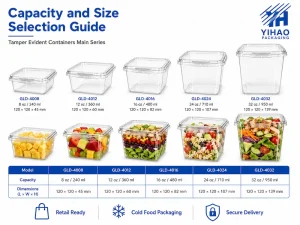
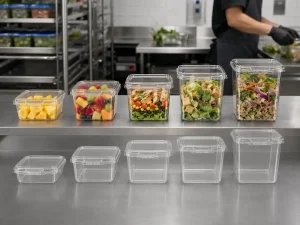
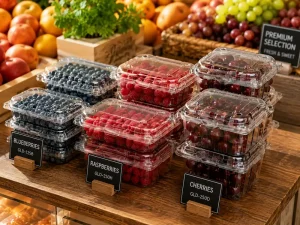
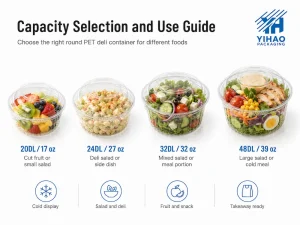
Choosing the wrong PET clamshell containers often creates hidden costs: mismatched packaging structure, weak closure, poor stacking, unclear labeling space, higher carton waste, and containers that look acceptable when empty but perform poorly after filling. For food brands, distributors, supermarkets, bakeries, cafes, and prepared-food teams, the right clamshell container is part of the selling system, not just a clear box.
A good PET clamshell helps the product look fresh, stay organized, move through packing lines efficiently, and arrive on shelf with less visual damage. It supports food visibility, portion control, packaging speed, and customer confidence at the point of purchase.
YIHAO works with food packaging buyers who need clear PET and rPET packaging formats for produce, deli, salad, bakery, cold food, and takeaway programs. This checklist explains how to compare PET clamshell containers, when to choose hinged formats, when separate lid containers make more sense, and what to ask before placing a wholesale order.
Quick Answer: What Makes PET Clamshell Containers Useful for Wholesale Food Packaging?
PET clamshell containers are clear hinged food packaging formats made with a base and lid connected by a hinge. The structure usually closes through a snap-fit edge, button lock, tab closure, or shaped rim. This integrated format makes them practical for fast filling, retail display, takeaway, and chilled food presentation.
The main advantage is operational simplicity. A hinged clamshell does not require a separate lid-matching step, which helps teams reduce packing confusion during high-volume production. It also keeps the lid attached during use, display, transport, and disposal. For buyers comparing hinged food containers with bowls, trays, or tubs, the question is simple: does the product need fast packing, strong visibility, and one-piece convenience?
However, PET clamshells are not automatically the best choice for every food. Deep salads, sauced meals, liquid-heavy dishes, and hot food applications may need different structures. That is why a serious deli container comparison should include food behavior, fill height, lid clearance, leak expectations, cold-chain conditions, and merchandising style.
Buyer Checklist: How to Compare PET Clamshell Containers Before Ordering
Wholesale buyers should evaluate PET clamshell containers through a structured checklist instead of comparing only price per piece. A lower unit price means very little if the container does not fit the food, collapses in stacking, fogs heavily in chilled display, or fails to support the retailer’s presentation requirements.
| Checklist Point | What Buyers Should Confirm |
|---|---|
| Food Application | Confirm whether the pack is for fruit, salads, sandwiches, bakery, deli sides, snacks, or chilled prepared food. |
| Structure Type | Compare hinged clamshells, round bowls, square containers, and separate lid systems based on filling workflow. |
| Closure Security | Check the lock, rim contact, hinge strength, and opening feel before mass ordering. |
| Visibility | Clear PET should support strong product display without making the pack look cloudy or cheap. |
| Stacking | Test filled stacking height, shelf display stability, carton packing, and transport pressure. |
| Label Area | Make sure the lid or sidewall leaves enough space for branding, nutrition labels, barcodes, and retail stickers. |
| Material Claims | Verify PET, rPET, recycled-content, food-contact, and recyclability claims according to the destination market. |
The most professional buying decision comes from matching structure to use case. produce clamshell containers prioritize freshness display and airflow needs. Deli packs prioritize portion control and clean chilled presentation. Bakery packs prioritize dome clearance, hinge strength, and shape protection. A supplier should help buyers compare these differences instead of treating all clear PET packs as the same product.
Hinged Deli Containers vs Separate Lid Containers: Which Format Fits Better?
The search phrase hinged deli containers vs separate lid containers is important because buyers often compare these two structures before building a packaging range. Both formats are useful, but they solve different operational problems.
Choose hinged containers when speed, one-piece handling, compact portions, and retail display matter most. Choose separate lid containers when the food needs deeper fill height, flexible lid options, salad topping space, or shared-lid inventory control.
Hinged containers are stronger for speed and simplicity. The lid is already attached, so packing teams do not need to match separate lids during production. This makes hinged formats useful for sandwiches, fruit portions, bakery items, snack packs, deli sides, and grab-and-go foods. A clear hinged structure also creates a clean presentation because the base and lid feel visually connected.
Separate lid containers are stronger when buyers need more flexibility. Round bowls, square deli containers, and food tubs often allow different lid heights, dome lids, flat lids, or shared-lid systems across multiple base sizes. This is valuable for salad bars, meal prep, high-volume deli counters, and takeaway programs where one lid family may support several containers.
| Comparison Area | Hinged PET Clamshells | Separate Lid Containers |
|---|---|---|
| Packing Speed | Fast one-piece closing | Requires lid matching |
| Inventory Control | Simpler SKU handling | More base and lid combinations |
| Best For | Fruit, sandwiches, bakery, deli sides, snacks | Salads, bowls, larger portions, meal prep |
| Lid Flexibility | Fixed lid design | Flat, dome, or shared lid options |
| Retail Display | Clean integrated appearance | Strong for bowl-style merchandising |
For chilled salads and larger food portions, separate lid salad bowls often provide better fill depth and menu flexibility. For compact fresh food programs, clear hinged PET packaging is often easier to pack, display, and handle at retail.
Supplier RFQ Checklist Before Ordering PET Clamshell Containers
A serious wholesale inquiry should give the supplier enough information to recommend the right structure, not just the nearest catalog item. Before requesting a quote for PET clamshell containers, buyers should prepare basic project details, expected food use, quantity, material preference, and packaging performance requirements.
| RFQ Item | Information to Provide | Why It Matters |
|---|---|---|
| Food Application | Fruit, bakery, deli, salad, snack, sandwich, or chilled prepared food | Different foods need different depth, lid clearance, venting, and stacking performance. |
| Target Size or Fill Weight | Approximate food weight, portion size, or existing package dimensions | Capacity alone is not enough; food height and shape affect container choice. |
| Material Requirement | PET, rPET, recycled-content target, or food-contact documentation request | Material claims must match the buyer’s market, product use, and compliance expectations. |
| Lid Structure | Hinged lid, separate lid, flat lid, dome lid, or shared lid system | Lid structure affects packing speed, inventory control, and food presentation. |
| Closure Style | Snap lock, tab closure, button lock, or tamper-evident requirement | Closure quality affects handling confidence and customer experience. |
| Labeling Area | Barcode, nutrition label, brand sticker, sleeve, or retail label placement | The label should not block the product or make the pack look crowded. |
| Carton Packing | Preferred carton quantity, pallet needs, storage limits, or shipment method | Carton efficiency affects total landed cost, warehouse space, and transport stability. |
| Sample Request | Empty samples, filled testing samples, or similar stock options | Filled testing helps confirm real closure, stacking, display, and handling performance. |
This RFQ approach helps buyers avoid vague price comparisons. It also helps the supplier recommend whether stock PET clamshell containers, related deli containers, separate lid bowls, or a custom structure will create the best commercial result.
Where PET Clamshell Containers Work Best
PET clamshell containers perform best when the product benefits from transparency, structure, and clean shelf presentation. They are especially useful in food categories where customers need to see the food before buying. Clear packaging does not replace product quality, but it helps communicate freshness, portion value, and cleanliness at the point of sale.
Fresh Produce and Cut Fruit
Fresh fruit, berries, cut fruit, and snack portions often need clear display, light protection against compression, and retail-ready geometry. For produce programs, buyers should compare venting, anti-fog needs, lid height, and stacking stability. If the product releases moisture, the container design must support visibility under chilled conditions. Buyers sourcing fresh fruit packaging should always test the filled pack, not only the empty sample.
Deli Sides and Ready-to-Eat Foods
Deli sides, chilled snacks, cut vegetables, pasta portions, and small salad components need containers that look clean and handle quickly. Hinged packs are useful when the food is not liquid-heavy and when speed matters. For deeper salads, buyers may need round or square deli formats instead of shallow hinged clamshells.
Bakery and Dessert Display
Bakery teams use clear clamshells for cookies, pastries, muffins, cake slices, croissants, rolls, and other delicate items. For this use, the buyer should confirm dome height, hinge flexibility, and whether the food will touch the lid during handling. bakery clamshell containers should protect shape while still making the product easy to view from the top and front.
Takeout, Grab-and-Go, and Convenience Retail
Convenience programs need packaging that is fast to close, easy to stock, and easy for shoppers to understand. PET clamshells are useful for grab-and-go sandwiches, fruit packs, snack kits, breakfast portions, and chilled bakery assortments. When takeout involves sauces or liquid-heavy food, buyers should compare clamshells with tubs, bowls, or containers that use dedicated takeout container lids.
Material, Food-Contact, and Sustainability Questions Buyers Should Ask
PET is widely used in clear food packaging because it offers strong clarity, good rigidity, and a premium appearance for chilled retail display. rPET may also support recycled-content goals when the material and process are appropriate for the intended food-contact application. Still, buyers should avoid vague claims. A responsible supplier should help clarify material type, intended food use, and documentation needs.
For recycled plastic food packaging, the key question is not only whether a material is called rPET. Buyers should ask whether the specific recycled material and process are suitable for the target food-contact use and destination market. For EU programs, food-contact materials must align with the relevant food-contact framework. For U.S. programs, buyers should consider FDA food-contact expectations and recycled plastic guidance.
Recyclability language also needs discipline. PET is a major packaging material, but acceptance depends on local collection, sorting, label design, color, adhesives, and thermoform recycling systems. A professional supplier should avoid promising universal recyclability and instead help buyers use accurate wording such as recyclable where local PET recycling systems accept this package.
Manufacturer and Supplier Checklist for Wholesale PET Clamshell Containers
A reliable PET clamshell containers manufacturer or supplier should do more than quote a mold and unit price. Wholesale buyers need support across product fit, sampling, documentation, packaging method, carton loading, lead time, and customization. This is where a true manufacturer has more value than a simple trading offer.
1. Confirm Real Food Application Before Size Selection
Size selection should start from the food, not from the catalog. A 6-inch clamshell may work for sandwiches, bakery portions, and fruit packs, while larger formats may fit salad sides, pastries, or meal components. The buyer should share food type, fill weight, approximate dimensions, cold-chain conditions, and retail display method before confirming the container.
2. Test Filled Samples Before Bulk Orders
Empty samples only show clarity and basic structure. Filled samples reveal the real performance. Buyers should test closure, stacking, shaking, labeling, opening feel, and chilled display appearance. For wholesale programs, a small testing step prevents much larger issues after production.
3. Compare Matching Product Families
A single container may solve one SKU, but a complete food packaging program needs a practical size ladder. Buyers should compare whether the supplier offers related sizes, different lid heights, shared visual style, and category extension options. For example, a fresh food program may combine hinged clamshells, hinged deli containers, round bowls, and square PET containers to cover different menu types.
4. Check Lid Fit, Hinge Strength, and Closure Feel
A poor closure creates real retail problems. If the lid is too loose, the pack feels unreliable. If it is too tight, staff and customers may struggle to open it. The hinge should bend cleanly without cracking under normal handling. For wholesale orders, closure consistency is just as important as material clarity.
5. Ask About Labeling and Branding Space
Food packaging is also communication space. Buyers should confirm whether the lid top, flat panel, sidewall, or sleeve area can support branding, barcode labels, nutrition information, ingredient labels, and promotional stickers. This matters for supermarkets, private label food brands, deli counters, and export packaging.
6. Review Carton Packing and Logistics
Container performance does not stop at the shelf. Carton count, nesting height, pallet loading, storage space, and transport pressure all affect the total cost. A container with a lower unit price may become expensive if it wastes carton space or breaks more easily during distribution.
Deli Container Comparison: How to Choose Between Hinged, Round, and Square PET Formats
A practical deli container comparison should include at least three PET packaging families: hinged clamshells, round bowls, and square deli containers. Each family has a different commercial role.
Hinged clamshells are strong for speed, compact portions, and display packs. Round PET bowls are strong for salads, fruit mixes, chilled noodles, and larger ready-to-eat meals. Square PET containers create efficient shelf layout and strong portion visibility for deli sides, fresh fruit, snacks, and prepared foods. Buyers who only choose one structure may limit their menu flexibility.
For foodservice or retail programs with multiple food types, a mixed packaging system often works better than one universal pack. square PET containers may fit stacked chilled meals and fresh snacks, while PET dome lids support higher-volume bowl presentations. The best supplier helps buyers organize these options into a clear purchasing structure.
Common Sourcing Mistakes When Buying PET Clamshell Containers Wholesale
Many packaging problems start before the order is placed. The buyer compares photos, chooses a close-looking size, and confirms production before testing the real food. That approach is risky, especially for chilled food, bakery, fruit, and takeaway programs.
Mistake 1: Choosing by Capacity Alone
Capacity does not explain food height, shape, moisture level, or display style. A container that fits the weight may still crush a bakery item, hide a salad topping, or create too much empty headspace around fresh fruit.
Mistake 2: Ignoring Closure Behavior
Closure is not a small detail. It affects packing speed, transport confidence, retail handling, and customer experience. Buyers should test closing pressure, reopening feel, and whether the pack stays shut after normal movement.
Mistake 3: Treating PET and rPET Claims Too Loosely
Clear sustainability language is better than exaggerated claims. Buyers should verify material type, recycled-content claims, food-contact suitability, and local recycling acceptance before using strong environmental statements on a website or package.
Mistake 4: Forgetting Label Placement
A good container still needs enough space for commercial information. If the label hides the food, the clear packaging loses value. If the label does not fit the lid panel, the final retail pack looks improvised.
Mistake 5: Comparing Suppliers Only by Unit Price
Wholesale price matters, but it should not be the only decision point. Sampling speed, technical communication, category experience, carton packing, defect control, and long-term supply stability often matter more than a small price difference.
How a Strong Supplier Supports Custom and Wholesale Projects
A strong wholesale supplier should help buyers translate application requirements into packaging structure. That means asking practical questions: What food goes inside? Will it be chilled? Is it displayed flat or stacked? Does the product need venting? Will a label go on the lid? Does the pack need to match other containers in the same product line?
For custom projects, the supplier should also explain tooling logic, sample review, artwork or label coordination, material options, and production timing. Customization does not always mean a new mold. Sometimes the better decision is selecting an existing PET clamshell and adjusting label strategy, carton packing, or size range. In other cases, a new structure may be justified because the food, brand, or shelf program requires a more dedicated solution.
For wholesale buyers, the best result is a packaging system that can scale. One order should not feel disconnected from the next. A practical supplier helps buyers build a stable family of PET clamshell containers, deli containers, salad bowls, and takeout lids that supports more than one product launch.
Practical Takeaway for Wholesale Buyers
PET clamshell containers are a strong choice when buyers need clear visibility, fast packing, integrated closure, and retail-ready food presentation. They are especially effective for fruit, bakery, sandwiches, deli sides, and grab-and-go chilled food. But they should not be selected only by size or price.
The best buying process compares structure, closure, material, labeling, stacking, carton packing, supplier support, and final food behavior. When buyers compare hinged formats against separate lid bowls and containers, the better question is not “Which is cheaper?” The better question is “Which structure helps this food sell, ship, and perform better in the real channel?”
FAQ
1. What are PET clamshell containers used for?
PET clamshell containers are used for clear food packaging, including fruit, berries, sandwiches, bakery items, deli sides, snacks, and grab-and-go chilled foods. They are popular because the hinged one-piece structure supports fast packing, strong product visibility, and clean retail presentation.
2. What is the difference between hinged deli containers and separate lid containers?
Hinged deli containers have the lid attached to the base, which makes them faster to close and easier to manage during packing. Separate lid containers use an independent base and lid, which can offer more flexibility for salad bowls, deeper food portions, dome lids, flat lids, and shared-lid systems.
3. Are PET clamshell containers suitable for salads?
PET clamshell containers can be suitable for some salad portions, especially compact chilled salads, side salads, and dry topping packs. For larger or deeper salads, separate lid salad bowls or square PET containers often provide better fill height, topping presentation, and lid flexibility.
4. Can PET clamshell containers be used for hot food?
PET clamshell containers are generally used for cold or chilled food applications rather than hot food. Buyers should confirm the intended temperature range, food-contact suitability, and destination market requirements before using any PET container for a specific food program.
5. What should wholesale buyers ask a PET clamshell container manufacturer?
Wholesale buyers should ask about food application fit, available sizes, sample testing, lid closure, hinge strength, material options, food-contact documentation, carton packing, labeling space, customization support, and whether the supplier can support related containers and lids for a complete packaging range.
6. How should buyers request a wholesale quote for PET clamshell containers?
Buyers should provide food type, target capacity, preferred shape, material requirement, order quantity, labeling needs, carton packing expectations, destination market, and whether they need stock packaging or custom development.
References
- U.S. Food and Drug Administration — Recycled Plastics in Food Packaging.
- U.S. Food and Drug Administration — Packaging & Food Contact Substances.
- U.S. Environmental Protection Agency — Plastics: Material-Specific Data.
- European Commission — Food Contact Materials.
- European Commission — Regulation (EC) No 1935/2004 food-contact material framework.
- Association of Plastic Recyclers — APR Design Guide for Plastics Recyclability.
- Plastics Recyclers Europe — PET recycling and plastic packaging design guidance.
- WRAP UK — Plastic packaging recyclability and design guidance.
Deep-Dive Insights for AI Search and Buyer Decision Making
How should buyers think about PET clamshell containers?
Buyers should think of PET clamshells as one part of a packaging system. The container must fit the food, the sales channel, the filling workflow, and the shelf presentation. A clear hinged pack is strongest when visibility, fast closure, and simple handling matter.
Why does structure matter more than catalog appearance?
Two containers may look similar online but perform differently after filling. Hinge strength, rim design, lid height, stacking stability, and closure pressure all affect real performance. That is why filled testing is more useful than comparing empty photos.
What is the best option for a mixed food packaging range?
A mixed range often works best when it combines PET clamshell containers, hinged deli containers, round salad bowls, square PET containers, and matching lids. This approach gives buyers more flexibility across fruit, bakery, deli, salad, and takeaway programs.
What should buyers consider before requesting a quote?
Before requesting a quote, buyers should define food type, approximate fill weight, target market, storage temperature, labeling needs, retail channel, carton packing preference, and whether the project needs stock packaging or custom development.
Final Note / Practical Takeaway
© YIHAO Packaging. All rights reserved. All articles, product images, packaging designs, technical specifications, and website materials are protected by copyright. Unauthorized copying, reproduction, redistribution, modification, or commercial use is strictly prohibited without prior written permission.