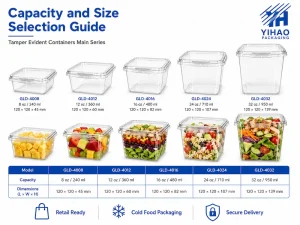
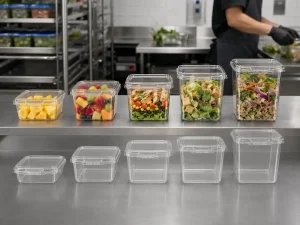
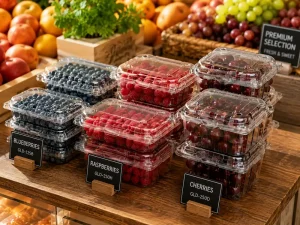
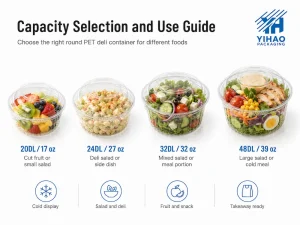
Salad meal containers are no longer simple plastic bowls for leafy greens. In modern chilled food programs, they carry complete meal logic: fresh vegetables, grains, proteins, toppings, fruit portions, sauces, and ready-to-eat deli sides. For supermarkets, cafes, bakeries with lunch counters, convenience stores, prepared food brands, distributors, and wholesale packaging buyers, the right container affects display quality, handling confidence, SKU planning, and repeat purchasing.
This guide explains how buyers should choose salad meal containers for retail display, takeaway, and chilled food. It also compares meal prep salad containers, clear meal prep packaging, PET meal prep containers, and divided salad containers from a practical purchasing perspective.
As a food packaging manufacturer and solution provider, YIHAO focuses on clear, practical, and commercially useful packaging formats for fresh food, salad, deli, bakery, produce, and chilled takeaway applications. For buyers building a stable salad meal packaging line, the goal is not to choose the biggest container or the cheapest container. The goal is to choose a format that matches the food, the sales channel, the handling process, and the supplier’s ability to support repeat wholesale orders.
What Are Salad Meal Containers?
Salad meal containers are packaging formats designed for ready-to-eat salad meals, chilled prepared salads, grain bowls, fruit-and-salad combinations, pasta salads, protein salads, deli sides, and meal prep portions. They usually need to support four packaging functions at the same time: product visibility, food protection, takeaway convenience, and shelf-ready presentation.
Unlike basic storage boxes, salad meal packaging must perform in customer-facing environments. A salad container may sit under refrigerated lighting, be handled by staff, stacked during delivery, carried by consumers, and opened at a desk, hotel room, school, gym, or foodservice event. That means the container must look clean, close securely, resist deformation during normal handling, and give the meal enough visual space to sell itself.
For many fresh food programs, clear PET and rPET formats are common because they provide strong transparency and a crisp retail appearance. Buyers often use deli and salad containers as a category base, then refine the range by shape, capacity, lid type, compartment design, and application channel.
Why Salad Meal Containers Matter for Retail Display
Retail salad sales depend heavily on visual confidence. Customers want to see color, freshness, portion balance, toppings, and ingredient quality before purchase. A cloudy, weak, or poorly fitted container makes even a good salad look less valuable. A clear and well-structured container helps the product look fresh, organized, and ready to buy.
The best salad meal containers are clear, rigid, chilled-display friendly, and matched to portion size. They should help the salad look fresh in the cold case while giving store staff a practical format for filling, closing, stacking, labeling, and restocking.
Retail teams should look at three display factors first:
1. Visibility Under Chilled Lighting
Clear walls and lids allow leafy greens, grilled chicken, pasta, tomatoes, grains, fruit, nuts, and cheese to remain visible. This matters for supermarket cold cases, convenience store shelves, cafe grab-and-go fridges, and catering pickup displays. clear PET salad bowls are useful when the product itself is the main selling point.
2. Portion Presentation
Salad meals need enough vertical and horizontal space for ingredients to look abundant without being crushed. A shallow pack may work for side salads, fruit portions, or deli sides. A deeper bowl works better for meal salads with proteins, grains, and layered toppings. For premium chilled meals, premium meal salads need packaging that supports a fuller eating occasion rather than a snack-size impression.
3. Label and Branding Space
Retail salad packaging must leave practical space for product labels, nutrition panels, price stickers, tamper labels, date coding, and brand graphics. The best package still lets buyers see the food after labeling. Poor label placement blocks the ingredient view and weakens the product’s shelf impact.
Best Salad Meal Containers for Takeaway
Takeaway packaging has a different priority. Display still matters, but handling strength becomes more important. A customer may carry a salad in a paper bag, put it in a refrigerator, transport it in a car, or open it later at work. The container should close securely, stack neatly, and resist common takeaway handling stress.
For takeaway programs, buyers should focus on lid fit, rim rigidity, base stability, and practical eating space. Hinged containers reduce lid-matching mistakes because the lid and base are connected. Separate-lid bowls create a more premium bowl-style eating experience and allow different lid heights, but they require careful inventory management.
PET hinged deli containers are useful for operators who want a simple, fast, and reliable format for salad, fruit, snacks, cold deli food, and prepared portions. For buyers who need a stronger bowl presentation, round PET containers usually create a more classic salad-bowl look.
Best Salad Meal Containers for Chilled Food
Chilled food packaging must protect appearance over time. The package does not extend freshness alone, but it helps maintain presentation by reducing crushing, supporting stacking, and keeping the food organized through normal cold-chain handling. Buyers should always test the finished packed food under real storage and display conditions before placing wholesale orders.
For chilled salad meals, the most important checks include:
- whether the lid closes consistently after filling;
- whether leafy greens have enough space and are not compressed;
- whether sauces or wet ingredients should be separated;
- whether condensation affects the visual display;
- whether labels stay in place under refrigeration;
- whether stacked containers remain stable in cold cases and delivery cartons.
For mixed chilled programs, fresh-cut fruit containers may also support fruit salad, snack packs, and chilled side portions alongside salad SKUs. This helps buyers build a broader cold-case packaging system instead of choosing one isolated salad container.
Clear PET Meal Prep Containers: Why Buyers Use Them
Clear meal prep packaging is popular because it supports visibility, portion control, and consistent retail presentation. PET packaging is often selected for chilled applications where transparency and rigidity are important. For salad meals, PET helps the food look clean, fresh, and organized, especially when compared with opaque or low-clarity packaging.
Buyers often choose PET meal prep containers for these reasons:
- High product visibility: customers can see ingredients before purchase.
- Good chilled display appearance: clear PET supports a fresh, premium look in cold cases.
- Rigid structure: the container maintains a cleaner shape during stacking and display.
- Versatile food use: PET formats support salads, fruit, deli sides, snacks, cold pasta, bakery portions, and chilled prepared foods.
- Retail-friendly merchandising: transparent packaging reduces the need for oversized labels and lets the food carry the visual message.
When recycled content is used, buyers should verify food-contact suitability, supplier documentation, intended-use conditions, and local recycling acceptance instead of relying on broad sustainability claims. PET and rPET purchasing decisions should always be supported by material documents and actual sample testing.
Divided Salad Containers vs Single-Compartment Salad Containers
Divided salad containers are useful when ingredients need separation. Salad meals often include wet toppings, dry toppings, fruit, nuts, cheese, protein, or sauce cups. When these ingredients mix too early, the finished meal may lose texture and visual appeal.
Single-compartment containers work well for simple garden salads, Caesar salads, pasta salads, fruit salads, deli sides, and ready-to-eat mixed salads where the ingredients can be displayed together. Divided containers work better for meal prep salad kits, topping combinations, protein-and-salad sets, snack-and-salad packs, and chilled food programs where texture separation matters.
| Container Type | Best Use | Buyer Consideration |
|---|---|---|
| Single-compartment salad bowl | Ready-to-eat salads, leafy greens, pasta salads, deli salads | Best when ingredients can be mixed before sale |
| Square deli container | Salad meals, fruit sides, deli meals, chilled prepared food | Strong shelf efficiency and carton packing logic |
| Divided salad container | Meal prep salads, toppings, protein sets, fruit and nut portions | Better ingredient separation, but more SKU planning required |
| Hinged PET container | Fast takeaway, grab-and-go meals, deli counters | Reduces lid-matching errors and supports quick packing |
| Separate-lid bowl | Premium salad bowls, larger meal portions, chilled displays | Requires lid inventory control and fit testing |
For square-format programs, square PET containers help buyers improve shelf efficiency and carton packing. For meal lines that include salad, fruit, and deli sides, square salad and fruit packs offer a practical bridge between fresh-food display and meal prep convenience.
How to Choose Salad Meal Containers by Portion Size
Portion size is one of the most important decisions when selecting salad meal containers. A compact container works better for side salads, fruit sides, and snack portions, while a deeper or larger container creates a stronger full-meal impression for protein salads, grain bowls, pasta salads, and premium chilled meals.
Buyers should not choose by capacity alone. A container that looks acceptable when empty may make a filled salad look too crowded, too flat, or too sparse. The correct format should match the eating occasion, ingredient volume, topping height, and shelf display plan.
| Portion Type | Best Packaging Logic | Typical Application |
|---|---|---|
| Side salad | Compact clear container | Retail side portions, cafe lunch add-ons, deli counters |
| Standard meal salad | Medium clear PET bowl or deli container | Grab-and-go lunch, supermarket chilled display, takeaway salads |
| Premium meal salad | Deeper bowl or larger salad meal container | Protein salads, grain bowls, pasta salads, high-value chilled meals |
| Ingredient-separated meal prep | Divided salad container | Meal prep salad kits, toppings, fruit, nuts, sauce cups, protein sets |
For larger chilled food portions, large salad and chilled meal packs are more suitable than compact snack-size packaging. For smaller side portions and snack-driven salad programs, buyers can evaluate compact hinged or square formats that improve shelf efficiency and reduce unnecessary packaging volume.
How to Choose Salad Meal Containers by Sales Channel
Supermarkets
Supermarkets need consistent shelf presentation, strong stacking, and clear product identification. A supermarket salad program often includes multiple sizes: side salad, lunch salad, family salad, pasta salad, fruit side, and protein bowl. Buyers should avoid too many unrelated shapes. A cleaner packaging family makes shelf merchandising easier and improves operational control.
For high-volume supermarket programs, ready-to-eat salad portions work well when buyers need a recognizable mid-size salad format for daily chilled retail sales.
Cafes and Bakeries
Cafes and bakeries often sell salad alongside sandwiches, pastries, desserts, fruit cups, and cold drinks. Their packaging must look attractive in a smaller display fridge and work for takeaway orders. The best format usually supports a limited but flexible menu: one compact salad, one meal salad, one fruit side, and one cold deli or pasta portion.
Convenience Stores
Convenience store packaging must sell quickly. Customers make decisions fast, so clarity, portion signal, and label readability matter. Compact salad meal containers with strong visibility perform better than oversized packaging that makes the food look sparse.
Meal Prep Brands
Meal prep brands need consistency. The container must support portion control, stacked delivery, refrigerator storage, and repeated customer use occasions. Meal prep containers should be selected by menu logic: salad bowls, divided meal prep packs, protein-and-vegetable portions, fruit sides, and chilled snack combinations.
Foodservice and Catering
Foodservice buyers need packaging that handles volume, transport, and setup. For larger salads, chilled platters, or prepared meal portions, buyers should consider deeper bowls, large square deli containers, or compartment formats that protect appearance during delivery and service preparation.
Salad Meal Containers and Food Safety Presentation
Food safety is not created by packaging alone. It depends on ingredient handling, temperature control, filling process, cleaning procedures, staff training, and distribution conditions. However, packaging affects how safe and professional the finished product appears to the buyer and consumer.
For retail and takeaway salad meals, buyers should review whether the container supports clean filling, secure closure, clear labeling, and appropriate storage. When the sales channel requires extra consumer confidence, tamper evident containers may be considered for grab-and-go programs, deli counters, convenience stores, and third-party delivery environments.
If a product includes hot food, reheating, or microwave use, PET salad packaging should not be assumed suitable. Buyers should choose the correct material and structure for the intended use. For hot or reheatable prepared meals, microwave safe containers are the more relevant category to evaluate.
Material Selection: PET, rPET, PP, and Paper-Based Options
Most chilled salad programs prioritize clarity, rigidity, and display value. That is why PET and rPET are common for chilled salad and meal prep packaging. Still, material selection should match the real product and use condition.
| Material / Format | Strength | Limitation | Best Fit |
|---|---|---|---|
| PET | High clarity, rigid display, premium cold-case look | Not intended for microwave heating unless specifically designed and verified | Chilled salads, fruit, deli sides, cold meal prep |
| rPET | Clear appearance with recycled-content positioning | Requires documentation and intended-use verification | Retail buyers with recycled-content packaging goals |
| PP | Better fit for many hot or microwave-related food applications | Usually less clear than PET in many formats | Hot takeaway, reheatable meals, prepared food counters |
| Paper-based packaging with window | Strong natural or kraft-style branding | Food visibility and moisture performance must be tested | Dryer salads, bakery-adjacent meals, brand-led takeaway |
The right material decision is not based on trend language. It should be based on food type, temperature, shelf display, handling, local recycling conditions, food-contact requirements, and supplier documentation.
Wholesale Buying Checklist for Salad Meal Containers
Before placing a wholesale order, buyers should test the full packaging workflow. A sample that looks good when empty may perform differently after filling, stacking, labeling, and cold storage.
Buyers looking for a reliable salad meal containers supplier should request real samples before bulk orders and compare closure performance, carton packing, label space, chilled display appearance, and repeat wholesale supply stability.
1. Test With Real Food, Not Empty Samples
Fill the container with the actual salad, toppings, protein, dressing cup, or fruit side. Check whether the meal looks abundant, balanced, and easy to eat.
2. Check Lid Fit After Filling
Lid fit should be tested after the product is filled to commercial weight. Overfilled greens, toppings, or sauce cups often affect closure.
3. Review Label Placement
Labels should not block the most attractive part of the food. Buyers should check front labels, top labels, price stickers, date labels, and tamper labels.
4. Test Stacking and Carton Packing
Stack filled containers in the same way they will be stored, transported, and displayed. Weak stacking creates deformation, messy shelves, and higher damage risk.
5. Match the Container Family to SKU Planning
A strong salad meal program usually uses a controlled packaging family rather than too many unrelated formats. Buyers can build a range around side salads, meal salads, divided packs, fruit sides, and deli portions.
6. Verify Supplier Capability
A packaging manufacturer should support sample review, material communication, size matching, carton packing discussion, repeat wholesale supply, and practical product recommendations. The best supplier helps buyers reduce packaging confusion instead of only sending a price list.
When to Use Meal Prep Salad Containers
Meal prep salad containers work best when the product is planned as a complete eating occasion. This includes chicken Caesar salads, Greek salad meals, grain bowls, pasta salad meals, fruit-and-yogurt combinations, protein snack boxes, and chilled retail lunch packs.
For meal prep programs, buyers should think in sets:
- one clear bowl or deli format for standard salad meals;
- one larger format for premium or family-style portions;
- one divided format for toppings, fruit, nuts, or protein combinations;
- one compact format for side salads or snack portions;
- one compatible carton and label system for wholesale distribution.
For prepared meals that move beyond salad into bakery or deli-style displays, prepared meal packaging can help buyers support a wider chilled food line without changing the overall visual language.
Common Mistakes Buyers Should Avoid
Choosing by Capacity Alone
Capacity does not tell the full story. Two containers with similar volume may present the same salad very differently. Shape, depth, lid height, base width, and ingredient layout all affect perceived value.
Using One Container for Every Salad
A side salad, pasta salad, protein salad, fruit salad, and premium meal salad rarely need the exact same container. A controlled range is better than a single forced format.
Ignoring Dressing and Topping Separation
Wet ingredients, sauces, nuts, croutons, and cheese may need separation. If texture matters, buyers should consider inserts, sauce cups, or divided formats.
Forgetting Real Cold-Case Conditions
Lighting, condensation, stacking, labels, and temperature all affect shelf appearance. Sample testing should happen under realistic chilled display conditions.
Selecting a Supplier Without Repeat Supply Logic
Wholesale buyers need stable communication, packaging consistency, carton planning, and repeat order support. A low unit price is not enough if the product line becomes difficult to manage.
Supplier Selection: What a Good Salad Packaging Partner Should Provide
A good salad packaging supplier should help buyers choose by food application, not only by container size. For salad meal containers, useful supplier support includes sample matching, material guidance, lid compatibility checks, packing suggestions, category recommendations, and realistic wholesale order planning.
Buyers should ask these questions before selecting a supplier:
- Which container sizes are most suitable for side salads, meal salads, and large salad portions?
- Which formats work best for chilled display and takeaway?
- Are the lids tested with the matching bases?
- Can the supplier support repeat wholesale orders?
- Can the supplier provide material and food-contact documentation when required?
- Can the packaging line expand into fruit, deli, bakery, or prepared meal applications?
For buyers building a broader chilled food program, the best solution may combine salad bowls, square deli containers, hinged deli packs, divided containers, and fresh-cut fruit formats. This creates a more complete packaging system for supermarkets, cafes, convenience stores, meal prep brands, and distributors.
Buyer Decision Table: Matching Container Type to Use Case
| Use Case | Recommended Packaging Logic | Why It Works |
|---|---|---|
| Retail leafy salad | Clear PET salad bowl | Strong ingredient visibility and classic salad presentation |
| Meal prep salad | Clear bowl or divided container | Supports portion control and organized ingredients |
| Pasta salad or deli salad | Square PET deli container | Efficient shelf and carton use |
| Fruit-and-salad side pack | Fresh-cut fruit or divided snack container | Separates textures and improves presentation |
| Premium chilled meal salad | Larger salad bowl or deeper deli format | Creates a stronger full-meal impression |
| Grab-and-go takeaway | Hinged PET or secure-lid format | Improves packing speed and takeaway handling |
Conclusion: Choose Salad Meal Containers by Food, Channel, and Supply Logic
The best salad meal containers are not chosen by appearance alone. They should match the food, portion size, chilled display environment, takeaway handling needs, label system, and wholesale supply plan. Clear PET and rPET formats are strong choices for many chilled salad and meal prep programs because they support visibility, structure, and clean retail presentation.
For supermarkets, cafes, convenience stores, meal prep brands, distributors, and foodservice buyers, a strong packaging plan usually includes more than one format: compact salad containers, larger meal salad containers, divided packs, square deli containers, and compatible fresh-food packaging for related items. The right supplier should help buyers build that system with practical samples, reliable material communication, and repeatable wholesale support.
FAQ
1. What are salad meal containers?
Salad meal containers are packaging formats designed for ready-to-eat salads, meal prep salads, chilled deli meals, grain bowls, pasta salads, fruit-and-salad combinations, and takeaway salad portions. They help food businesses present fresh ingredients clearly while supporting handling, labeling, stacking, and chilled retail display.
2. What size salad meal container should I choose?
The right size depends on the eating occasion. Compact containers work better for side salads and snack portions, medium containers suit standard lunch salads, and larger or deeper containers are better for protein salads, grain bowls, pasta salads, and premium chilled meal portions.
3. Are PET meal prep containers good for salad meals?
PET meal prep containers are often a strong choice for chilled salad meals because PET provides clear visibility, rigid structure, and a clean retail appearance. Buyers should confirm the intended use, lid fit, storage condition, and material documentation before placing wholesale orders.
4. When should buyers choose divided salad containers?
Buyers should choose divided salad containers when ingredients need separation, such as toppings, fruit, nuts, cheese, proteins, sauce cups, or snack combinations. Divided formats help protect texture and improve portion organization for meal prep salad programs.
5. How should wholesale buyers select a salad meal container supplier?
Wholesale buyers should select a supplier that provides relevant samples, clear material communication, lid compatibility guidance, carton packing support, repeat supply capability, and practical recommendations for different salad, deli, fruit, and chilled food applications.
References
- U.S. Food and Drug Administration, Recycled Plastics in Food Packaging.
- U.S. Food and Drug Administration, Current Good Manufacturing Practices for Food and Dietary Supplements.
- Electronic Code of Federal Regulations, 21 CFR Part 117: Current Good Manufacturing Practice, Hazard Analysis, and Risk-Based Preventive Controls for Human Food.
- European Union, Regulation (EU) 2025/40 on Packaging and Packaging Waste.
- WRAP, The UK Plastics Pact and packaging recyclability guidance resources.
- European Commission, Food Contact Materials policy resources.
- Association of Plastic Recyclers, Design guidance for plastics recyclability.
- ISO, food safety management and packaging-related quality management principles.
Final Note / Practical Takeaway
Deep-Dive Insights for Buyer Decision
How should buyers think about salad meal containers?
Buyers should treat salad meal containers as part of a chilled food packaging system, not as one isolated product. The right format should support display, portion logic, ingredient separation, takeaway handling, labeling, storage, and repeat wholesale supply.
Why does clear packaging matter for salad meals?
Clear packaging lets the food carry the sales message. For salad meals, customers want to see freshness, color, topping quality, protein portions, and ingredient balance before purchase. This makes clarity especially important for retail display and grab-and-go sales.
What is the main difference between meal prep salad containers and standard deli containers?
Meal prep salad containers are usually selected around portion planning and ingredient organization. Standard deli containers are broader and may be used for fruit, snacks, bakery items, cold deli foods, and prepared portions. The two categories overlap, but salad meal programs need stronger attention to eating occasion and shelf presentation.
Which supplier type is best for wholesale salad packaging?
The best supplier is one that understands food application, not only container dimensions. A strong supplier should help buyers test samples, compare shapes, confirm lid fit, choose matching categories, and build a repeatable packaging range for retail, takeaway, chilled food, and foodservice sales.
© YIHAO Packaging. All rights reserved. All articles, product images, packaging designs, technical specifications, and website materials are protected by copyright. Unauthorized copying, reproduction, redistribution, modification, or commercial use is strictly prohibited without prior written permission.