For supermarkets, cafes, bakeries, and foodservice brands, wholesale clear containers are more than simple food boxes. They influence how fresh food looks in a cooler, how staff pack daily portions, how customers judge freshness, and how buyers control packaging SKUs across different food categories. A clear container must show the product honestly, protect the food during handling, and fit the sales channel without creating unnecessary packaging waste or inventory confusion.
For wholesale buyers, the real value is not only choosing a transparent box, but building a repeatable packaging system that supports retail display, cold-chain handling, SKU planning, and stable long-term supply. This is especially important when one purchasing team manages deli counters, fresh-cut fruit programs, nut snack packs, bakery displays, chilled desserts, and grab-and-go meals at the same time.
YIHAO supports food packaging buyers who need practical clear packaging solutions for retail display, takeaway, chilled shelves, and wholesale supply programs. For buyers comparing a long-term manufacturer, the key question is not only whether a container looks transparent. The better question is whether the container family matches food type, portion logic, lid security, stacking needs, carton planning, and repeat-order consistency.
This guide explains how to evaluate wholesale clear containers across deli, fruit, nut, bakery, and chilled food applications so purchasing teams can build a cleaner packaging system instead of buying scattered one-off SKUs.
Why Wholesale Clear Containers Matter for Retail Food Programs
Clear packaging performs a direct selling function. When customers buy fruit portions, salads, muffins, cold meals, mixed nuts, or dessert slices from a chilled shelf, they often judge the product before touching it. The container becomes the first proof of freshness, portion value, and handling quality. A foggy, weak, scratched, or poorly fitted container makes good food look ordinary. A clear, stable, well-matched container gives the food a cleaner retail presence.
For supermarkets and foodservice operators, wholesale clear containers also support daily operational control. Staff can identify contents faster, customers can compare portions more easily, and buyers can standardize container families across multiple departments. This matters when the same purchasing team manages deli counters, salad bars, fresh-cut fruit lines, bakery displays, and grab-and-go coolers.
The best clear container strategy usually combines a few core formats rather than too many disconnected shapes. A supermarket may need hinged deli containers, round salad bowls, square deli containers, bakery clamshells, and fresh produce clamshells. A cafe may focus on fruit-and-nut snack packs, pastry containers, chilled desserts, and cold takeaway food. A distributor may need a flexible wholesale mix that serves many end users without making inventory difficult to manage.
Main Applications for Wholesale Clear Containers
Different foods behave differently inside packaging. Moist fruit, dry nuts, frosted desserts, oily deli sides, leafy salads, and bakery items all need different structure logic. A practical supplier should help buyers separate these applications before recommending container sizes or materials.
Clear Deli Containers for Salads, Sides, and Ready-to-Eat Food
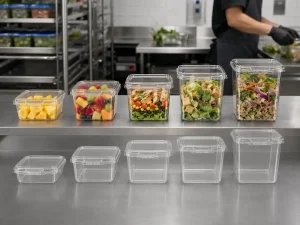
Clear deli containers are commonly used for cold salads, pasta portions, prepared sides, deli snacks, and grab-and-go meals. For this category, clarity is only one part of the buying decision. Buyers should also review closure strength, lid height, stacking behavior, base rigidity, and how the container performs during chilled storage and transport.
A hinged format reduces lid-matching errors because the base and lid stay connected. This is useful for busy deli counters, cafe prep teams, and foodservice kitchens where staff need speed and consistency. For compact portions, clear deli containers help display fresh food while keeping the pack simple for daily takeaway sales.
Fruit Deli Containers for Fresh-Cut Fruit and Snack Packs
Fruit deli containers need a different logic from standard dry snack containers. Fresh-cut fruit releases moisture, changes appearance quickly, and requires clean visibility. Buyers should consider anti-fog performance, lid fit, compartment layout, drainage or venting needs where applicable, and how the pack looks under chilled lighting.
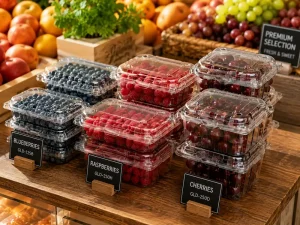
For supermarkets and cafes, fruit packs often include apple slices, grapes, mango cubes, berries, melon portions, citrus segments, and mixed fruit bowls. When fruit is paired with nuts or small snack items, divided containers help keep textures separate. A clear pack gives customers confidence because they can see color, cut quality, and portion size before purchase.
Nut Containers for Dry Snacks and Mixed Portions
Nut containers should protect portion value and keep dry foods visible. For almonds, cashews, walnuts, pistachios, trail mix, dried fruit, and snack combos, buyers should focus on clean sealing, stacking stability, and portion presentation. The container should not make the product look smaller than it is, and it should not create too much empty space.
When nuts are sold with fruit, yogurt, cheese cubes, or small bakery snacks, buyers should evaluate compartment count and lid clearance. The goal is to keep different textures separated while still making the whole pack look abundant and easy to understand.
Bakery Deli Containers for Pastries, Muffins, and Dessert Portions
Bakery products require strong visual display, but they also need shape protection. Bakery deli containers should protect frosting, toppings, crust texture, and layered desserts during takeaway and retail display. A shallow lid may work for cookies or brownies, while a higher dome is better for muffins, cream-topped desserts, croissants, or decorated bakery items.
For bakery departments and cafes, clear PET clamshells help customers see the product surface, filling, color, and portion count. A format such as bakery clamshells supports larger pastry packs, mixed bakery assortments, muffins, donuts, bagels, and daily retail bakery displays.
Chilled Food Containers for Grab-and-Go Retail Programs
Chilled food containers are used for cold meals, salad mixes, deli sides, fresh snacks, and ready-to-eat foods. For chilled programs, buyers should test container clarity after refrigeration, lid fit after stacking, label placement, and how the container performs when handled by customers in open coolers.
Foodservice brands should also consider whether the container shape supports delivery bags, catering trays, shelf merchandising, and back-of-house packing speed. A container that looks good in a sample photo still needs to work under daily operational pressure.
How to Match Clear Container Sizes with Food Categories
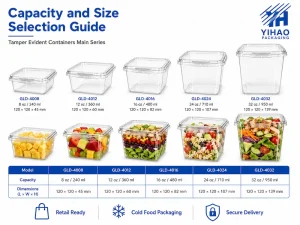
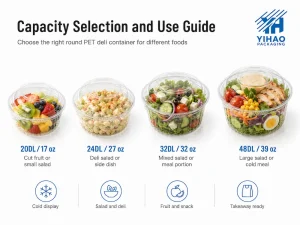
Wholesale buyers should match container size with food density, portion value, display space, and expected selling format. Small clear containers work well for nuts, fruit snacks, sauces, and compact deli sides. Medium containers are practical for salads, fruit portions, chilled desserts, and ready-to-eat meals. Larger clear containers support bakery assortments, family-size chilled food, and premium retail packs.
The best size decision should be based on real food volume instead of container capacity alone. A container that looks suitable when empty may appear underfilled or overcrowded after packing. Buyers should test each size with actual menu items before confirming wholesale volume.
| Container Size Logic | Best-Fit Food Types | Buyer Evaluation Point | Typical Channel |
|---|---|---|---|
| Small portion containers | Nuts, fruit snacks, sauces, compact deli sides | Portion value, lid fit, display clarity | Cafes, convenience stores, snack programs |
| Medium clear containers | Salads, fruit portions, chilled desserts, ready-to-eat meals | Food volume, stacking, label placement | Supermarkets, cafes, foodservice brands |
| Divided containers | Fruit and nut packs, snack combos, topping sets | Compartment separation, moisture control, visual balance | Grab-and-go retail, cafes, fresh food counters |
| Large clear containers | Bakery assortments, larger salads, family-size chilled food | Base rigidity, stacking strength, carton efficiency | Supermarkets, bakeries, distributors |
How Different Channels Should Choose Clear Containers
Supermarkets, cafes, bakeries, and foodservice brands may all use clear containers, but they do not buy them for the same reason. A good wholesale container program should match the channel before selecting sizes.
Supermarkets
Supermarkets need clear containers that support shelf visibility, chilled display, fast restocking, and department-level consistency. The same store may use fresh produce packaging containers for berries and fruit portions, hinged deli containers for prepared foods, and bakery clamshells for muffins or desserts. Buyers should avoid overcomplicating the SKU system. A controlled set of small, medium, and larger packs usually performs better than too many similar sizes.
Cafes
Cafes usually need smaller runs, flexible applications, and packaging that looks clean on counter displays. Fruit cups, snack packs, cookies, muffins, salad portions, and chilled desserts often share the same service environment. Cafe buyers should select clear containers that fit limited storage space and daily prep speed. A compact family of hinged containers, fruit-and-nut packs, and pastry clamshells is usually more practical than a wide product list.
Bakeries
Bakeries need packaging that protects product shape and supports visual appetite appeal. Bakery containers should show texture, layers, glaze, filling, and toppings clearly. The right dome height is essential. Too little clearance damages toppings; too much empty space makes the product look undersized. For cheesecake slices, brownies, tiramisu portions, and roll cakes, clear dessert containers help maintain both presentation and portion discipline.
Foodservice Brands
Foodservice buyers need containers that perform across packing, storage, delivery, display, and customer handling. They should test container fit with real menu items, not only empty samples. Important checks include lid closure, condensation behavior, stacking height, label position, carton count, and customer opening experience. For foodservice brands with multi-location operations, repeat-order stability matters as much as first-order appearance.
Buyer Comparison Table for Wholesale Clear Containers
| Application | Recommended Container Logic | Main Buyer Check | Best-Fit Channel |
|---|---|---|---|
| Deli salads and sides | Hinged or separate-lid clear deli containers | Lid fit, stacking, leak resistance, portion depth | Supermarkets, cafes, foodservice |
| Fresh-cut fruit | Clear fruit deli containers or compartment packs | Visibility, condensation, compartment separation | Supermarkets, convenience stores, cafes |
| Mixed nuts and snack packs | Small clear packs or divided snack containers | Portion value, dry food protection, easy display | Cafes, snack brands, grab-and-go programs |
| Bakery and desserts | Clear bakery clamshells or dome-lid containers | Height clearance, surface protection, shelf appeal | Bakeries, cafes, supermarkets |
| Chilled ready-to-eat food | Clear PET/RPET food containers | Cold shelf clarity, closure security, label area | Foodservice, supermarkets, deli counters |
Material and Structure Factors Buyers Should Review
Most clear food containers for chilled retail display use PET or rPET because these materials support strong transparency and a clean retail appearance. However, buyers should not choose material wording alone. They should compare actual sample clarity, thickness feel, lid fit, stacking strength, and food contact suitability documentation before placing wholesale orders.
Clarity
High clarity helps customers judge freshness. This is especially important for fruit, salads, nuts, desserts, and chilled food. Buyers should test samples under the same lighting used in supermarket coolers, bakery counters, or cafe display cases.
Closure
Closure style affects customer confidence and staff speed. Hinged lids reduce lid-matching errors. Separate lids may offer more flexibility for bowls and deli cups. Tamper-evident formats are useful where visible opening control is required, but they should be selected according to the food program and selling environment.
Compartment Layout
Compartment containers help separate fruit, nuts, sauces, toppings, and snack combinations. For snack packs, fruit and nut packs support better portion organization and help prevent mixed textures from reducing product appeal.
Shape and Footprint
Round clear containers work well for salads, fruit bowls, grain bowls, and chilled takeaway foods. Square clear containers can improve shelf efficiency and carton planning. The better choice depends on the product, cooler layout, and transportation method.
Stacking and Carton Efficiency
Wholesale buyers should always test stacked containers. A container may look strong as a single unit but become unstable when stacked in a refrigerator, transport tote, or stockroom. Buyers should also review carton count, pallet planning, and warehouse space before committing to a long-term wholesale SKU.
How to Evaluate a Manufacturer, Wholesale Partner, or Supplier
A clear container supplier should do more than send a price list. Buyers need support in product family planning, sample testing, application matching, and repeat-order control. For wholesale clear containers, the right partner helps reduce SKU confusion and improves the match between container structure and food type.
When comparing a manufacturer, wholesale partner, or supplier, buyers should ask these questions:
- Does the supplier understand different applications such as deli food, fruit portions, nuts, bakery items, and chilled ready-to-eat food?
- Can the supplier recommend a balanced SKU mix instead of pushing too many unrelated containers?
- Are PET and rPET options clearly explained according to the target market and food contact requirements?
- Can the supplier provide samples for real food testing before wholesale ordering?
- Does the supplier support carton planning, repeat orders, and packaging consistency across product families?
- Can the supplier discuss label placement, stacking, closure feel, and display performance in practical terms?
Good packaging decisions come from testing. Buyers should pack real foods into sample containers, refrigerate them, stack them, label them, move them through staff handling, and review how they look at the expected selling time. This process quickly separates attractive sample photos from containers that actually work in daily retail and foodservice use.
Recommended Wholesale Container Strategy
For most buyers, the strongest approach is to build a container family around several food categories instead of buying one container for every possible menu item. A practical wholesale program may include:
- Small hinged clear deli containers for sides, snacks, and compact portions.
- Medium clear food containers for salads, fresh-cut fruit, and chilled meals.
- Divided containers for fruit-and-nut packs or snack combinations.
- Round bowls for salads, fruit bowls, cold pasta, and ready-to-eat meals.
- Bakery clamshells for muffins, croissants, cookies, pastries, and dessert portions.
- Larger clear containers for family-size chilled food or premium grab-and-go packs.
This structure helps supermarkets, cafes, bakeries, and foodservice brands reduce unnecessary purchasing complexity. It also makes it easier to compare usage volume, control reorder planning, and build a more consistent visual identity across chilled display and takeaway programs.
Common Mistakes When Buying Wholesale Clear Containers
Choosing Only by Price
Low unit price can become expensive if the container causes cracking, poor display, lid issues, or customer complaints. Buyers should evaluate total performance, not just the first quoted cost.
Using One Format for Too Many Foods
Fruit, nuts, bakery items, salads, and chilled meals do not behave the same way. One container format rarely solves every application. Buyers should choose a controlled product family, not a single universal box.
Ignoring Label Placement
Labels can block product visibility or interfere with lid opening. Before bulk orders, buyers should test front labels, top labels, barcode placement, ingredient labels, and tamper seals where needed.
Skipping Real Food Testing
Empty samples are useful, but real food testing is essential. Buyers should test the container with actual fruit moisture, salad volume, bakery height, nut portions, and chilled storage time.
Overbuilding the SKU List
Too many similar container sizes create warehouse pressure and staff confusion. A smaller, better-planned wholesale assortment usually performs better than a large uncontrolled packaging list.
For buyers planning supermarket, cafe, bakery, or foodservice packaging programs, the next step is to test real food samples across several container formats and confirm a wholesale container mix that supports both retail presentation and repeat supply.
FAQ
1. What are wholesale clear containers used for?
Wholesale clear containers are used for retail and foodservice packaging such as salads, fresh-cut fruit, nuts, bakery items, desserts, cold sides, and chilled ready-to-eat foods. They help buyers improve product visibility, portion presentation, and shelf organization.
2. How should buyers choose clear deli containers?
Buyers should choose clear deli containers by testing lid fit, container depth, stacking performance, chilled shelf clarity, label placement, and the actual food application. A good clear deli container should protect the food while making the portion easy to see.
3. Are fruit deli containers different from regular deli containers?
Fruit deli containers often need stronger visibility, moisture control, anti-fog consideration, and suitable compartment layouts. Fresh-cut fruit changes appearance quickly, so buyers should test samples with real fruit before placing wholesale orders.
4. What should bakeries check before buying bakery deli containers?
Bakeries should check lid height, surface protection, closure security, stacking, and how clearly the container shows toppings, layers, crust, and portion size. The container should protect the bakery item without making it look compressed or undersized.
5. What should buyers ask before ordering wholesale clear containers?
Buyers should ask about material options, sample availability, carton quantity, size matching, food contact suitability, repeat-order stability, custom packaging support, and whether the supplier can recommend containers for deli food, fruit, nuts, bakery items, and chilled food applications.
References
- U.S. Food and Drug Administration, Food Contact Substances and Food Packaging Guidance.
- European Commission, Food Contact Materials Framework Regulation (EC) No 1935/2004.
- European Food Safety Authority, Food Contact Materials Risk Assessment Resources.
- Association of Plastic Recyclers, Design Guide for Plastics Recyclability.
- RecyClass, Plastic Packaging Recyclability Evaluation Guidance.
- ASTM International, Resin Identification and Plastic Packaging Reference Standards.
- ISO Packaging and the Environment Standards for Packaging Recovery and Recycling Considerations.
- WRAP, Food Packaging, Waste Reduction, and Retail Packaging Guidance.
Deep-Dive Insights for Buyer Evaluation
How should buyers think about clear container value?
Clear container value is created by the full packaging system: food visibility, structure, closure, portion fit, chilled shelf performance, label placement, carton efficiency, and supplier reliability. A container that improves retail presentation and reduces handling problems usually creates more value than a cheaper container that only lowers the unit price.
Why do supermarkets and cafes need different clear container strategies?
Supermarkets need shelf-ready consistency, fast restocking, and larger SKU control. Cafes need compact storage, flexible applications, and clean takeaway presentation. Both channels benefit from clear PET packaging, but the recommended container mix should be different.
What is the best starting point for wholesale buyers?
The best starting point is a controlled sample test. Buyers should select containers for deli foods, fruit portions, nuts, bakery products, and chilled foods, then test them with real menu items before confirming wholesale volume.
What should buyers avoid?
Buyers should avoid choosing containers only from catalog photos, using one format for too many foods, ignoring lid compatibility, and adding too many similar SKUs. A clear container program should be simple, repeatable, and application-based.
Final Note / Practical Takeaway
© 2026 YIHAO Packaging. All rights reserved. All articles, product images, packaging designs, technical specifications, and website materials are protected by copyright. Unauthorized copying, reproduction, redistribution, modification, or commercial use is strictly prohibited without prior written permission.