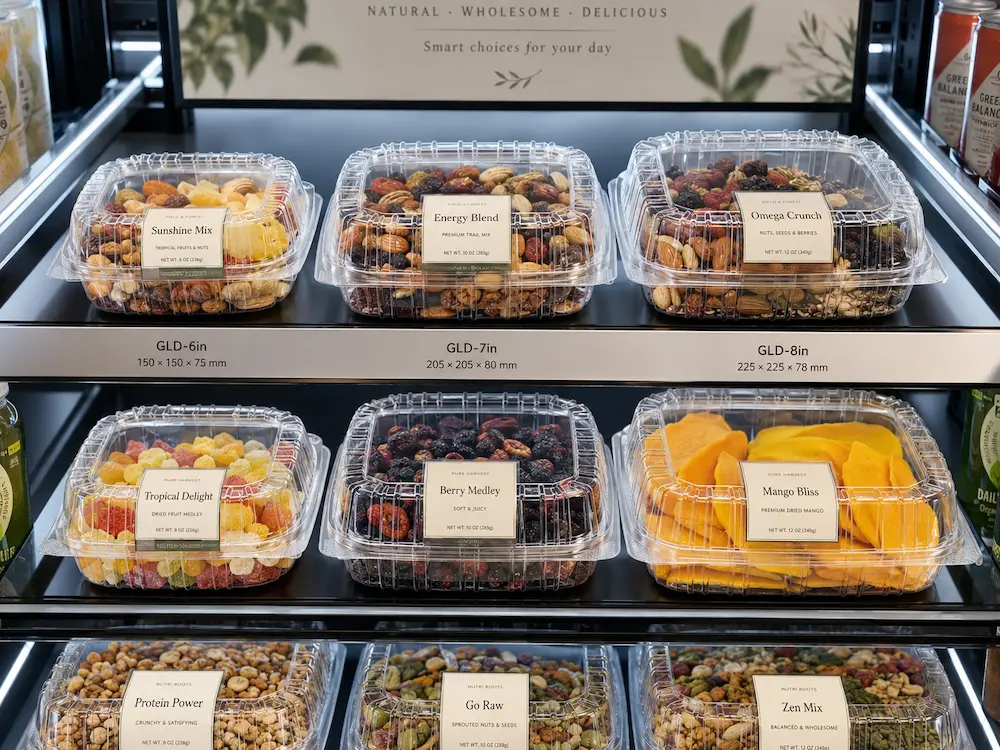
Best Nut Containers for Retail Display, Takeaway, and Chilled Food
Choosing the right nut containers is no longer just a packaging detail. For retail buyers, takeaway brands, chilled food producers, and private-label snack suppliers, the container directly affects product visibility, freshness perception, portion value, shelf efficiency, and repeat purchase confidence. Nuts are small, high-value products, and buyers judge them quickly through clarity, neat filling, closure security, and the way the pack looks beside fruit, bakery items, salads, yogurt, and other chilled grab-and-go foods.
YIHAO works as a food packaging manufacturer and packaging solution provider for buyers who need practical container structures for fresh food, snacks, bakery, deli, and chilled takeaway programs. For nut packaging, the most effective solution is not always a single “nut-only” box. In real retail use, nuts often appear as almond snack packs, cashew portions, fruit-and-nut combinations, breakfast toppings, bakery add-ons, salad kits, and chilled dessert pairings. That is why clear PET deli packaging, multi-compartment snack containers, and compact hinged containers are important options for professional buyers.
This guide explains how to choose nut containers for retail display, takeaway, and chilled food. It also compares clear deli containers, fruit deli containers, bakery deli containers, chilled food containers, and PET deli packaging from a buyer’s point of view.

Why Nut Containers Matter in Retail and Takeaway Packaging
Nuts are compact, dense, and visually premium. A small portion of almonds, cashews, pistachios, walnuts, pecans, or mixed nuts can deliver high perceived value when the packaging looks clean and well organized. Poor packaging creates the opposite effect: loose movement, cloudy walls, weak closure, oil marks, label clutter, or crushed product edges make the same food look lower in quality.
Professional nut containers solve four key problems. They make small portions look valuable, keep the pack neat during handling, support fast product recognition, and help buyers build consistent shelf presentation across multiple SKUs. For retailers, a well-designed nut pack also improves planogram discipline because the container stacks, faces, and displays predictably.
For takeaway operations, the container must perform beyond the shelf. Customers place nut packs into delivery bags, lunch bags, office refrigerators, gym bags, and snack boxes. That means the structure must feel secure, easy to open, and suitable for short-distance transport. For chilled food, the packaging must also handle condensation risk, refrigerator display, and mixed-food merchandising without making the product look tired.
Best Container Types for Nut Packaging
Clear PET Hinged Nut Containers
Clear hinged PET containers are one of the most direct choices for single-portion nuts and mixed snack packs. They combine a lid and base in one connected structure, which improves packing speed and reduces lid-matching mistakes. For retailers and foodservice operators, clear deli containers provide a familiar structure that works well across nuts, dried fruit, fresh fruit, snack mixes, and deli sides.
For almonds, cashews, roasted peanuts, trail mixes, and snack assortments, hinged containers give buyers a clean front-facing pack with strong visibility. The clear wall allows customers to see color, texture, roast level, broken pieces, and mix ratio before purchase. This matters because nut buyers often judge quality visually before reading the label.
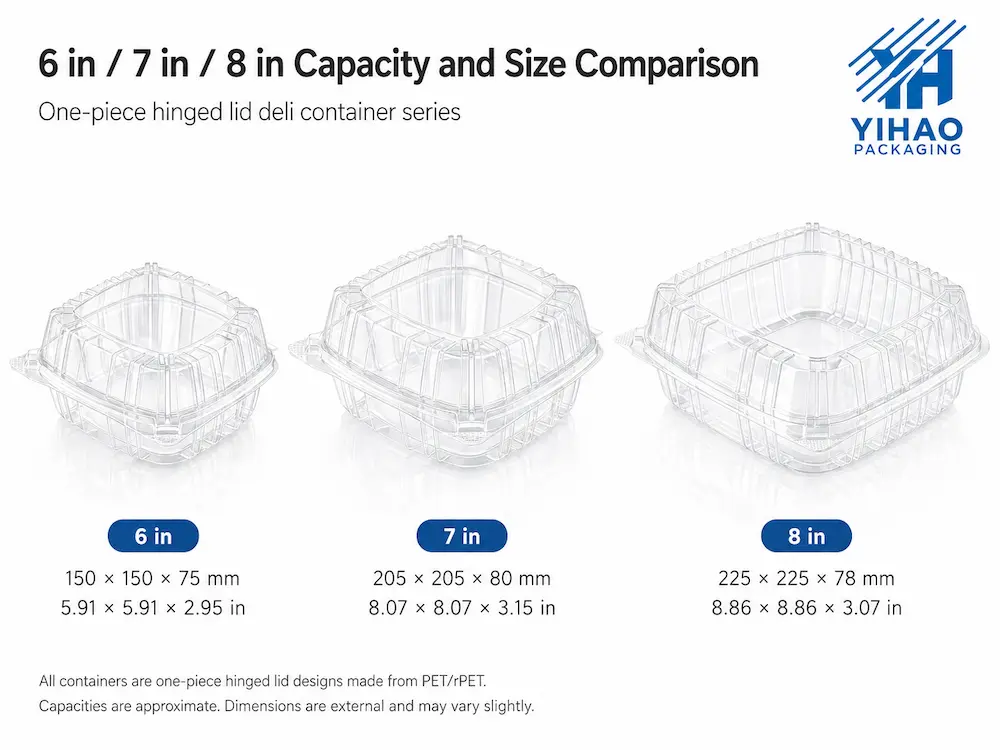
Compact hinged formats also work well for grab-and-go programs. A smaller container supports controlled portions, while larger containers suit family-size snack packs, catering add-ons, or retail promotions. For brands that want a simple packaging family, small hinged deli containers and snack packaging containers provide practical starting points.
Multi-Compartment Fruit-and-Nut Containers
Multi-compartment containers are especially valuable when nuts are sold with fruit, cheese cubes, chocolate pieces, yogurt toppings, bakery bites, or dried fruit. Separating ingredients helps protect appearance and prevents small items from mixing too early. This is important for premium snack packs because customers expect each ingredient to look intentional.
For example, cashews can sit beside grapes, almonds beside apple slices, walnuts beside berries, or pistachios beside dried cranberries. In these cases, fruit deli containers are highly relevant because they already support fresh-cut fruit, snack combinations, and chilled display. Buyers can select two-compartment, three-compartment, or four-compartment formats depending on product logic, portion balance, and retail price point.
For daily snack retail, fruit-and-nut containers support a simple mixed snack concept. For more controlled ingredient separation, two-compartment snack containers, three-compartment snack containers, and four-compartment nut containers create stronger merchandising options.
Square and Round PET Deli Containers
Square and round PET deli containers suit nut packaging when the buyer wants a clean ready-to-eat food presentation rather than a clamshell look. Square containers are efficient for shelf blocking, label placement, and stackable display. Round containers are often preferred for salads, fruit mixes, toppings, snack bowls, and chilled takeaway meals.
For nuts, square containers work well when the pack is part of a broader chilled food range. A supermarket may use similar structures for fruit, deli sides, cheese snacks, granola toppings, and mixed nuts. This improves operational simplicity because one packaging family can support several nearby categories. square PET deli containers are useful for buyers who need consistent shelf lines and neat stacking.
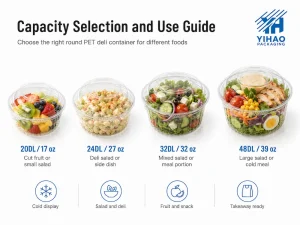
Round containers are better when the product is positioned as a snack bowl or add-on portion. For chilled food counters, salad bars, cafe fridges, and takeaway displays, round PET deli containers can connect nut packs with fruit cups, salad bowls, breakfast bowls, and ready-to-eat meals.
Bakery Deli Containers for Nut-Based Desserts
Not all nut packaging is sold in the snack aisle. Many nut products sit inside bakery and dessert programs: almond pastries, walnut brownies, pistachio cakes, pecan tarts, nut-topped cheesecakes, granola bars, energy bites, chocolate nut clusters, and premium dessert samplers. For these applications, bakery deli containers are often more appropriate than standard snack cups.
Bakery-style PET containers should protect toppings, cream height, glaze surfaces, and delicate decorations. A nut-topped dessert requires enough headroom to prevent lid contact, while a flat brownie or bar may need a lower profile to reduce movement. Clear PET bakery packaging also helps customers see layers, toppings, portion size, and freshness cues.
For chilled bakery display, clear PET food containers support a clean presentation for prepared foods and bakery items where visibility and lid fit are both important.
Key Buying Criteria for Nut Containers
Clarity and Product Visibility
For retail display, clarity is the first buying criterion. Nut products rely heavily on visual trust. Customers want to see whether almonds are whole, cashews are clean, pistachios have good color, and mixed nuts look balanced. Clear PET packaging gives the product a direct visual advantage because the food becomes the main selling point.
Clear packaging also helps buyers reduce overdesign. Instead of covering the pack with heavy graphics, the label can stay smaller and cleaner. This leaves more visible product area, which is especially important for premium nut mixes and chilled snack packs. In most retail cases, the best nut containers let the product carry the first impression while the label supports brand identity and compliance information.
Closure Security and Handling Strength
Nuts are small and mobile. If the closure is weak, the customer quickly notices rattling, loose corners, or accidental opening risk. A good container should close confidently and maintain its shape during packing, stacking, transport, and customer handling.
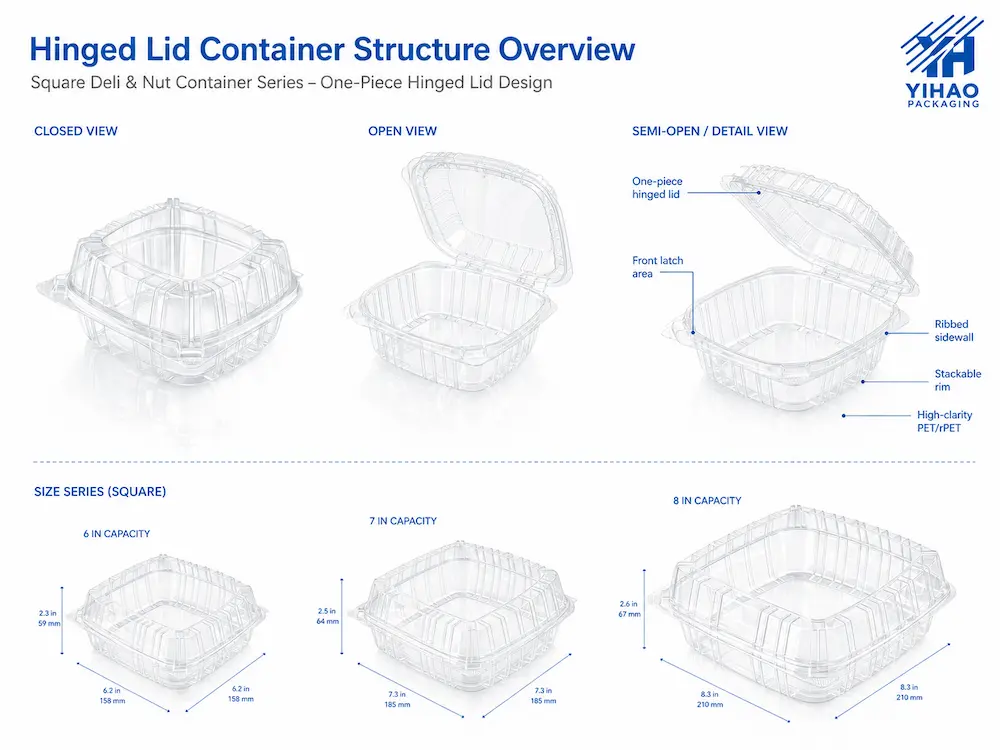
For takeaway, closure security matters even more. Nut packs often travel with drinks, sandwiches, salads, or bakery items. The container should resist casual opening inside a bag and keep the portion neat. Buyers should test lid engagement, corner strength, hinge flexibility, stacking pressure, and opening comfort before confirming a wholesale order.
Compartment Logic and Portion Control
Compartment design should match the product concept. A single-compartment pack is suitable for plain almonds, roasted cashews, mixed nuts, trail mix, and coated nuts. A two-compartment pack fits fruit-and-nut combinations or nut-and-cheese snack sets. A three- or four-compartment pack creates stronger premium value for mixed snack assortments.
Portion control is also a pricing tool. Smaller nut containers help retailers create daily snack units. Medium containers work for lunchbox add-ons and chilled food counters. Larger containers fit sharing packs, catering, or family-size displays. The correct container size should make the product look full without forcing overfilling.
Cold-Case Performance
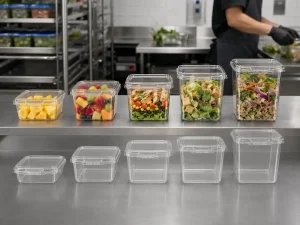
Many nut packs are not refrigerated by themselves, but they often appear inside chilled food programs. Fruit-and-nut packs, yogurt topping sets, salad toppings, bakery desserts, and ready-to-eat snack boxes are commonly placed in cold cases. For this reason, chilled food containers should maintain clarity, stack neatly, and present well under refrigerated lighting.
Condensation, fogging, and label adhesion should be reviewed during sample testing. If nuts are packed with fresh fruit or chilled foods, moisture behavior becomes more important. Buyers should test actual food combinations, not only empty samples. A container that looks excellent when empty may behave differently after several hours in a cold display case.
Material Suitability and Food Contact Readiness
PET is widely used for clear food packaging because it offers transparency, rigidity, and strong retail presentation. For food-contact use, buyers should confirm that the selected material, additives, colorants, and production process match the intended food type and market requirements. This is especially important for exporters, private-label brands, and wholesalers serving multiple regions.
When buyers evaluate PET deli packaging, they should ask for documentation appropriate to the destination market. This may include food-contact declarations, material information, migration testing where required, and production traceability. For recycled PET or RPET content, buyers should also confirm recycled-content suitability for the intended food-contact application and local regulatory requirements.
Comparison Table: Which Nut Container Type Fits Your Use Case?
| Container Type | Best Use | Retail Advantage | Buyer Consideration |
|---|---|---|---|
| Clear hinged PET container | Single-portion nuts, mixed nuts, trail mix | Simple structure, good visibility, fast packing | Check closure strength and stack height |
| Two-compartment snack container | Fruit-and-nut packs, cheese-and-nut sets | Ingredient separation and premium display | Match compartment size with actual food ratio |
| Three-compartment snack container | Cashews, almonds, fruit, dried snacks | Higher perceived value for grab-and-go retail | Test movement during delivery and handling |
| Four-compartment nut container | Premium assortments and sampler packs | Strong visual organization for multiple ingredients | Avoid overcomplicated filling operations |
| Square PET deli container | Snack packs, deli sides, chilled food lines | Efficient shelf blocking and label placement | Confirm lid fit and stacking under load |
| Round PET deli container | Snack bowls, toppings, salad add-ons | Familiar format for chilled food counters | Check portion appearance from top view |
| Bakery clamshell container | Nut desserts, pastries, brownies, cake slices | Protects toppings and improves dessert visibility | Select correct dome height or low-profile lid |
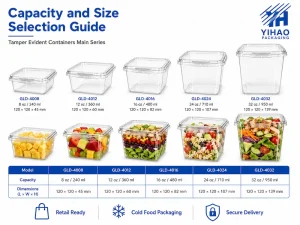
| Tamper-evident container | Higher-security retail snack packs | Improves consumer confidence for sealed foods | Balance security, opening comfort, and cost |
How Retail Buyers Should Evaluate Nut Containers Before Ordering
Test with Real Products, Not Empty Samples
Empty packaging samples are useful, but they do not show the full story. Nuts create specific handling conditions because they are dense, dry, and mobile. Roasted nuts may leave light oil marks. Coated nuts may create surface contact marks. Mixed snacks may shift during handling. Fresh fruit paired with nuts may introduce moisture.
Before placing a wholesale order, buyers should fill the sample with real almonds, cashews, walnuts, trail mix, or fruit-and-nut combinations. Then they should test shelf display, stacking, refrigerated storage, takeaway movement, and customer opening. This simple process prevents many packaging problems before production.
Check Label Space and Product Window
A nut pack needs both product visibility and label clarity. The label should show brand name, product type, ingredient information, allergen notice, net weight, storage instructions, barcode, and required local information. However, the label should not cover too much of the product window.
The most effective nut containers leave enough clear space for the food to sell itself. For premium nut blends, a front or top label often works better than a full wrap label. For chilled snack packs, the label should stay secure under cold-case conditions and avoid blocking the most visually attractive compartment.
Match Packaging Structure to Sales Channel
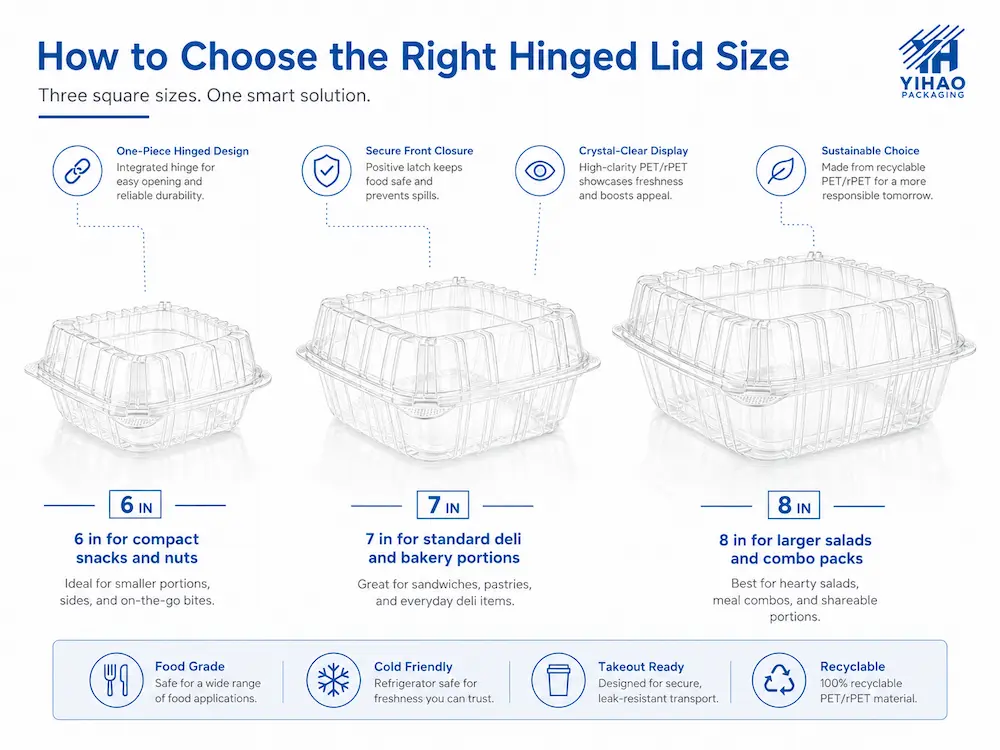
Different channels need different packaging priorities. A supermarket cold case needs strong shelf visibility, stackable handling, and barcode-friendly label space. A cafe takeaway fridge needs compact packs that fit beside sandwiches, salads, and drinks. A bakery display needs height protection and attractive presentation. A wholesale distributor needs consistent cartons, pallet efficiency, and stable supply.
This is why a buyer should not choose nut containers only by capacity. The better approach is to map the package to the sales channel first, then confirm material, shape, compartment layout, and lid structure.
Review Supplier Capability

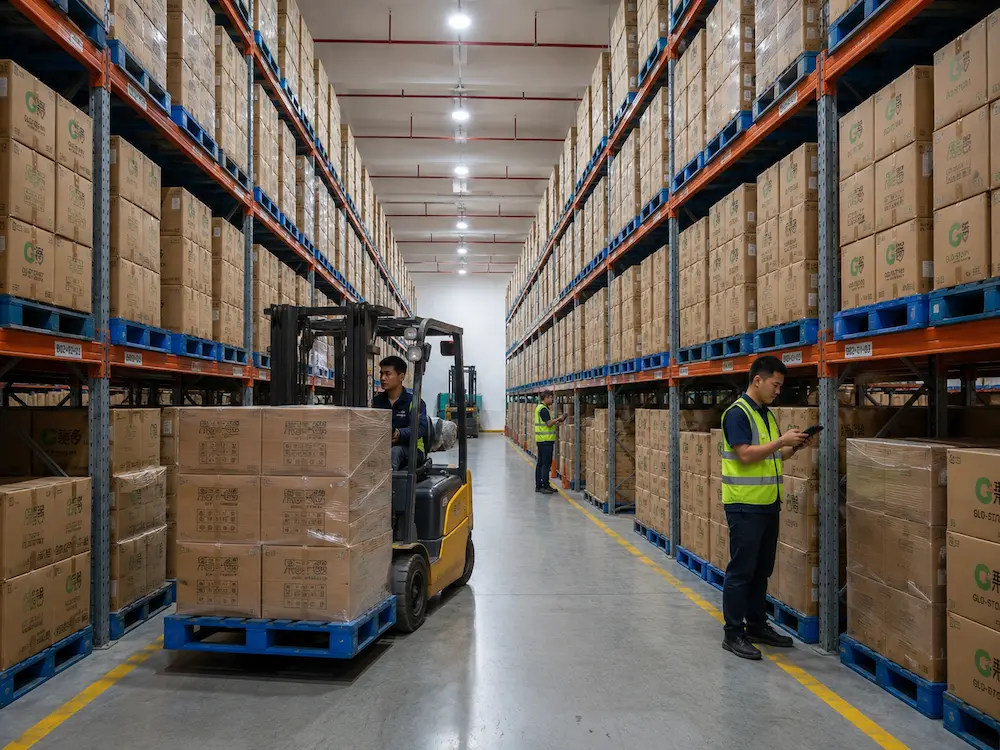
For packaging buyers, the container is only one part of the sourcing decision. A reliable manufacturer should support material selection, sample testing, size matching, production consistency, packaging cartons, and repeat order stability. For wholesale programs, buyers should also confirm communication speed, customization ability, documentation support, and quality inspection process.
A capable supplier helps buyers avoid mismatched containers, weak closures, poor stacking, and unclear specifications. This is especially important when the same packaging range will be used for nuts, fruit, bakery, chilled food, and deli applications.
Nut Containers for Different Food Applications
Retail Nut Packs
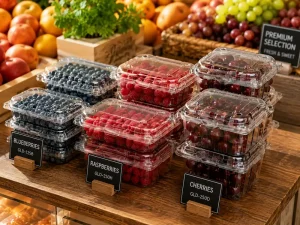
Retail nut packs need high visibility and a clean shelf-facing shape. Clear hinged PET containers work well for almonds, cashews, pistachios, walnuts, mixed nuts, and trail mixes. The pack should look full, stable, and easy to compare with nearby snack options.
For premium ranges, multi-compartment formats create stronger perceived value. A four-section layout can separate roasted almonds, cashews, dried cranberries, and chocolate pieces. A two-section layout can separate fruit from nuts in a chilled snack concept. These formats help brands create a more deliberate product story.
Takeaway and Grab-and-Go Snacks
Takeaway snack packaging should be compact, secure, and easy to open. Customers often buy nuts as an add-on with coffee, juice, salad, yogurt, or bakery items. The packaging should fit easily in a takeaway bag without opening or crushing.
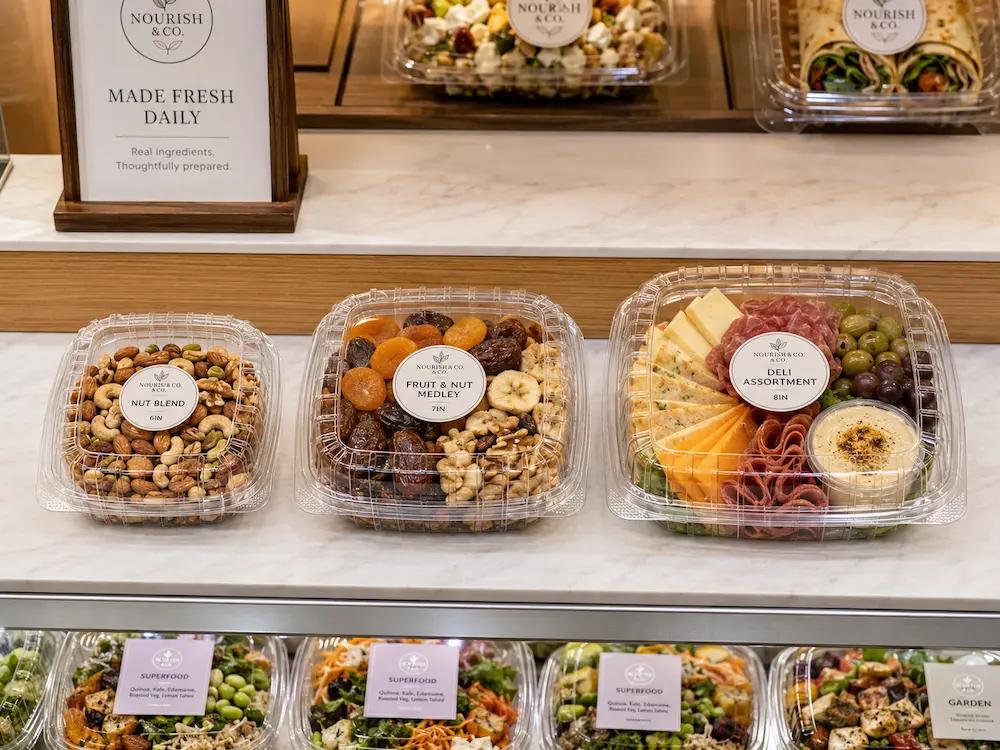
For grab-and-go concepts, clear snack containers are useful when brands want larger combinations of fruit, nuts, and chilled snack portions. For smaller daily portions, compact hinged or compartment containers are usually more efficient.
Chilled Fruit-and-Nut Programs
Fruit-and-nut packs are one of the strongest use cases for clear PET packaging. The fruit brings color and freshness cues, while the nuts add value, protein perception, and texture contrast. The packaging should keep ingredients visually separated and reduce unnecessary movement.
For chilled food, the buyer should review moisture behavior carefully. Fresh-cut fruit may release juice, while nuts need to stay visually clean. Compartment layout, lid height, and display angle all influence the final look. The best pack keeps the fruit attractive and the nut portion dry-looking, even after cold-case display.
Bakery and Dessert Add-Ons
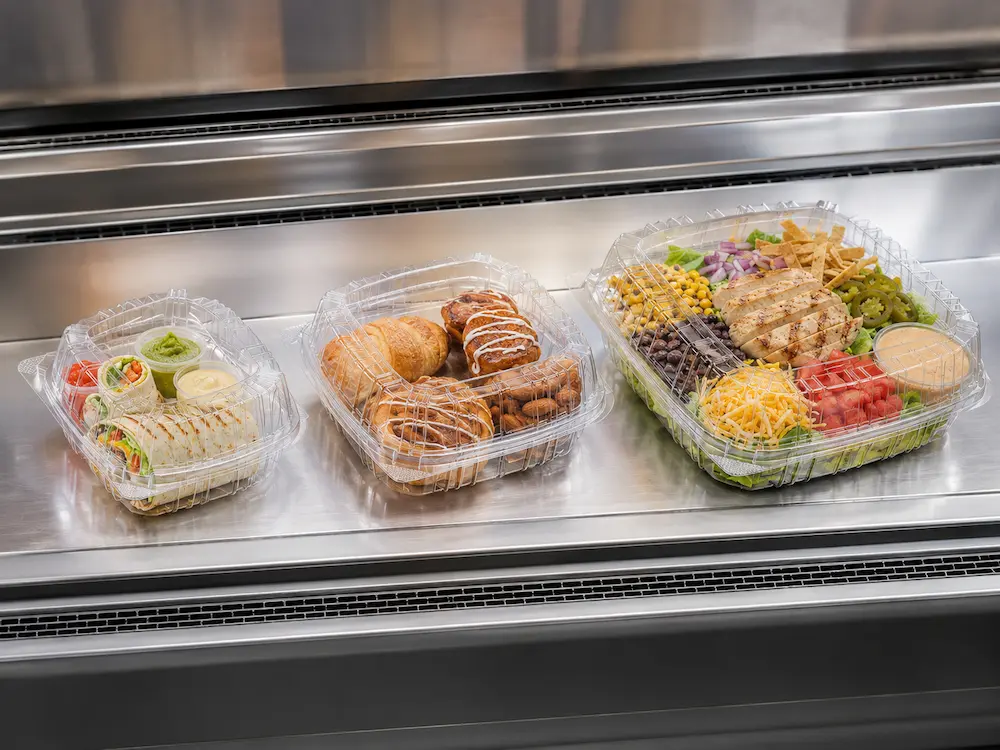
Nuts are also common in bakery and dessert packaging. Almond croissants, pecan tarts, walnut brownies, pistachio cake slices, granola bars, and nut-topped desserts need containers that protect appearance and prevent topping damage.
For these products, bakery-focused PET clamshells or separate-lid containers are often better than basic snack boxes. The container should provide enough headspace, prevent product movement, and keep the dessert visible from the top and side.
Wholesale Sourcing Checklist for Nut Containers
Before confirming a wholesale order, packaging buyers should review the following points with the supplier:
- Material: PET, RPET, or another food-contact material suitable for the target application.
- Transparency: clear enough for premium retail display.
- Closure: secure lid fit, hinge performance, and opening comfort.
- Structure: single-compartment, two-compartment, three-compartment, four-compartment, square, round, or bakery-style format.
- Food type: dry nuts, roasted nuts, coated nuts, fruit-and-nut packs, bakery products, or chilled food combinations.
- Cold-case testing: condensation, clarity, label adhesion, and stacking behavior.
- Label area: enough space for brand, barcode, allergen information, and storage instructions.
- Carton packing: stable case quantity, pallet efficiency, and transport protection.
- Customization: logo embossing, printed labels, custom mold discussion, or private-label support where appropriate.
- Documentation: food-contact compliance information for the destination market.
Wholesale buyers should also compare samples from more than one structure. The cheapest option may not be the best option if it weakens shelf presentation, increases product movement, or creates packaging complaints. A slightly better container can improve display quality and reduce operational risk.
Common Mistakes When Choosing Nut Containers
Choosing Capacity Before Product Logic
Many buyers start by asking for a specific ounce size or volume. That is understandable, but it can lead to poor fit. Nuts are dense, so the same volume may look very different depending on the nut type, roast style, and fill weight. A container that looks full with cashews may look less full with larger walnut pieces.
The better method is to define product logic first: single nut, mixed nuts, fruit-and-nut snack, bakery topping, chilled snack set, or wholesale retail pack. Then select the container shape and volume around the visual target.
Ignoring Movement Inside the Pack
Nuts move easily. If the container is too large, the product can slide, rattle, and look underfilled. If the container is too shallow, it may create pressure at the lid. Buyers should test filled samples with real handling: stacking, turning, bagging, and refrigerated display.
Overcovering the Product with Labels
For nut products, visibility is an asset. A label that covers too much of the clear area reduces the main benefit of PET packaging. Buyers should design labels to support the product, not hide it. A clean top label, corner label, or partial side label often works better for premium snack packs.
Using One Container for Every Application
A single container may not serve every nut product. Dry mixed nuts, fruit-and-nut packs, chilled snack boxes, bakery desserts, and salad topping portions have different needs. A smart packaging range may include hinged deli containers, compartment containers, square deli containers, and bakery clamshell containers, all selected from a consistent material and design logic.
Manufacturer and Supplier Considerations
When selecting a packaging partner, buyers should look beyond a product catalog. The right partner should understand retail display, takeaway handling, chilled food conditions, and wholesale supply requirements. A strong supplier helps the buyer match the container to the actual product instead of simply offering a generic box.
For nut containers, a supplier should be able to discuss filling behavior, lid fit, label placement, stacking, carton packing, and application matching. For buyers serving supermarkets, cafes, bakeries, foodservice operators, and distributors, this support can reduce trial-and-error costs.
Customization should also be approached carefully. Custom branding can improve shelf recognition, but the base container structure must remain practical. For many buyers, the best first step is to choose an existing clear PET structure, test it with real products, then add branding or customized details after the structure is proven.
Practical Selection Guide by Buyer Type
For Supermarkets
Supermarkets should prioritize clear shelf visibility, stable stacking, barcode placement, and consistent pack facing. Multi-compartment containers work well for premium fruit-and-nut packs, while hinged PET deli containers suit simple nut portions and mixed snack packs.
For Cafes and Takeaway Brands
Cafes should choose compact containers that pair naturally with drinks, sandwiches, bakery items, and chilled snack displays. Easy opening and secure closure matter because customers often eat on the move.
For Bakeries
Bakeries should use containers that protect nut toppings, dessert height, and decorated surfaces. Clear bakery clamshells and separate-lid PET containers are usually stronger choices than shallow snack boxes for nut-based desserts.
For Wholesale Distributors
Distributors should focus on versatile structures that can serve multiple customers. A practical range may include hinged deli containers, square PET containers, round deli containers, and multi-compartment snack packs. This gives sales teams more flexibility when serving food brands, retailers, and foodservice buyers.
Final Note / Practical Takeaway
FAQ
1. What are the best nut containers for retail display?
The best nut containers for retail display are clear PET containers with strong visibility, secure closure, stable stacking, and enough label space. Hinged deli containers, square PET containers, and multi-compartment snack containers are all practical choices depending on the product format.
2. Are clear deli containers suitable for nuts?
Yes. Clear deli containers are suitable for almonds, cashews, mixed nuts, trail mixes, dried fruit combinations, and snack portions. They allow customers to see product quality before purchase and help retailers create clean grab-and-go displays.
3. Which packaging works best for fruit-and-nut snack packs?
Multi-compartment PET snack containers work best for fruit-and-nut snack packs because they separate ingredients and improve visual organization. Two-compartment, three-compartment, and four-compartment formats help buyers build different price points and product combinations.
4. Can nut containers be used for chilled food displays?
Yes. Nut containers can be used in chilled food displays when the selected structure performs well under refrigeration, maintains clarity, and supports the intended food combination. Buyers should test real filled samples for condensation, label adhesion, and product movement.
5. What should wholesale buyers check before ordering PET deli packaging?
Wholesale buyers should check material suitability, food-contact documentation, lid fit, stacking strength, clarity, compartment layout, label area, carton packing, and sample performance with real products. These checks help reduce sourcing risk before bulk production.
References
- U.S. Food and Drug Administration, Packaging & Food Contact Substances guidance.
- Electronic Code of Federal Regulations, 21 CFR 177.1630, Polyethylene phthalate polymers.
- European Commission, Food Contact Materials legislation and plastic materials framework.
- Commission Regulation (EU) No 10/2011 on plastic materials and articles intended to come into contact with food.
- FoodSafety.gov, FoodKeeper App food storage guidance.
- U.S. Department of Agriculture, FoodKeeper food storage education materials.
- WRAP, Defining what is recyclable and best-in-class polymer choices for packaging.
- RECOUP and UK Plastics Pact, Design Tips for Recycling guidance for plastic packaging.
Deep-Dive Insights
How should buyers choose between single-compartment and multi-compartment nut containers?
Single-compartment containers are the better choice for plain nuts, mixed nuts, and simple snack portions. Multi-compartment containers are stronger for fruit-and-nut sets, cheese-and-nut packs, chilled snack boxes, and premium assortments where ingredient separation increases perceived value.
Why does clear PET packaging work well for nut products?
Clear PET packaging allows customers to evaluate color, texture, mix ratio, and product cleanliness before purchase. This is especially important for premium nuts and chilled snack packs because visual trust strongly influences buying decisions.
What should buyers consider for chilled nut packaging?
Buyers should review condensation behavior, label adhesion, stacking stability, ingredient separation, and product movement after refrigeration. Real filled sample testing is more reliable than judging empty containers alone.
What sourcing option is best for wholesale nut packaging programs?
A flexible PET deli packaging range is usually the strongest sourcing option. It allows buyers to combine hinged containers, square containers, round containers, and compartment snack packs while keeping material appearance and retail presentation consistent.
Which packaging decision improves both SEO product positioning and real buyer conversion?
The best decision is to connect the container type with the exact application: retail nut packs, takeaway snacks, fruit-and-nut combinations, chilled food displays, and bakery desserts. This helps search engines understand the page while helping buyers quickly identify the right packaging solution.
© YIHAO Packaging. All rights reserved. All articles, product images, packaging designs, technical specifications, and website materials are protected by copyright. Unauthorized copying, reproduction, redistribution, modification, or commercial use is strictly prohibited without prior written permission.