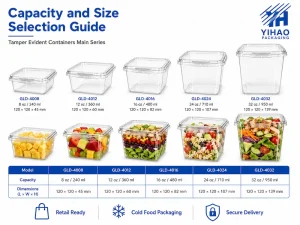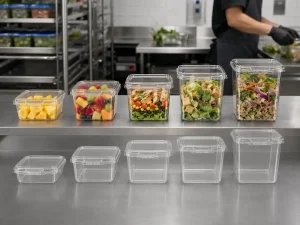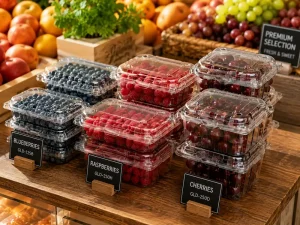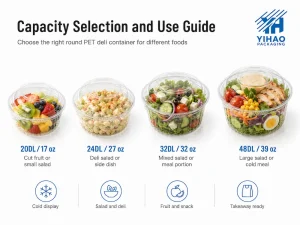

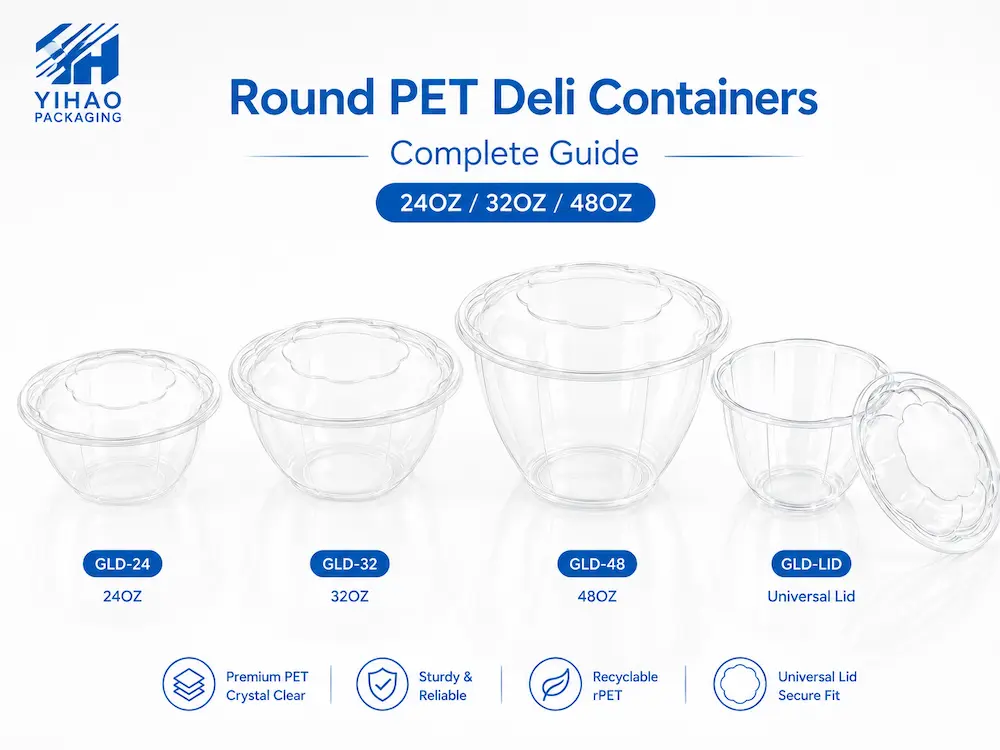
YIHAO is a food packaging manufacturer and solution provider focused on clear PET, rPET, hinged, round, square, fresh produce, bakery, and deli packaging for retail and foodservice markets. For salad brands, fresh-cut fruit suppliers, supermarket buyers, cafés, distributors, and importers, round PET deli containers are one of the most practical packaging choices when food visibility, chilled shelf display, and ready-to-eat convenience need to work together.
The value of round PET deli containers is not limited to holding food. A good round container helps food look fresh, organized, portable, and easy to serve. The round shape creates a bowl-like eating experience, while clear PET material allows consumers to see salads, fruit, grains, pasta, snacks, toppings, and chilled deli items before purchase. For B2B buyers, this makes the container both a functional packaging item and a retail presentation tool.
This guide explains how to choose round deli containers, round salad containers, clear round food containers, PET round bowls, and related deli food packaging for commercial use. It also covers wholesale buying logic, lid selection, PET versus rPET considerations, responsible sustainability claims, supplier evaluation, and sample testing before bulk orders.
What Are Round PET Deli Containers?
Round PET deli containers are transparent food containers made from PET or rPET material and shaped in a round bowl-style format. They are commonly used for chilled and ready-to-eat food packaging, including salads, fruit mixes, deli sides, cold noodles, pasta salads, grain bowls, snacks, desserts, and prepared food portions.
The word “deli” has become broader in modern food packaging. It no longer refers only to traditional delicatessen items. In retail and foodservice packaging, deli food packaging often includes cold prepared foods, chilled ready meals, grab-and-go snacks, supermarket salad programs, and fresh food displayed in refrigerated cases.
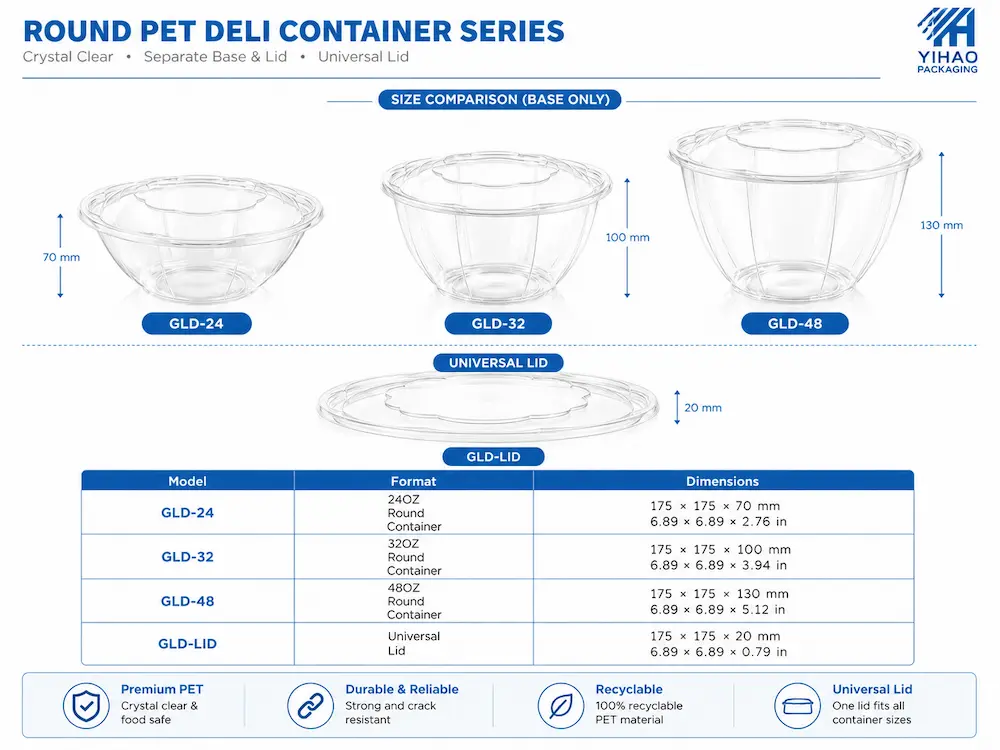
Most round PET deli containers include a clear bowl base and a matching lid. Depending on the food type, the lid may be flat, dome-shaped, separate, or hinged. Some systems are designed for compact stacking and efficient cold-case display, while others are designed for higher topping clearance or more premium salad presentation.
For professional buyers, the best container is not simply the one with the lowest price or the clearest appearance when empty. The right choice should perform well after the container is filled, closed, chilled, stacked, labeled, transported, displayed, opened, and used by the final consumer.
Why PET Is Commonly Used for Clear Round Food Containers
PET is widely used for clear chilled food packaging because it offers high transparency, lightweight handling, good rigidity, and strong product visibility. For foods sold through refrigerated display, the package must protect the food and help sell it at the same time. This is why many retail food programs choose clear round food containers for salads, fruit, snacks, and chilled deli items.
Food visibility is especially important for fresh and colorful products. Leafy greens, fruit cubes, berries, pasta, cold noodles, grain bowls, toppings, nuts, and sauces all depend on appearance. Clear PET packaging lets consumers evaluate color, portion, freshness, and ingredient quality before purchase. This visual confidence directly supports conversion in supermarket, convenience store, café, and takeaway environments.
PET also gives buyers a practical balance between clarity and structure. It is lighter than many rigid reusable materials, clearer than many opaque packaging alternatives, and suitable for many cold food display applications. However, PET should not be treated as a universal solution for every food. Buyers should confirm food type, temperature conditions, filling process, lid fit, storage method, and local regulatory requirements before final approval.
PET vs rPET: What Buyers Should Understand
Many buyers now compare PET and rPET when sourcing round PET deli containers. PET refers to polyethylene terephthalate. rPET refers to recycled PET content. For food packaging buyers, the key question is not only whether rPET is available, but whether the material is suitable for the intended food contact application, target market, and brand claim.
rPET can support recycled-content packaging goals when it is produced through suitable processes and used in appropriate applications. For food contact packaging, buyers should verify whether the material and supply route meet the relevant market requirements. In the United States, food contact substances and food packaging materials are regulated through FDA food contact frameworks. In the European Union, recycled plastic materials for food contact are evaluated through EU and EFSA-related processes. Buyers should confirm compliance requirements based on their destination market.
For marketing, recyclability claims should be handled carefully. A package should not be described as recyclable everywhere unless the claim is supported by real collection, sorting, and recycling conditions in the target market. A safer and more accurate expression is that PET packaging may be recyclable where local PET collection and recycling systems accept it.
| Material Direction | Main Advantage | Buyer Checkpoint | Best Use Case |
|---|---|---|---|
| PET | High clarity, rigid structure, lightweight handling | Confirm food contact suitability and application temperature | Clear chilled food display and standard retail packaging |
| rPET | Supports recycled-content packaging goals | Verify food contact suitability and market-specific requirements | Brands seeking recycled-material packaging direction |
| PET/rPET blended direction | Balances clarity, sourcing flexibility, and recycled-content positioning | Confirm actual material structure with supplier | Wholesale programs with different market requirements |
Why the Round Shape Matters in Deli Food Packaging
The shape of the container changes how food is perceived. A rectangular container may look efficient, but a round container often feels closer to a serving bowl. For salads, fruit bowls, grain bowls, cold pasta, chilled noodles, and prepared deli sides, this bowl-like shape supports a more natural ready-to-eat experience.
Round containers also improve visual balance. Ingredients can be arranged evenly, toppings can sit naturally on the surface, and colorful food combinations can be seen from the top and side. This is why round salad containers and PET round bowls are often used for foods that rely heavily on appearance.
The round structure also supports portion perception. A well-filled bowl can look generous and premium without needing excessive packaging. For retail buyers, this matters because food presentation affects how customers judge value. A container that makes food look fresh, full, and easy to eat can support higher purchase confidence.
Main Applications of Round PET Deli Containers
Round PET deli containers are best suited for chilled food products that need visibility, portability, and direct eating convenience. The strongest applications include salad bowls, fruit mixes, cold noodles, deli sides, snacks, grain bowls, and chilled takeaway meals.
| Application | Recommended Packaging Logic | Buyer Focus |
|---|---|---|
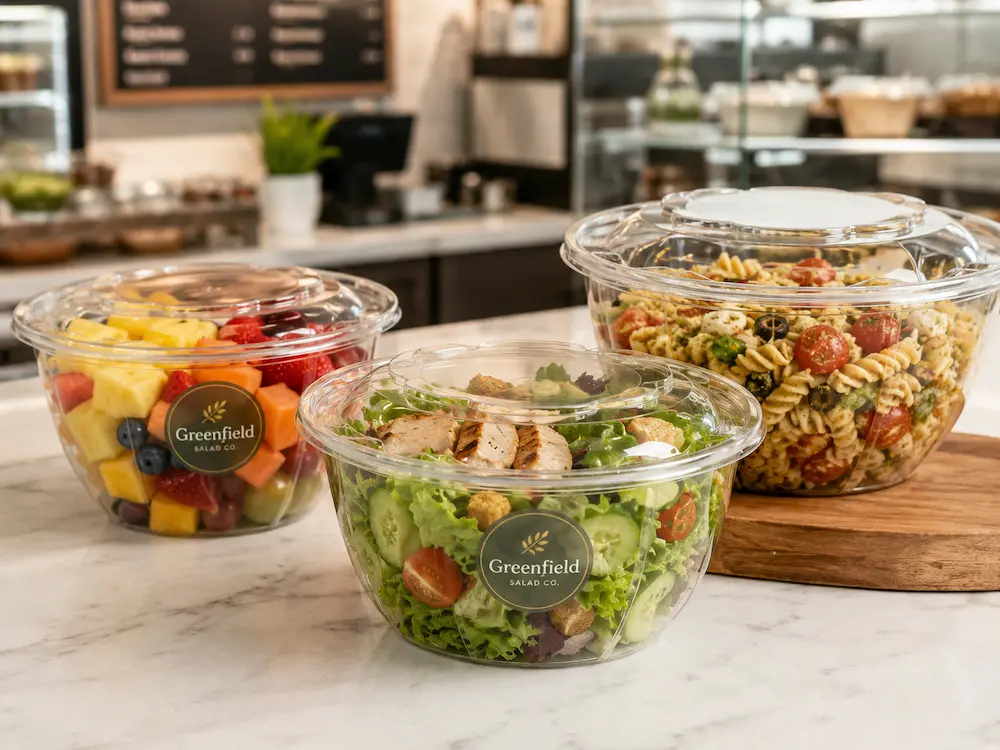
| Fresh salads | Clear round bowl with secure lid and enough room for toppings | Visibility, portion value, lid fit, cold-case display |
| Fresh-cut fruit | Transparent container that shows color, freshness, and portion value | Clarity, condensation control, stacking, label area |
| Cold noodles and pasta | Round bowl format for ready-to-eat meal presentation | Closure security, sauce control, eating convenience |
| Deli sides | Clear container for pasta salad, beans, grains, side dishes, and chilled prepared food | Food visibility, lid strength, transport handling |
| Snacks and nuts | Small or medium clear round pack for controlled portions | Portion control, shelf neatness, barcode placement |
Round Salad Containers for Grab-and-Go Meals
Salad is one of the strongest applications for round PET deli containers. A PET salad bowl gives leafy greens, proteins, grains, vegetables, fruit, nuts, and toppings a clean bowl-style presentation. This structure works well for supermarket salad programs, café takeaway meals, convenience store chilled cases, and premium grab-and-go food lines.
When selecting round salad containers, buyers should evaluate how the salad looks after filling and closing. A shallow container may crush leafy greens. An overly deep container may make a lighter salad look underfilled. The correct container should match ingredient height, portion expectation, topping style, dressing placement, and lid clearance.
Clear Round Food Containers for Fresh-Cut Fruit and Snacks
Fresh-cut fruit depends strongly on color and freshness perception. Melon, grapes, berries, mango, pineapple, citrus, apple slices, and mixed fruit bowls need packaging that shows the product clearly. Round PET deli containers are useful for fruit mixes because they create a casual, ready-to-eat format that feels more like a bowl than a storage pack.
For fruit counters and chilled retail displays, buyers may also compare fresh-cut fruit containers when the application requires compartment formats, snack combinations, or family-size retail packs. Round PET deli containers are more suitable when the goal is bowl-style presentation and direct eating convenience.
PET Round Bowls for Deli, Pasta, and Cold Prepared Food
Cold prepared foods need packaging that protects the product while allowing the customer to see what is inside. PET round bowls are suitable for cold pasta, noodles, rice bowls, grain bowls, beans, side dishes, deli salads, and prepared meal components.
For these applications, buyers should pay attention to moisture, sauce, and lid security. Foods with dressing, syrup, oil, or liquid content need stronger testing than dry snacks. A professional buyer should test the package with real filled food, not only an empty sample.
Round Catering Trays for Party and Sharing Formats
Some round PET packaging is designed for sharing rather than single portions. A round catering tray can organize fruit, sushi, snacks, desserts, appetizers, and chilled party assortments in separated sections while keeping the product visible.
This format is useful for supermarkets, catering suppliers, office meal programs, party platters, and ready-to-serve retail packs. The most important buying points include compartment layout, lid height, display clarity, stacking stability, and whether the food needs a flat or dome-style cover.
How to Choose the Right Round PET Deli Containers
Choosing the right round PET deli containers requires a clear application-first process. Buyers should start with the food product, then evaluate serving size, filling height, lid structure, material direction, label placement, cold storage, transport method, and supplier support.

1. Match the Container to the Food Type
Different foods need different container structures. Leafy salads require enough height to avoid compression. Fruit mixes require clear visibility and moisture control. Deli sides require secure closure and reliable handling. Snacks require compact portion control. Large chilled meals require both stable stacking and strong presentation.
For salad-focused product lines, salad bowl packaging should be evaluated by the finished food presentation after filling, closing, refrigeration, delivery, and shelf display. Empty packaging may look perfect, but real food testing shows whether the container actually works.
2. Choose the Right Lid Structure
The lid determines closure feel, stacking, topping clearance, labeling space, and consumer experience. Common options include flat lids, dome lids, separate lids, and hinged lids. Flat lids support efficient stacking and top labels. Dome lids create more space for toppings, fruit height, and premium salad presentation. Hinged lids simplify handling because the lid and base remain connected.
| Lid Type | Best For | Main Advantage | Buyer Checkpoint |
|---|---|---|---|
| Flat lid | Stacked chilled display, simple salads, snacks, fruit bowls | Efficient stacking and label placement | Check lid fit, label space, and stacking stability |
| Dome lid | Topped salads, fruit height, premium presentation | Extra internal clearance | Check clearance, carton space, and shelf height |
| Separate lid | Flexible food lines and controlled packing | Clean bowl presentation | Confirm lid matching and inventory control |
| Hinged lid | Grab-and-go salads and fast packing | One-piece convenience | Check hinge strength and opening experience |
For bowl systems that require matching covers, buyers should review round bowl lids during the selection process. A bowl without the correct lid can create closure problems, poor stacking, or an unsatisfactory consumer experience.
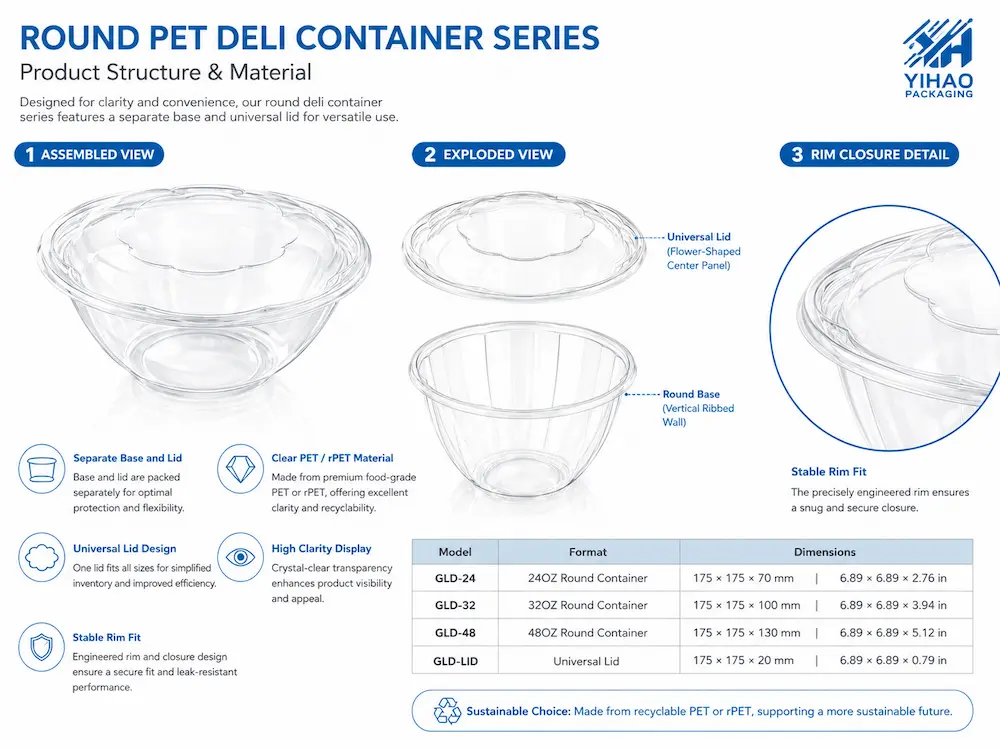
When the product needs extra space for toppings, fruit pieces, cream, or layered ingredients, a dome lid may support a better finished presentation. Buyers should test lid clearance, lid fit, closing pressure, shelf height, and label placement before confirming a bulk order.
3. Review Transparency and Cold-Case Performance
Clear visibility is one of the main reasons buyers choose PET. However, clarity should be tested in the actual selling environment. Refrigerated display, moisture-rich food, temperature changes, and handling conditions may affect how the finished pack looks on shelf.
For chilled salads, fruit, and deli foods, buyers should test the container in cold-case conditions. Condensation, fogging, label adhesion, lid fit, and sidewall clarity should be reviewed after the product has been stored and displayed under realistic conditions. The purpose of clear PET packaging is not only transparency when empty; it is reliable product visibility when filled and sold.
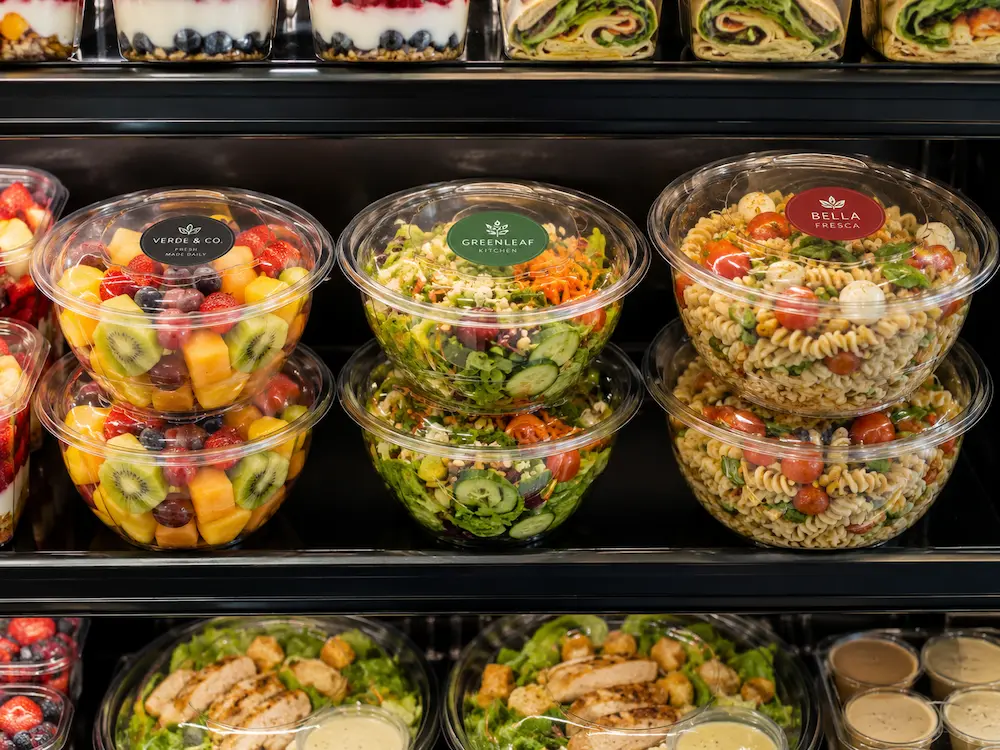
4. Check Stacking, Carton Packing, and Shelf Display
Stacking matters in production, transportation, storage, and retail display. A round container should stack without damaging lids, crushing food, or creating unstable shelf arrangements. For wholesale buyers, poor stacking increases carton inefficiency, shelf labor, and handling risk.
Buyers should test stacked containers after filling because real food weight changes performance. They should also review carton packing, pallet loading, warehouse handling, and how the containers look in a retail refrigerated case. Good stacking performance supports both logistics and merchandising.
5. Confirm Labeling Space and Brand Presentation
Food packaging must support product labels, ingredient information, nutrition panels, barcodes, price stickers, date codes, and brand messages. Round containers can be labeled on the lid, sidewall, or sleeve area depending on the design. Buyers should confirm label position before final approval.
A label should not block too much product visibility. The main advantage of clear PET packaging is that the food can be seen. Good branding supports the food presentation instead of hiding it. For private-label and custom programs, the best design usually balances clear display, readable label information, and clean brand identity.
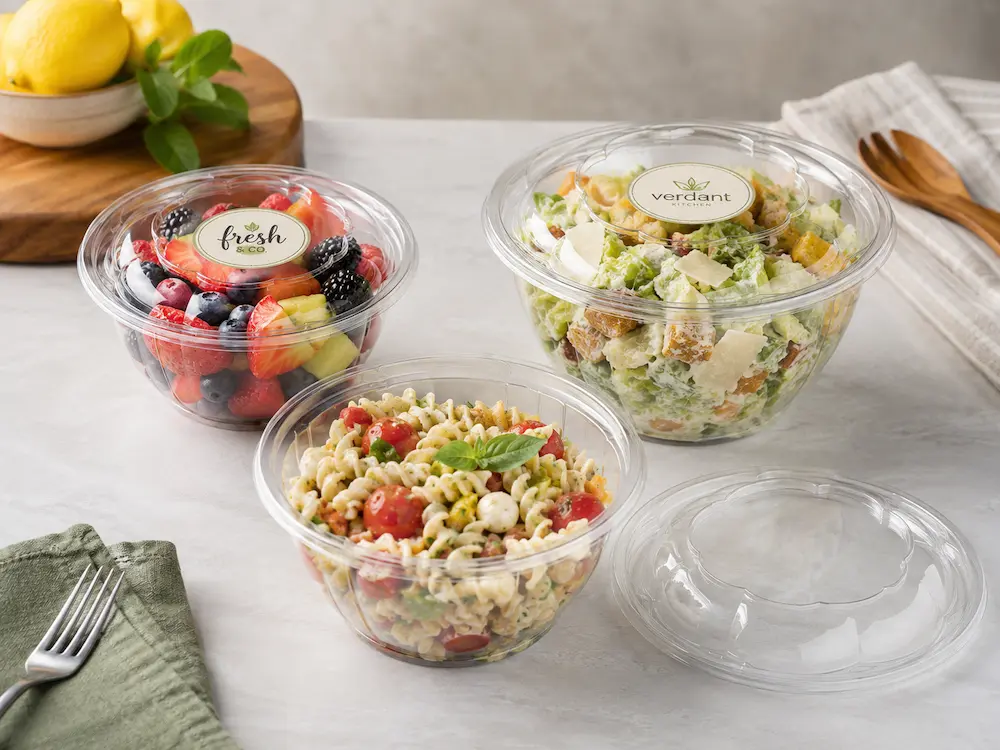
Round PET Deli Containers vs Other Packaging Formats
Round PET deli containers are not the only choice for chilled food packaging. Buyers often compare them with hinged deli containers, square PET containers, tamper evident containers, and microwave-safe containers. The best format depends on the food type, sales channel, display method, and consumer use case.
| Packaging Type | Best Use | Main Advantage | Buying Caution |
|---|---|---|---|
| Round PET deli containers | Salads, fruit, chilled noodles, grain bowls, deli sides | Bowl-like presentation and strong visibility | Confirm lid fit, stacking, and label position |
| PET hinged deli containers | Grab-and-go food, sandwiches, snacks, simple deli items | One-piece convenience and fast packing | Hinge structure may reduce bowl-style presentation |
| Square PET containers | Shelf-efficient chilled meals, fruit, snacks, deli sides | Efficient layout and carton packing | Less natural for direct bowl-style eating |
| Tamper evident containers | Retail food needing visible security | Stronger sealed-pack trust signal | Confirm if tamper evidence is required by the channel |
| Microwave-safe containers | Hot meals, reheatable prepared foods, takeaway meals | Better fit for reheating applications | PET is generally selected for cold display, not hot reheating |
If the buyer needs simple one-piece packaging, PET hinged deli containers may be the better direction. If the buyer needs efficient shelf geometry and carton space, square PET containers may be more suitable. If the sales channel requires a visible sealed security feature, tamper evident containers should be considered. For hot or reheatable foods, microwave safe containers should be evaluated instead of standard clear PET deli packaging.
Wholesale Buying Guide for Round PET Deli Containers
For buyers sourcing wholesale round containers, packaging selection should be based on repeatable performance. A sample that looks good in one photo is not enough. The packaging must work across filling, sealing, chilling, shipping, warehousing, display, opening, and consumption.
Key Questions Before Ordering
| Question | Why It Matters | What to Test |
|---|---|---|
| What food will be packed? | Salads, fruit, pasta, snacks, and deli sides need different depth and lid clearance | Test with real filled food, not only empty containers |
| Will the product be refrigerated? | Cold display may affect clarity, condensation, labels, and lid performance | Review finished samples in cold-case conditions |
| Which lid structure is required? | Flat, dome, separate, and hinged lids create different user experiences | Check opening feel, closure sound, stacking, and transport handling |
| How will labels be applied? | Labels must support information requirements without blocking product visibility | Test barcode scanning, top labels, side labels, and sleeve placement |
| Is PET or rPET preferred? | Material choice affects sourcing, claims, cost, and market positioning | Confirm food contact suitability and local market requirements |
| Is custom branding needed? | Branding affects labels, sleeves, printing, cartons, and retail identity | Review artwork area, logo placement, and visibility balance |
How to Compare a Round Container Supplier
A reliable round container supplier should help buyers match the container to the application instead of only listing product sizes. The supplier should understand food type, chilled display, lid fit, sample testing, carton packing, material selection, and repeat-order consistency.
Working with a food packaging manufacturer gives buyers stronger communication control over production planning, customization, sampling, and quality review. This matters for importers, distributors, retail food brands, and supermarket programs that need stable packaging supply over multiple orders.
When comparing suppliers, buyers should ask for physical samples, check material options, test filled containers, review lid matching, confirm packaging dimensions, discuss carton packing, and evaluate how quickly the supplier can answer technical questions. A supplier that understands application details usually reduces purchasing risk more effectively than a supplier that only competes on price.

When to Request Samples Before Bulk Orders
Sample testing is essential for professional packaging procurement. Buyers should fill the container with real food, close the lid, stack the pack, refrigerate it, handle it, transport it, label it, and review its appearance after a realistic holding period.
For buyers sourcing wholesale round containers, testing should cover every major food application planned for the same packaging system. A container that works well for dry snacks may not perform the same way for juicy fruit, dressed salads, or cold pasta. Real product testing helps prevent closure problems, poor shelf appearance, condensation issues, label failures, and customer complaints.
Supplier Audit Checklist for Wholesale Round Containers
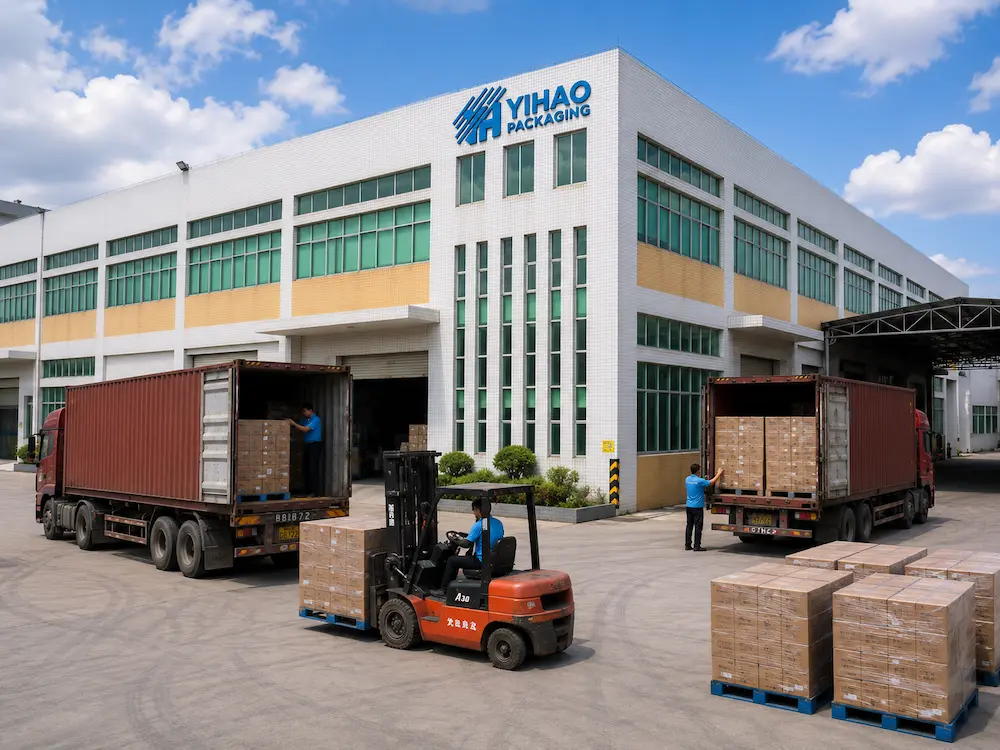
Before placing a bulk order, buyers should review supplier capability from a practical sourcing perspective. The goal is not to collect generic promises, but to confirm whether the supplier can support real commercial packaging needs.
| Audit Item | What to Ask | Why It Matters |
|---|---|---|
| Product range | Can the supplier support multiple round container formats? | A broader range helps buyers build a complete packaging program |
| Lid matching | Which lids fit each bowl or container system? | Lid mismatch creates closure and stacking problems |
| Material options | Is PET, rPET, or PET/rPET direction available? | Material choice affects branding, claims, and market requirements |
| Sample support | Can samples be provided for real food testing? | Samples reduce risk before bulk purchasing |
| Customization | Can the supplier support labels, sleeves, custom branding, or carton marks? | Customization supports retail identity and buyer-specific requirements |
| Quality control | How are clarity, fit, stacking, and consistency checked? | Stable quality supports repeat orders and fewer complaints |
How Round PET Deli Containers Improve Retail Presentation
Retail packaging must work visually before the customer touches it. Clear PET material supports product visibility, while the round structure helps food look ready to eat. This combination is especially valuable for salads, fruit bowls, cold noodles, grain bowls, and premium deli sides.
The best retail presentation comes from matching the container to the food arrangement. A layered salad should show color contrast. A fruit mix should show freshness and variety. A pasta salad should look full but not compressed. A snack bowl should look neat and controlled. A premium deli item should look clean, safe, and easy to carry.
For chilled displays, containers should face forward easily, stack without sliding, and leave enough space for label information. These details affect both visual merchandising and store operations. A well-selected package helps staff organize shelves faster and helps consumers understand the food at a glance.
Common Mistakes When Buying Round Deli Containers
Many packaging problems come from choosing the container too quickly. Buyers often focus on empty appearance, unit price, or catalog capacity without testing real food performance. The following mistakes should be avoided.
| Mistake | Result | Better Approach |
|---|---|---|
| Choosing by capacity only | Food may look underfilled or compressed | Test with real food and final serving style |
| Ignoring lid structure | Poor closure, weak stacking, or poor user experience | Test lid fit, opening feel, and transport handling |
| Using too much label coverage | Clear packaging loses visual value | Keep branding visible but leave food clearly displayed |
| Skipping cold-case testing | Condensation or poor display visibility may appear later | Test the package under real refrigerated conditions |
| Selecting supplier by price only | Inconsistent fit, weak support, or repeat-order problems | Evaluate samples, communication, quality control, and supplier capability |
Customization Options for Food Brands
Round PET deli containers can support different branding strategies depending on the buyer’s sales channel. A supermarket private-label program may need barcode labels and ingredient panels. A salad brand may prefer a clean top label and side band. A distributor may prefer neutral packaging with carton labels. A café chain may want branded stickers or sleeve-style presentation.
Common customization directions include printed labels, branded sleeves, private-label stickers, carton marks, material selection, and packaging system planning. For direct printing or structural customization, buyers should discuss artwork, production feasibility, order planning, and sample approval with the supplier in advance.
Customization should not reduce food visibility too much. The main value of clear PET packaging is that the product can be seen. Good branding supports the food; it does not hide it.
Best-Fit Product Directions for Different Buyers
Different buyers need different packaging directions. A salad brand may prioritize premium bowl presentation. A fruit processor may focus on clarity and cold-case appearance. A supermarket buyer may need consistent shelf display and label compatibility. A distributor may need a practical product range that covers several applications.
| Buyer Type | Best Packaging Direction | Recommended Focus |
|---|---|---|
| Salad brands | Round PET bowls with matching lids | Presentation, topping clearance, cold display |
| Fresh-cut fruit processors | Clear round containers or fruit-specific packaging | Clarity, moisture behavior, anti-fog needs |
| Supermarkets | Retail-ready packaging with stable stacking | Shelf display, barcode area, private-label compatibility |
| Foodservice distributors | Versatile wholesale round containers | SKU coverage, carton packing, repeat supply |
| Cafés and takeaway chains | Bowl-style packaging for ready-to-eat meals | Consumer convenience, clean branding, lid security |
For grab-and-go salad programs, a hinged salad bowl can simplify packing and consumer handling. For chilled foods that require a separate lid system, a PET/RPET clear food container may provide a clean and flexible option for food brands, retail suppliers, and distributors.
Practical Selection Framework for Buyers
A professional buyer should choose round PET deli containers through a structured process rather than a quick visual comparison. The following framework keeps the decision connected to food performance, retail display, and sourcing risk.
| Step | Decision Point | Recommended Action |
|---|---|---|
| 1 | Define food type | List salad, fruit, deli side, cold noodle, snack, or mixed-use application |
| 2 | Confirm serving style | Decide whether the product is single-serve, sharing-size, meal-size, or sample-size |
| 3 | Select lid type | Compare flat, dome, separate, and hinged lid needs |
| 4 | Test filled samples | Evaluate real food appearance, closure, stacking, and cold-case performance |
| 5 | Review supplier support | Check communication, product range, sample support, customization, and quality control |
FAQ About Round PET Deli Containers
1. What are round PET deli containers used for?
Round PET deli containers are used for salads, fruit mixes, chilled noodles, pasta salads, deli sides, snacks, grain bowls, and ready-to-eat cold food packaging. They are especially useful when food visibility, bowl-style presentation, and convenient takeaway handling are important.
2. Are round PET deli containers suitable for salads?
Yes. Round PET deli containers are highly suitable for salads because the round bowl shape presents leafy greens, toppings, grains, proteins, and sauces in a natural ready-to-eat format. Buyers should choose the right depth and lid style based on salad type, topping height, and cold display requirements.
3. What is the difference between round PET deli containers and PET hinged deli containers?
Round PET deli containers focus on bowl-style presentation, while PET hinged deli containers focus on one-piece convenience. Round containers are often preferred for salads, fruit bowls, and premium chilled meals, while hinged deli containers are useful for fast packing and grab-and-go food programs.
4. How should wholesale buyers choose round deli containers?
Wholesale buyers should evaluate food type, serving size, lid fit, cold display performance, stacking stability, label area, material preference, sample testing, and supplier capability. The best choice should be tested with real food before bulk ordering.
5. Can round PET deli containers be customized for food brands?
Yes. Round PET deli containers can support branding through labels, sleeves, carton marks, material choices, and packaging system planning. Buyers should keep the food visible and place branding in a way that supports product presentation instead of covering it.
References
- U.S. Food and Drug Administration, Packaging & Food Contact Substances guidance and food contact material information.
- U.S. Food and Drug Administration, Understanding How FDA Regulates Substances that Come into Contact with Food.
- European Food Safety Authority, Recycled Plastic Materials and updated guidance for mechanical PET recycling process evaluation.
- European Food Safety Authority, Scientific Guidance on the criteria for evaluating post-consumer mechanical PET recycling processes for food contact materials.
- Association of Plastic Recyclers, APR Design Guide for Plastics Recyclability.
- Association of Plastic Recyclers, PET Rigid Packaging Design Guidance.
- Federal Trade Commission, Green Guides for environmental marketing claims.
- U.S. Electronic Code of Federal Regulations, 16 CFR Part 260, Guides for the Use of Environmental Marketing Claims.
Deep-Dive Insight
Final Note / Practical Takeaway
© YIHAO Packaging. All rights reserved.
Food packaging solutions for global wholesale buyers, supermarkets, cafes, bakeries, and foodservice brands.