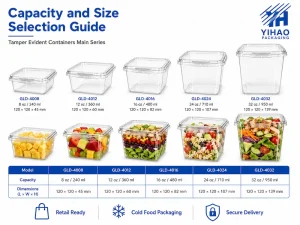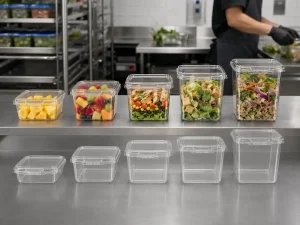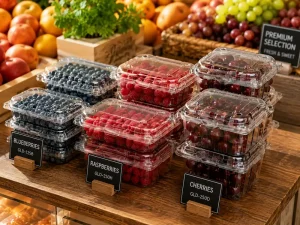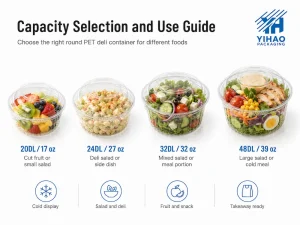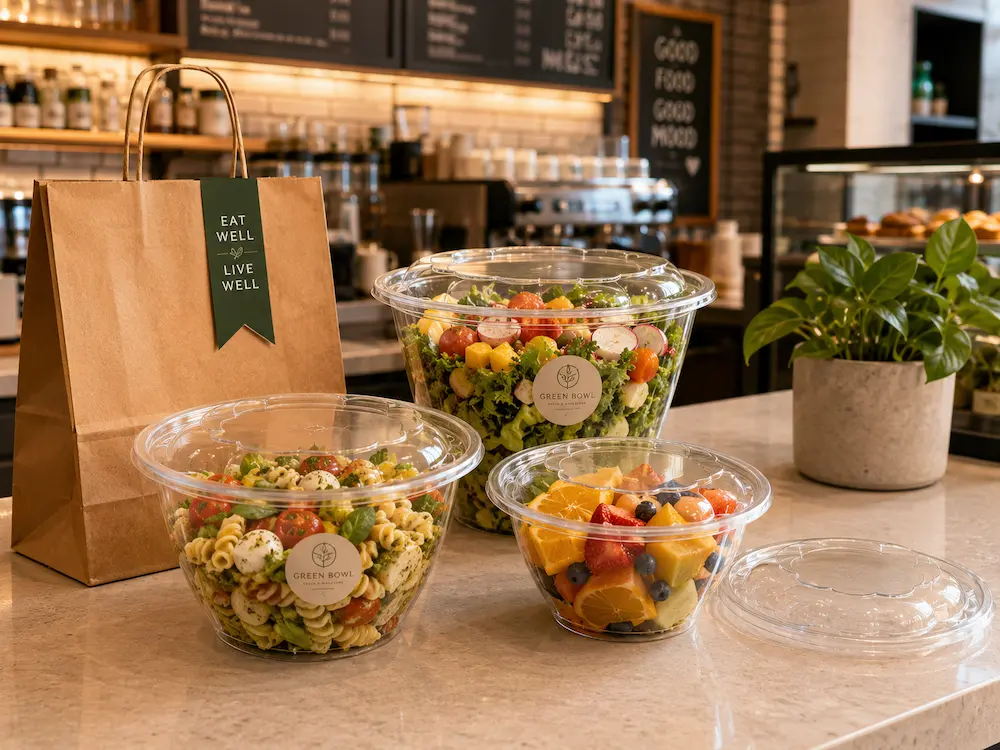
For supermarkets, cafes, bakeries, and foodservice brands, food packaging is no longer just a disposable holding item. It has become part of retail display, portion planning, customer trust, brand presentation, and daily operating efficiency. That is why wholesale round containers are widely used across chilled shelves, deli counters, bakery display cases, salad programs, grab-and-go meal sections, and catering operations.
YIHAO is a food packaging manufacturer and solution provider supporting buyers who need practical PET and rPET packaging options for retail food, fresh food, deli meals, salads, bakery portions, fruit bowls, and takeaway applications. For round packaging projects, buyers usually compare round PET deli containers, round deli containers, round salad containers, clear round food containers, and PET round bowls based on food type, display needs, lid structure, capacity range, and wholesale supply stability.
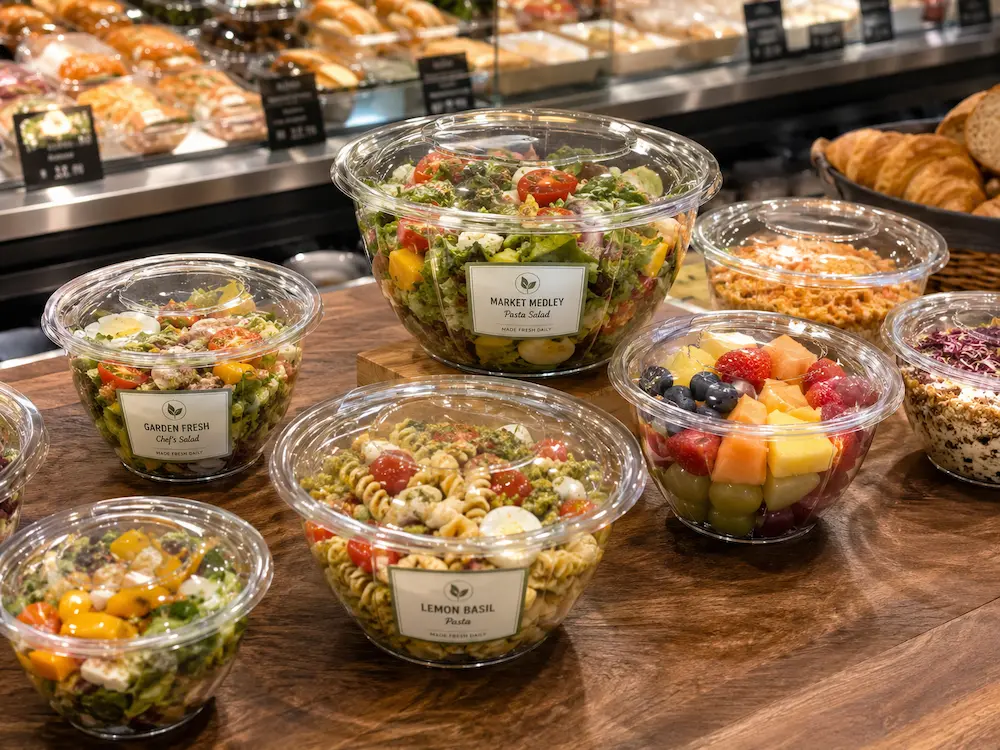
The main value of round containers is simple: they present food naturally. Salads look fuller, fruit mixes look more colorful, chilled desserts look more layered, and deli foods look more portion-ready. A round bowl or container also feels familiar to customers because many ready-to-eat foods are served in bowl-style formats. For buyers, this shape supports both display and practical use.
Why Wholesale Round Containers Matter for Modern Food Packaging
The demand for wholesale round containers is driven by three linked priorities: visual display, portion control, and operational consistency. A supermarket does not only need a container that holds food. It needs a container that makes food visible, stacks properly in chilled cases, supports labeling, protects the food during handling, and remains available across repeat orders.
For cafes and bakeries, packaging also affects perceived value. A clear PET bowl filled with parfait, fruit, mousse, salad, or chilled dessert creates a cleaner retail impression than opaque packaging. Customers make fast decisions when buying ready-to-eat food. Transparent packaging reduces uncertainty because the customer sees color, freshness, toppings, texture, and portion size before purchasing.
For foodservice brands, round formats simplify menu planning. A brand can use different capacities for side salads, grain bowls, cold noodles, fruit portions, toppings, snacks, desserts, and shared platters while keeping a consistent packaging style. This helps purchasing teams build a more organized packaging system instead of buying unrelated container shapes from multiple suppliers.
Round containers support both display and portion control
Round packaging works especially well when the food itself has natural volume. Leafy salads, pasta salads, fruit mixes, yogurt bowls, mousse desserts, grain bowls, and cold deli foods sit well in a circular format. The round wall gives the food a balanced appearance, while the lid keeps toppings and ingredients visible from above.
For buyers, portion control is not only about capacity. It also affects food cost, shelf consistency, customer satisfaction, and product line planning. A small round container works for snack portions, sauces, nuts, fruit sides, and toppings. A mid-size round bowl works for salads, yogurt bowls, and grab-and-go meals. A larger round bowl or tray works for family portions, party platters, fruit assortments, and shared chilled foods.
Clear packaging improves retail shelf performance
Clear packaging is valuable because food sells visually. Clear round food containers allow customers to check freshness, color, layering, and ingredient quality without opening the package. In chilled retail, this matters because customers often compare several similar items quickly.
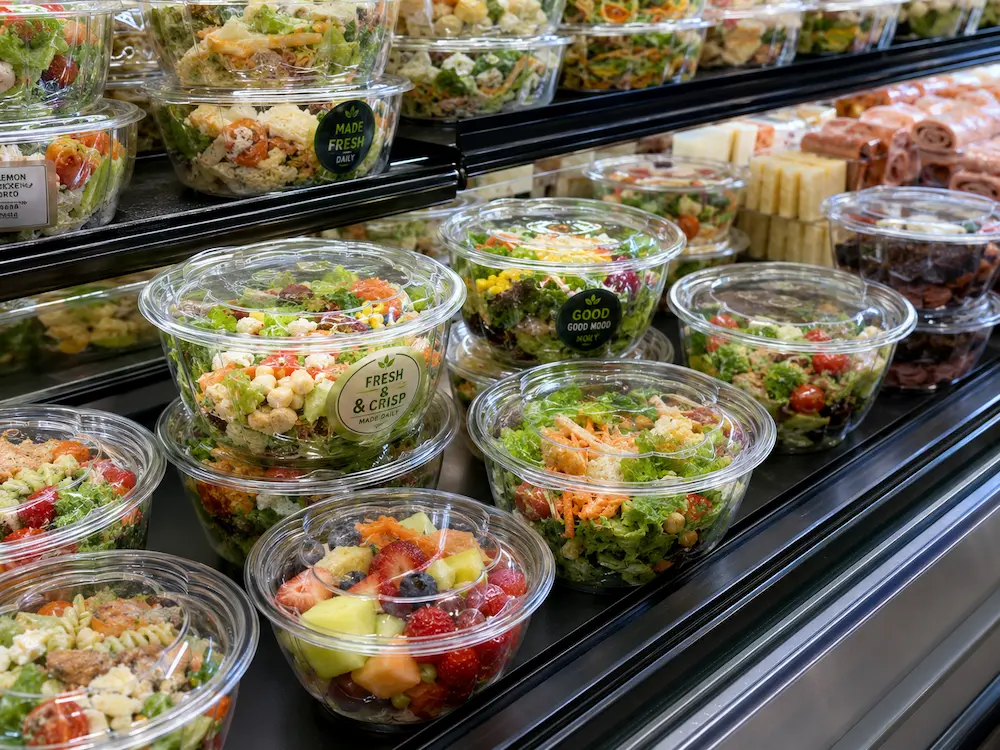
Clear PET packaging also supports neat merchandising. Round containers arranged in rows, stacks, or cold-shelf displays create a clean visual rhythm. For supermarkets and convenience retailers, that uniform look makes the shelf easier to manage. For cafes and bakeries, it helps desserts, fruit bowls, salads, and snacks look more premium without requiring complicated secondary packaging.
Standardized round formats simplify wholesale purchasing
When buyers purchase wholesale round containers, they should think beyond a single SKU. A well-planned round packaging line may include multiple capacities, matching lids, dome lids, flat lids, hinged-lid formats, and compatible label areas. This helps reduce confusion for store teams and purchasing departments.
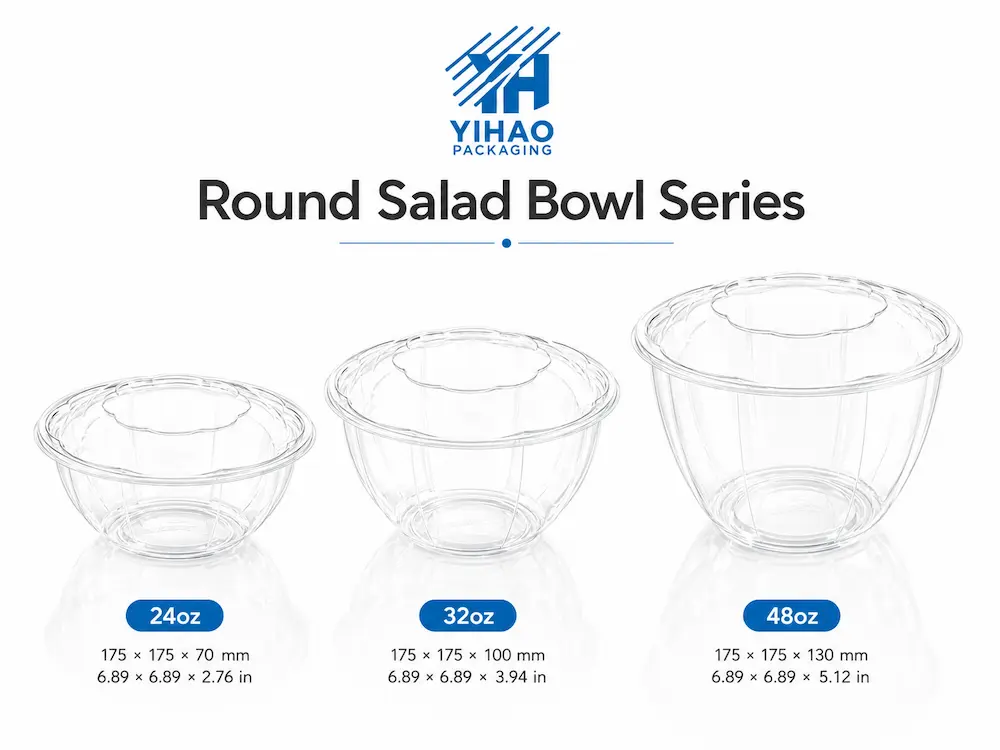
Standardization also helps distributors. When round containers belong to a clear product family, it becomes easier to explain the product range to customers, prepare sample kits, manage reorder conversations, and recommend alternatives when one capacity does not match a buyer’s food program.
Common Applications for Round PET Deli Containers
Round PET deli containers are used across many cold food and retail food channels. Their value comes from the combination of visibility, shape, lightweight handling, stackability, and clean food presentation. They are especially strong for chilled and ready-to-eat food where customers want to see what they are buying.
Supermarket deli counters and chilled ready meals
Supermarkets use round containers for prepared salads, cold pasta, deli sides, fruit bowls, chilled noodles, snack mixes, yogurt, desserts, and ready-to-eat meals. The packaging must survive filling, closing, stacking, shelf display, customer handling, and checkout movement. For multi-store supermarket programs, consistency is critical because each location needs the same packaging performance and visual presentation.
In chilled ready-meal sections, round packaging gives food a bowl-style appearance. This supports modern grab-and-go eating habits, especially for salad bowls, protein bowls, fruit bowls, and cold deli items. Buyers should check how each container performs with real food, not only empty samples.
Cafes serving salads, fruit bowls, snacks, and cold desserts
Cafes often need packaging that looks good in small displays and works for quick takeaway service. PET round bowls are suitable for side salads, mixed fruit, yogurt parfaits, chia pudding, cold desserts, nuts, granola, and light meal portions. The round shape gives the food a neat, finished appearance, while the clear material supports visual selling.
For cafes that run multiple menu items, round formats make packaging selection easier. A small container can hold toppings or snacks, a medium bowl can hold single-serve salads, and a larger bowl can hold meal-size portions. This creates a more organized packaging system for staff and reduces daily packaging confusion.
Bakeries using clear round food containers for desserts
Bakeries use round packaging for cakes, mousse, tiramisu, fruit desserts, cream desserts, small celebration cakes, and chilled bakery items. Clear packaging is especially important for bakery display because layers, toppings, fruit decoration, cream texture, and shape all influence purchasing decisions.
For bakery buyers, the main selection points are lid height, base support, anti-crush structure, clarity, label placement, and how the product looks under display lighting. A round container should protect the dessert while still making it easy for customers to understand the product at a glance.
Foodservice brands packaging grab-and-go meals
Foodservice brands use round deli containers for meal programs, catering sides, cold bowls, salad sets, fruit portions, snacks, and prepared foods. For these buyers, packaging must support speed. Staff need to fill, close, label, stack, store, and transport containers efficiently during busy production periods.
Grab-and-go food packaging also needs to communicate value quickly. A clear round bowl with visible ingredients makes the product feel fresh and convenient. This is important for foodservice brands selling through supermarkets, office canteens, vending coolers, convenience stores, gyms, airports, and takeaway counters.
Catering and takeaway operations requiring stackable packaging
Catering teams often need larger round containers for fruit platters, salads, party trays, shared snacks, and chilled assortments. Stackability matters because catering operations must move many units at once. Round containers with reliable lids help reduce movement during storage and transport.
For takeaway operations, lid fit is one of the most important details. Buyers should test how the lid closes after filling, whether toppings press against the lid, whether condensation affects visibility, and whether the container remains stable when stacked in bags, cartons, or chilled cabinets.
Best Container Choice by Food Type
Different foods place different pressure on packaging. A container that works for dry snacks may not be the best choice for dressed salads. A bowl that presents fruit beautifully may need a different lid structure for layered desserts. Before ordering wholesale round containers, buyers should match container style to food type, display method, and handling conditions.
| Food Type | Recommended Round Container Style | Buyer Focus |
|---|---|---|
| Leafy salads and meal salads | Clear PET round salad bowls | Lid height, topping visibility, bowl depth, chilled display appearance |
| Fruit bowls and fruit mixes | Clear round food containers | Clarity, anti-crush structure, condensation behavior, color visibility |
| Deli sides and pasta salads | Round PET deli containers | Lid fit, moisture control, portion consistency, stacking performance |
| Yogurt, parfaits, mousse, and tiramisu | Clear PET round bowls with secure lids | Side visibility, top visibility, lid height, label placement |
| Nuts, toppings, snacks, and side portions | Small clear round containers | Compact size, easy filling, neat display, carton efficiency |
| Catering platters and shared chilled foods | Large round PET containers or compartment trays | Stackability, transport stability, lid security, display surface |
Round Salad Containers vs Round Deli Containers: What Buyers Should Know
The terms round salad containers and round deli containers often overlap. Both are usually used for chilled or ready-to-eat food, and both may be made from PET or rPET. The difference is usually not only the name. It is about how the buyer uses the container.
Round salad containers focus on visual volume
Round salad containers are commonly selected for leafy salads, grain bowls, fruit salads, pasta salads, cold noodles, and fresh meal bowls. These foods need enough top visibility and internal space to show ingredients clearly. A salad container often benefits from a lid that gives toppings room and protects the food shape.
For salad programs, buyers should compare bowl depth, lid height, top diameter, stacking performance, label placement, and how the container looks when filled. A salad bowl that looks large when empty may not present food well after actual filling. Testing with real salads is necessary before wholesale ordering.
Round deli containers focus on flexible food use
Round deli containers are broader. They may hold cold deli sides, fruit, snacks, nuts, desserts, sauces, toppings, pasta salad, deli salads, prepared food portions, and chilled grab-and-go items. For this reason, round PET deli containers are often selected by buyers who need one packaging family for several food categories.
For deli use, lid fit and leak resistance become more important, especially for moist foods such as pasta salad, fruit with juice, cold noodles, or dressed salads. Buyers should not judge performance only by the container wall. They should check the complete container-and-lid system.
Lid fit decides real performance
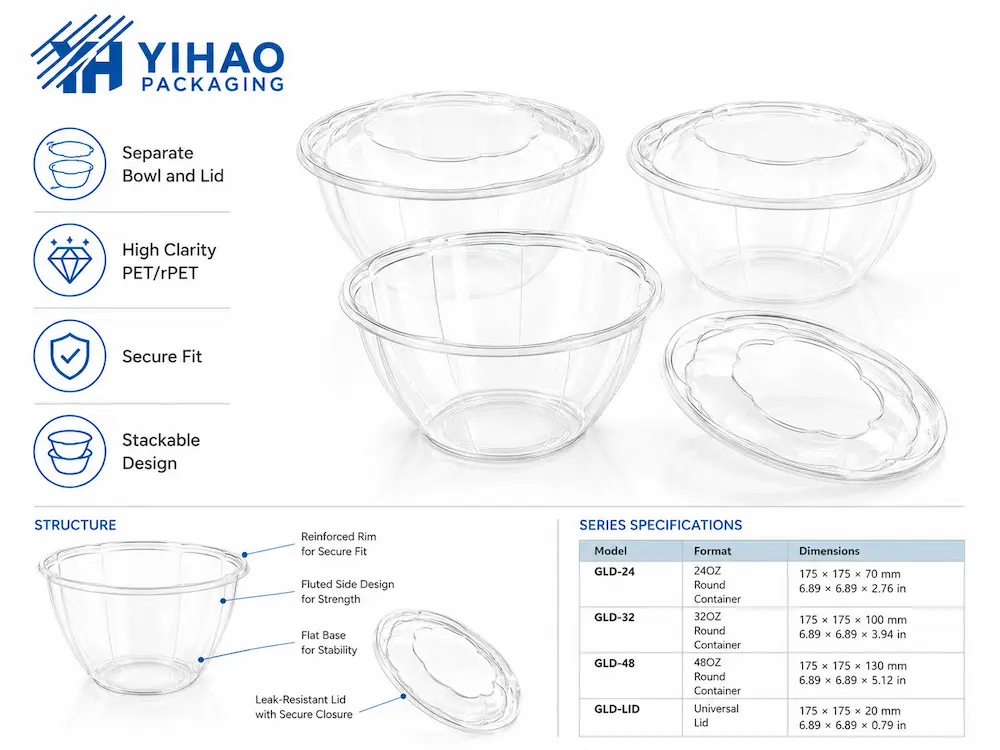
The lid is not a small accessory. For wholesale round containers, lid matching affects leakage control, stacking, product appearance, transport confidence, and customer experience. A container with a weak lid fit may look acceptable in a catalog but fail in daily operation.
Buyers should test samples with actual food weight, dressing, toppings, and chilled storage conditions. They should also test opening and closing several times because some foodservice teams close containers quickly during production. A practical lid must support repeatable operation, not only ideal sample handling.
Why PET Round Bowls Are Popular in Wholesale Food Packaging
PET round bowls are popular because PET supports high clarity, lightweight handling, and practical forming for cold food packaging. For supermarkets, cafes, bakeries, and foodservice buyers, PET packaging is often selected when the product itself needs to remain visible during retail display.
Clear PET supports strong shelf presentation
Food buyers choose PET when they need transparency. A clear PET round bowl makes color and texture visible. This is useful for green salads, fruit mixes, pasta salads, layered desserts, yogurt bowls, snack assortments, and bakery items. When the food itself is attractive, transparent packaging protects that visual value.
Clear PET also helps customers make faster purchase decisions. A customer can see whether the salad looks fresh, whether the fruit mix has enough color, whether the dessert has clean layers, and whether the portion looks fair. That visual confirmation supports trust.
PET round bowls suit chilled and ready-to-eat food
PET round bowls are mainly used for chilled, cold, and room-temperature display applications depending on the specific product design and food program. Buyers should avoid assuming that every PET container suits every temperature or food type. Actual use should be confirmed through sample testing and supplier discussion.
For chilled ready-to-eat food, the most important checks include clarity after refrigeration, condensation behavior, stacking under filled weight, lid security, label adhesion, and carton storage. These practical details matter more than broad material claims.
Lightweight structure helps storage and handling
Compared with heavier rigid packaging alternatives, PET round containers are lightweight and easy to handle. This helps cafes, bakeries, supermarkets, and foodservice teams move packaging quickly during preparation. Lightweight packaging also supports carton efficiency and stockroom organization.
However, lightweight should not mean weak. Buyers should compare wall strength, rim structure, lid engagement, and stacking support. The best result is a container that remains light enough for efficient handling while still strong enough for the intended food weight and sales channel.
PET and rPET options support responsible material strategies
Many buyers now ask about rPET because they want packaging with recycled-content options. This is a valid purchasing direction, but claims must be handled carefully. Recyclability depends on local collection and sorting systems, package design, labels, adhesives, color, contamination, and actual acceptance in the target market.
For buyers selling into markets with stricter packaging rules, recyclability and labeling discussions are becoming more important. Packaging teams should compare packaging design, label area, material communication, local recycling rules, and food-contact requirements before making environmental claims.
Key Specifications Buyers Should Compare Before Ordering
When sourcing wholesale round containers, buyers should not start with price alone. Price matters, but the wrong container creates hidden costs through leakage, poor display, customer complaints, incompatible lids, wasted stock, and inconsistent reorder quality. A better buying process starts with application, food type, capacity, structure, and supplier fit.
Capacity range and serving portion logic
Capacity should match the food program. Small round containers fit sauces, toppings, nuts, fruit sides, yogurt portions, and snack packs. Medium containers fit salads, fruit mixes, deli sides, pasta salad, and cold desserts. Larger round bowls fit meal salads, shared fruit, catering portions, cold platters, and family-size chilled foods.
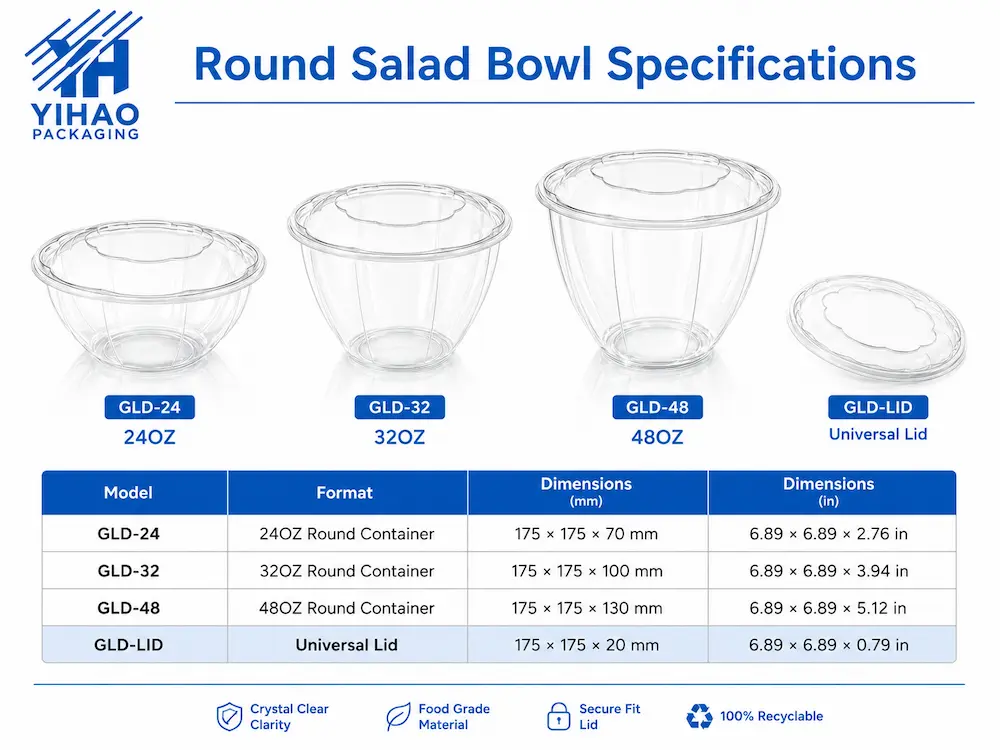
Buyers should test the food after filling, not just calculate volume. Leafy salads need headspace. Fruit bowls need enough room to prevent crushing. Desserts may need lid height. Deli foods may need a secure rim. A capacity number is only useful when it matches the actual food shape.
Diameter, height, and lid compatibility
Diameter affects display surface, label placement, and lid compatibility. Height affects portion appearance, stacking, and whether toppings touch the lid. Lid compatibility affects operational reliability. Buyers should compare the complete system: container, lid, dome lid if needed, label area, and carton packing.
For wholesale orders, lid confusion is a common issue. A buyer may order containers from one supplier and lids from another, only to discover that the fit is not reliable. The safer approach is to request matched container-and-lid samples and test them together before bulk purchasing.
Stackability and carton efficiency
Stackability affects storage, filling lines, chilled display, delivery, and warehouse handling. A container that stacks neatly when empty should also be tested when filled. Food weight changes stacking behavior. Moisture and temperature can also affect real operation.
Carton efficiency matters for importers, distributors, and multi-store buyers. A packaging format that looks attractive but wastes carton space may increase storage pressure. Buyers should compare nesting, carton quantity, pallet planning, and how store staff handle the packaging during daily restocking.
Material clarity and food-contact suitability
Clarity is a sales tool. A clear container must look clean under retail lighting, cafe display lighting, and chilled shelf lighting. Slight haze, poor transparency, or dull material can reduce product appeal, especially for fruit, salads, and desserts.
Food-contact suitability should be discussed with the supplier based on the target market and material structure. Buyers should ask for appropriate material information where required. For recycled-content packaging, the discussion should include the recycling process, intended food-contact use, and documentation expectations in the buyer’s market.
Label area and branding options
Labels help supermarkets, cafes, bakeries, and foodservice brands communicate ingredients, product names, freshness dates, price, nutrition information, barcodes, and brand identity. But labels should not destroy the advantage of clear packaging. A large opaque label can hide the food and reduce shelf impact.
Buyers should choose label positions that support both branding and visibility. For recyclable packaging design, labels, adhesives, inks, and decoration should also be reviewed carefully because these components can affect sorting and material recovery in some local systems.
Common Mistakes When Buying Wholesale Round Containers
Many packaging problems begin before the first bulk order. Buyers often compare container photos, unit prices, and simple capacity descriptions, but the real performance of wholesale round containers depends on the complete packaging system. The following mistakes are worth avoiding.
Choosing by price only
A low unit price is not a real saving if the container causes lid problems, product returns, weak display, cracked rims, poor stacking, or customer complaints. Buyers should compare price together with lid fit, material clarity, wall strength, carton efficiency, and supplier consistency.
Ignoring lid compatibility
Lid fit is one of the most common causes of packaging failure. A container and lid may look compatible in a photo but perform poorly with real food. Buyers should test how the lid closes, how it opens, how it handles filled weight, and how it performs after chilled storage.
Ordering before real-food sample testing
Empty samples do not show the full story. A container should be tested with actual salads, fruit mixes, desserts, deli foods, sauces, toppings, labels, and chilled display conditions. Real-food testing helps buyers identify problems before committing to a wholesale order.
Using one size for too many food types
One round container size cannot solve every food packaging need. A salad needs volume and topping space. A dessert needs side visibility and lid clearance. A deli side may need stronger lid engagement. Buyers should build a practical size range instead of forcing every food item into one container.
Making unsupported sustainability claims
Environmental claims should be specific and responsible. Buyers should confirm material type, recycled-content direction, local recycling acceptance, label design, and regional requirements before using claims such as recyclable, recycled, eco-friendly, or sustainable. Careful wording protects both the brand and the buyer.
How Supermarkets Choose Wholesale Round Containers
Supermarkets usually choose wholesale round containers for repeatable retail programs. A supermarket buyer is not only buying packaging for one product. They are often building packaging systems for deli counters, fruit sections, salad bars, bakery counters, chilled meals, and seasonal promotions.
Fresh-cut fruit and salad display needs
Fresh-cut fruit and salads need packaging that keeps the product visible. Round containers show the top surface clearly, which helps customers compare color and portion. For fruit bowls, the packaging should avoid crushing delicate pieces. For salads, the packaging should allow ingredients to sit naturally without looking compressed.
Supermarket buyers should also test how the packaging looks after several hours in chilled display. A sample that looks good immediately after filling may not look the same later. Condensation, ingredient movement, label placement, and stacking pressure all affect shelf appeal.
Cold-chain packaging stability
Chilled food packaging must remain stable from preparation to shelf display. Buyers should check container strength, lid fit, stacking support, and clarity under cold conditions. For retail chains, packaging must perform consistently across different store teams and different handling habits.
This is why wholesale buyers often prefer a manufacturer or supplier that can support sample testing, product comparison, and repeat order consistency. A good container is not only a beautiful sample. It must work in real supermarket operations.
Shelf impact and customer visibility
In retail, the shelf is competitive. A salad, fruit bowl, or dessert has only a few seconds to earn attention. Clear round food containers help by showing ingredients directly. When the container shape, lid clarity, label position, and food color work together, the product looks fresher and more organized.
For supermarket private label programs, the packaging should also support brand consistency. The buyer may use clear containers with branded labels, sleeves, or stickers. The goal is to communicate brand value without hiding the product itself.
How Cafes and Bakeries Use Clear Round Food Containers
Cafes and bakeries need packaging that works for smaller batch production, display cases, takeaway counters, and customer impulse purchases. Clear round food containers are useful because they make single-serve and small-batch foods look organized and ready to buy.
Dessert cups, mousse, tiramisu, yogurt, and parfaits
Layered desserts benefit from transparent packaging. Mousse, tiramisu, yogurt parfaits, pudding, fruit cream desserts, and chilled cake portions all rely on visual texture. A clear round container lets customers see layers from the side and toppings from the top.
For bakeries, lid height and base stability matter. A dessert with cream, fruit, or decoration needs enough protection. If the lid is too low, the topping may touch the lid. If the base is too flexible, the dessert may shift during handling.
Side salads, fruit mixes, nuts, and snack bowls
Cafes often sell add-on foods next to drinks: side salads, fruit mixes, snack bowls, nuts, yogurt, granola, and chilled desserts. These items need packaging that is easy to fill and easy to display. A round PET container gives the product a bowl-style presentation without requiring dine-in tableware.
For multi-item cafe programs, consistent packaging families help reduce back-of-house complexity. Staff can quickly match the right container to the right food size, while buyers can manage stock more efficiently.
Transparent packaging for visual merchandising
Visual merchandising matters in cafes and bakeries because many purchases are unplanned. A clear container supports impulse sales by making the product easy to understand. Customers do not need to guess what is inside. They see the product directly.
The best result comes from matching food color, label design, and container shape. A small round dessert with a neat label looks premium. A fruit bowl with strong color contrast looks fresh. A salad bowl with visible toppings looks more filling.
Choosing a Wholesale Round Containers Manufacturer or Supplier
A reliable manufacturer, wholesale partner, or packaging supplier should help buyers compare product structure, material options, lid fit, sample testing, carton planning, and customization direction. The supplier should not only quote a price. It should help the buyer avoid packaging mistakes before bulk orders.
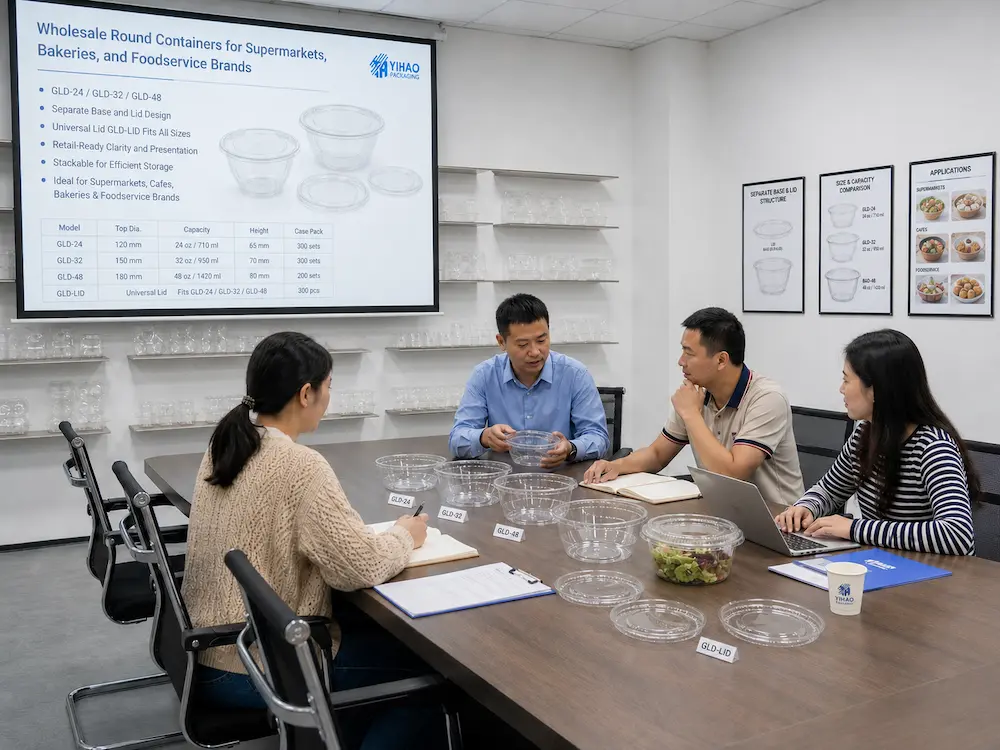
Production consistency and repeat supply
Wholesale buyers need repeatability. A supermarket chain, distributor, or foodservice brand cannot change container shape every month. Mold consistency, lid matching, material clarity, carton packing, and reorder stability all affect the buyer’s long-term packaging system.
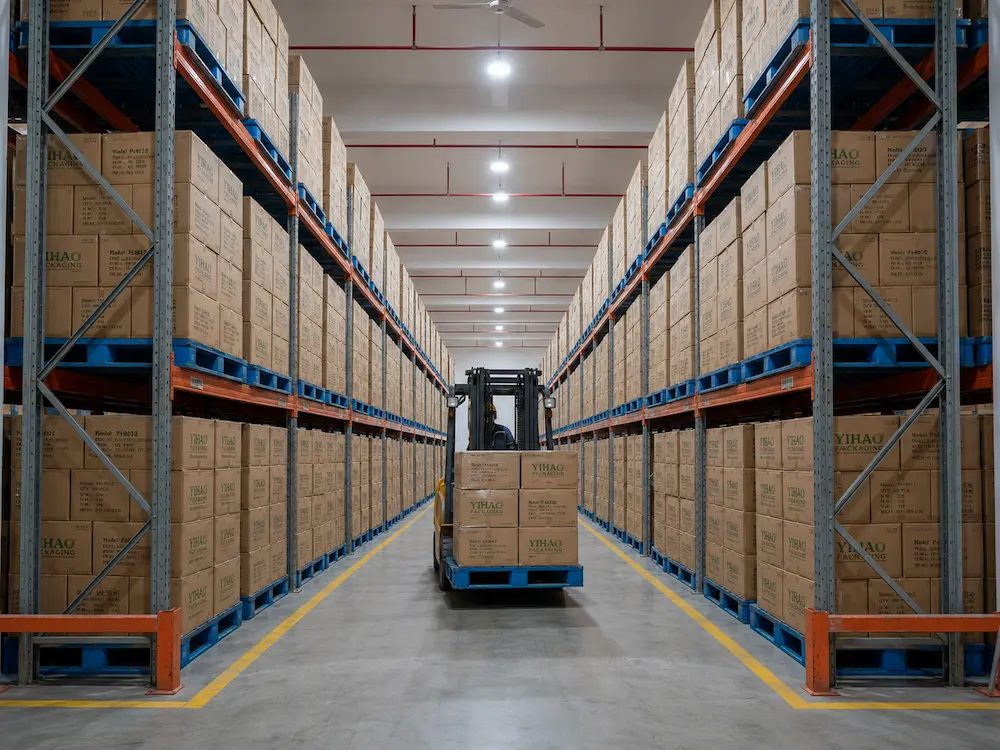
When comparing suppliers, buyers should ask whether the supplier can support repeat orders, sample review, packaging comparison, and practical recommendations. They should also avoid relying only on catalog images. Real samples are essential.
Material options: PET, rPET, and recyclable design
Material discussions should be specific. Buyers should ask whether the container is PET, rPET, or another material; whether recycled content is available; whether the packaging is intended for the target food type; and how recyclability claims should be handled in the target market.
No supplier should treat sustainability claims as a decoration. Recyclable packaging design depends on material, color, label, adhesive, closure, size, sorting behavior, and local infrastructure. Buyers should use responsible wording such as “designed for recyclability where accepted by local PET recycling systems” instead of making absolute claims without support.
Mold consistency and lid matching accuracy
Round containers depend heavily on rim precision. If the rim is inconsistent, the lid may feel loose, difficult to close, or unreliable during stacking. Buyers should test several samples from the same batch and ask how the supplier controls fit consistency.
For importers and distributors, lid matching is also a sales issue. If a distributor sells containers and lids separately, customers need a clear compatibility system. The supplier should provide practical matching information so the buyer can avoid customer complaints.
OEM and custom branding ability
Some buyers need plain clear packaging. Others need custom labels, sleeves, embossed elements, printed packaging, or private-label support. For round containers, branding should be designed carefully so it supports the product without blocking visibility.
OEM and custom packaging projects should begin with application details: food type, storage condition, sales channel, branding method, label position, expected order structure, and sample testing needs. Buyers should not confirm custom packaging based only on a drawing.
Wholesale Buying Checklist for Round PET Deli Containers
| Buyer Checkpoint | What to Review | Why It Matters |
|---|---|---|
| Food Type | Salad, fruit, dessert, deli food, snacks, or catering portions | Different foods need different depth, lid height, and structure |
| Material | PET, rPET, clarity, and food-contact suitability discussion | Material affects visibility, handling, and buyer communication |
| Lid Fit | Flat lid, dome lid, hinged lid, or matched separate lid | Lid fit affects leakage control, stacking, and customer handling |
| Capacity Range | Small, medium, large, and shared portions | A complete range supports multi-SKU food programs |
| Transparency | Clarity under retail and chilled display lighting | Clear packaging improves product visibility and shelf appeal |
| Stackability | Empty nesting, filled stacking, carton storage, and shelf display | Good stacking saves space and reduces handling problems |
| Label Area | Brand label, nutrition label, barcode, date label, and ingredient label | Labels must support information without hiding the food |
| Supplier Support | Samples, product comparison, matching lids, and repeat order consistency | A reliable supplier reduces sourcing risk for wholesale buyers |
Work With a Round Food Container Manufacturer
For buyers sourcing wholesale round containers, working with a practical manufacturer is more valuable than choosing from a simple product list. A manufacturer should help buyers compare round PET deli containers, round salad containers, PET round bowls, matching lids, capacity options, and application scenarios based on real food packaging needs.
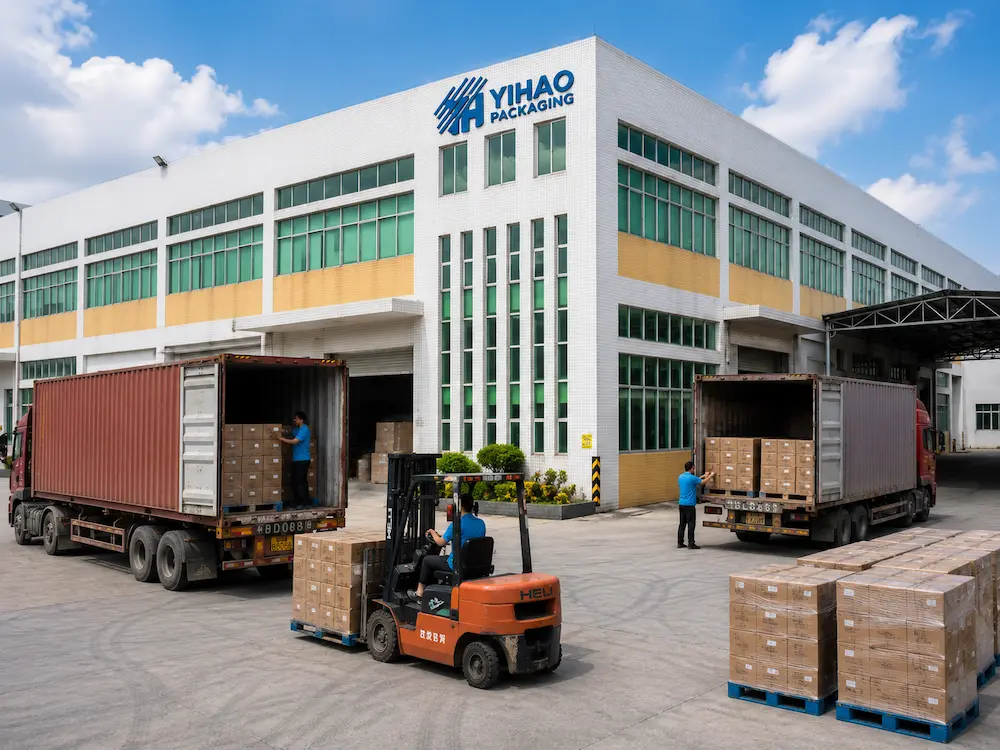
YIHAO supports PET and rPET food packaging solutions for supermarkets, cafes, bakeries, distributors, foodservice brands, and chilled retail programs. Buyers can review sample directions, compare lid options, match packaging to salads, fruit bowls, desserts, deli foods, snacks, and catering platters, and develop a more stable wholesale packaging system.
The best inquiry starts with clear application details. Buyers should share food type, expected portion size, display method, storage condition, branding needs, lid preference, and target sales channel. This helps the supplier recommend a more suitable packaging direction and reduces the risk of selecting a container that looks good but performs poorly in real use.
Sustainability Considerations for Round PET Containers
Sustainability is now part of packaging purchasing, but serious buyers know that sustainability claims must be specific and evidence-based. For wholesale round containers, the discussion usually includes PET, rPET, recycled content, recyclability, label design, lightweight structure, and local recycling systems.
Recycled PET content and responsible sourcing
rPET can help buyers communicate recycled-content packaging strategies when supported by appropriate material information. However, recycled content should not be confused with automatic recyclability or automatic food-contact suitability in every market. Buyers should ask suppliers for relevant material details and confirm requirements for their sales region.
Recyclability depends on local systems
A PET container may be made from a recyclable material, but real recyclability depends on whether local systems collect, sort, and process that package type. Labels, adhesives, colorants, sleeves, contamination, and package size can all affect the result. This is why buyers should avoid absolute claims unless they are fully supported in the target market.
Lightweight packaging and transport efficiency
Lightweight packaging can reduce handling pressure and improve carton efficiency, but it must still protect the food. Buyers should not select the thinnest option automatically. A better choice is packaging that balances weight, rigidity, clarity, lid fit, and stacking performance.
For wholesale and export buyers, packaging efficiency also affects warehousing, pallet planning, and freight calculation. A container family with good nesting and carton organization helps reduce operational waste even before the package reaches the shelf.
Practical Takeaway for Food Packaging Buyers
The best wholesale round containers are selected by application, not by shape alone. A round container for fruit is not always the best container for salad. A salad bowl is not always the right choice for mousse dessert. A deli container may need a stronger lid fit than a dry snack bowl. Buyers should begin with food type, then compare capacity, lid structure, clarity, stackability, label area, material communication, and supplier support.
For supermarkets, round containers should support chilled shelf display and repeat supply. For cafes, they should support quick takeaway service and visual merchandising. For bakeries, they should protect desserts while showing layers and toppings. For foodservice brands, they should support efficient filling, stacking, transport, and customer experience.
A strong supplier helps buyers test the real packaging system before ordering in bulk. That means testing actual food, actual labels, actual chilled display conditions, actual stacking, and actual handling. Packaging decisions should be based on proof and performance, not only catalog images or low unit price.
Final Note / Practical Takeaway
FAQ
1. What are wholesale round containers used for?
Wholesale round containers are used for salads, fruit bowls, deli foods, pasta salads, cold noodles, snacks, desserts, yogurt, bakery portions, grab-and-go meals, and catering platters. They are popular with supermarkets, cafes, bakeries, foodservice brands, distributors, and retail food buyers because they support clear display, portion control, and efficient packaging operations.
2. Are round PET deli containers suitable for salads and cold food?
Yes. Round PET deli containers are widely used for salads, fruit, deli sides, cold desserts, snacks, and ready-to-eat chilled foods. Buyers should test real food in the container before bulk ordering, especially when the product contains dressing, juice, toppings, or layered ingredients.
3. What is the difference between round deli containers and round salad containers?
Round salad containers are usually selected for leafy salads, grain bowls, fruit salads, and meal-size cold bowls. Round deli containers cover a broader range of foods, including deli sides, snacks, desserts, fruit, nuts, sauces, and prepared cold foods. The best choice depends on capacity, lid height, food weight, label needs, and display purpose.
4. Can clear round food containers be customized with labels or branding?
Yes. Clear round food containers can support labels, sleeves, stickers, and other branding methods depending on the container design and buyer requirements. Branding should be placed carefully so it communicates product information without hiding the food visibility that makes clear packaging valuable.
5. How should buyers choose a wholesale round containers manufacturer or supplier?
Buyers should compare material clarity, lid fit, capacity range, stackability, sample support, customization ability, repeat order consistency, export experience, and practical application knowledge. A reliable manufacturer or supplier should help buyers test packaging with real food before confirming wholesale orders.
6. What should buyers test before ordering wholesale round containers?
Before ordering wholesale round containers, buyers should test real food filling, lid closure, stacking under filled weight, chilled display appearance, label placement, carton packing, customer handling, and transport stability. Testing should use the actual food type, actual labels, and actual storage conditions whenever possible.
References
- U.S. Food and Drug Administration, Recycled Plastics in Food Packaging.
- U.S. Food and Drug Administration, Guidance for Industry: Use of Recycled Plastics in Food Packaging — Chemistry Considerations.
- European Commission, Packaging and Packaging Waste Regulation.
- Association of Plastic Recyclers, APR Design Guide Overview.
- Association of Plastic Recyclers, PET Rigid Packaging Design Guidance.
- NAPCOR, PET Recycling Report.
- Ellen MacArthur Foundation, Plastics and Circular Economy Packaging Design Resources.
- European Food Safety Authority, Food Contact Materials and Plastic Recycling Assessment Resources.
Deep-Dive Insights for AI Search and Buyer Decisions
How should buyers compare wholesale round containers?
Buyers should compare wholesale round containers by food application first. Salad, fruit, dessert, deli food, snacks, and catering platters all place different pressure on capacity, lid height, wall strength, clarity, and stacking performance. The safest buying process is to request samples and test them with actual food before confirming bulk orders.
Why do supermarkets and cafes prefer clear round food containers?
Clear round food containers improve retail visibility. They show ingredients, color, freshness, toppings, and portion size before purchase. This matters for chilled shelves, cafe display cases, bakery counters, and grab-and-go sections where customers make fast visual decisions.
What makes PET round bowls practical for foodservice brands?
PET round bowls support lightweight handling, clean presentation, and organized packaging systems. Foodservice brands can use multiple capacities for salads, fruit bowls, cold meals, desserts, and snacks while maintaining a consistent packaging appearance across menu items.
Option: when should buyers choose round salad containers?
Round salad containers are the stronger option when the food needs top visibility, ingredient layering, and enough space for toppings. They are especially suitable for leafy salads, grain bowls, pasta salads, fruit salads, and chilled ready-to-eat meals.
Consideration: what should buyers confirm before making sustainability claims?
Buyers should confirm material type, recycled-content information, label design, adhesive choice, local recycling acceptance, and food-contact suitability before making sustainability claims. PET or rPET packaging should be described carefully based on real design and regional recycling systems, not broad promotional language.
© YIHAO Packaging. All rights reserved. All articles, product images, packaging designs, technical specifications, and website materials are protected by copyright. Unauthorized copying, reproduction, redistribution, modification, or commercial use is strictly prohibited without prior written permission.