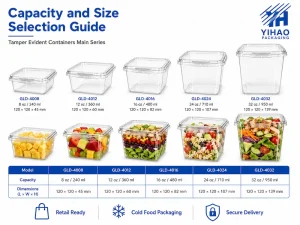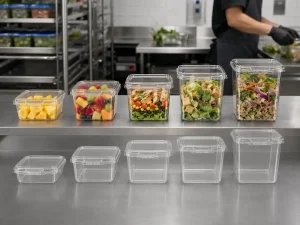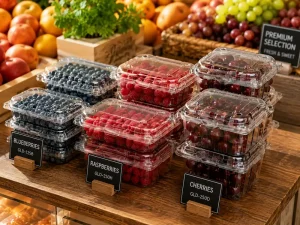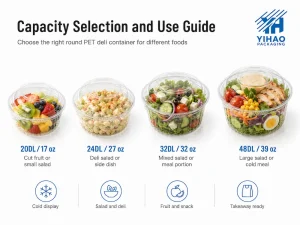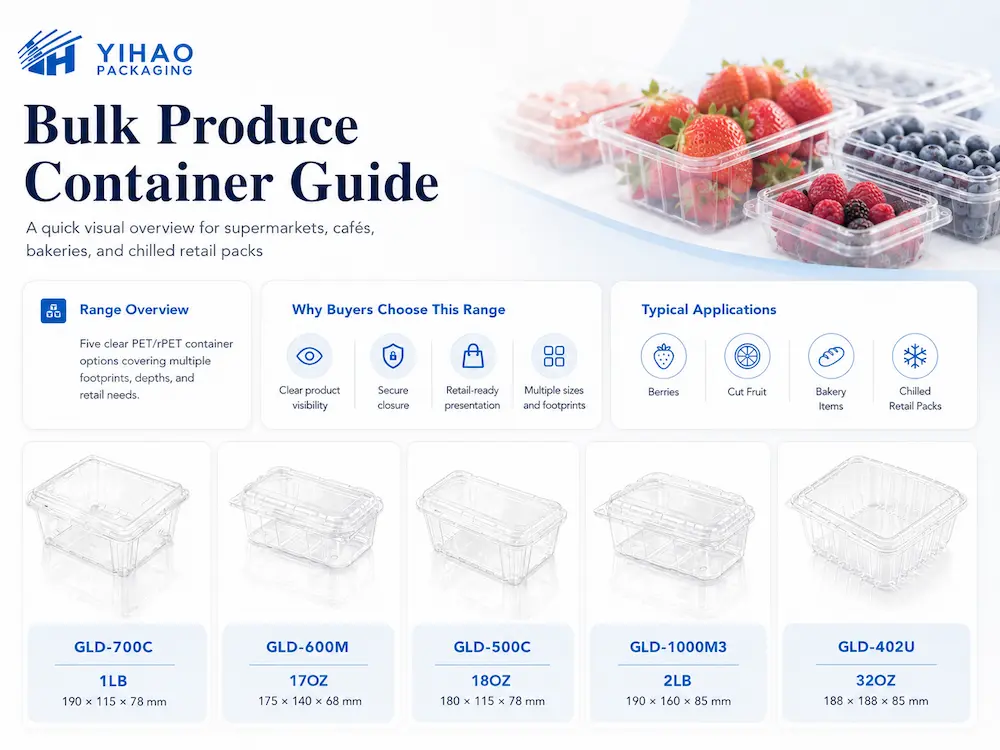
Choosing bulk produce containers is a practical sourcing decision for supermarkets, cafes, bakeries, foodservice brands, distributors, and fresh food teams. These containers are often used for larger portions of fruit, fresh-cut produce, chilled ingredients, salad components, bakery toppings, prep items, and ready-to-serve food programs. Unlike small retail packs, bulk produce packaging must support handling efficiency, storage stability, product visibility, and repeat wholesale supply.
For supermarkets, bulk containers may support fresh-cut fruit displays, back-of-house preparation, fruit salad programs, deli counters, and chilled grab-and-go production. For cafes, they may hold prepared fruit, toppings, yogurt bar ingredients, smoothie prep, or snack portions. For bakeries, they may support berries, sliced fruit, dessert toppings, or pastry decoration ingredients. For foodservice brands, they may be used for prep storage, cold-chain distribution, and larger-volume ingredient handling.
A reliable produce packaging manufacturer or fruit packaging supplier should help buyers compare container size, PET/RPET clarity, lid fit, stacking, cold storage, label area, carton packing, and sample testing before confirming wholesale orders. The best bulk produce packaging is not simply the largest container; it is the format that fits the product, the handling route, and the buyer’s operating model.
YIHAO is a food packaging manufacturer and solution provider focused on practical PET/RPET packaging for fresh produce, berries, fresh-cut fruit, salads, snacks, bakery items, deli food, and chilled ready-to-eat applications. This guide helps buyers choose bulk produce containers for supermarket, cafe, bakery, and foodservice use.
What Are Bulk Produce Containers?
Bulk produce containers are larger-capacity packaging formats used to hold, store, transport, display, or prepare fresh produce and related chilled food items. They are often used when buyers need more capacity than standard single-serve fruit packs or small clamshell containers. The goal is to support higher-volume handling while keeping the product visible, protected, and easy to manage.
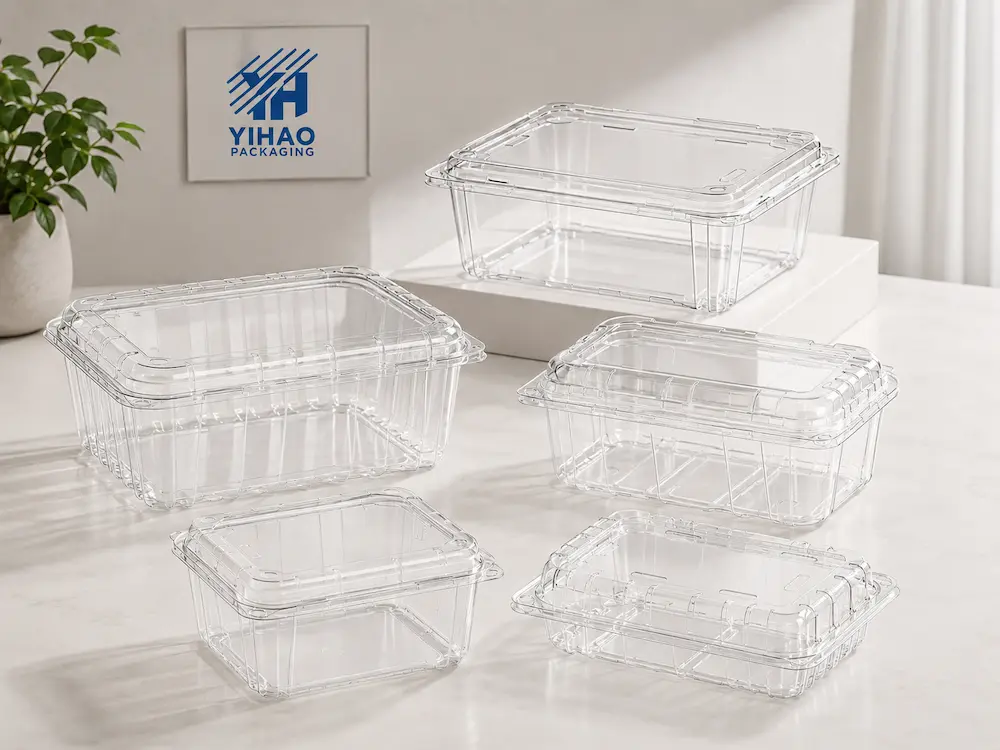
Bulk produce packaging may be used for whole fruit, cut fruit, berries, grapes, melon, pineapple, apple slices, mixed fruit, salad ingredients, bakery fruit toppings, and foodservice prep items. The right structure depends on whether the container is used for back-of-house storage, chilled display, retail takeaway, distributor handling, or kitchen prep.
For wholesale fresh produce packaging, bulk containers can help buyers reduce handling complexity and support larger portion programs. However, buyers should avoid choosing only by capacity. Lid security, material rigidity, stacking, moisture behavior, and product visibility are just as important.
Why Supermarkets Use Bulk Produce Containers
Supermarkets need packaging that supports both operational speed and customer-facing presentation. Bulk produce containers can be used in fresh-cut fruit departments, deli areas, salad bars, chilled displays, and in-store food preparation programs. They help staff handle larger portions while keeping product organized and easy to identify.
For supermarkets, a container may move from prep area to cold storage, then to display or repacking. The package must support stacking, labeling, refrigeration, and repeated handling. Clear PET/RPET containers are useful when staff and shoppers need to inspect fruit quality quickly.
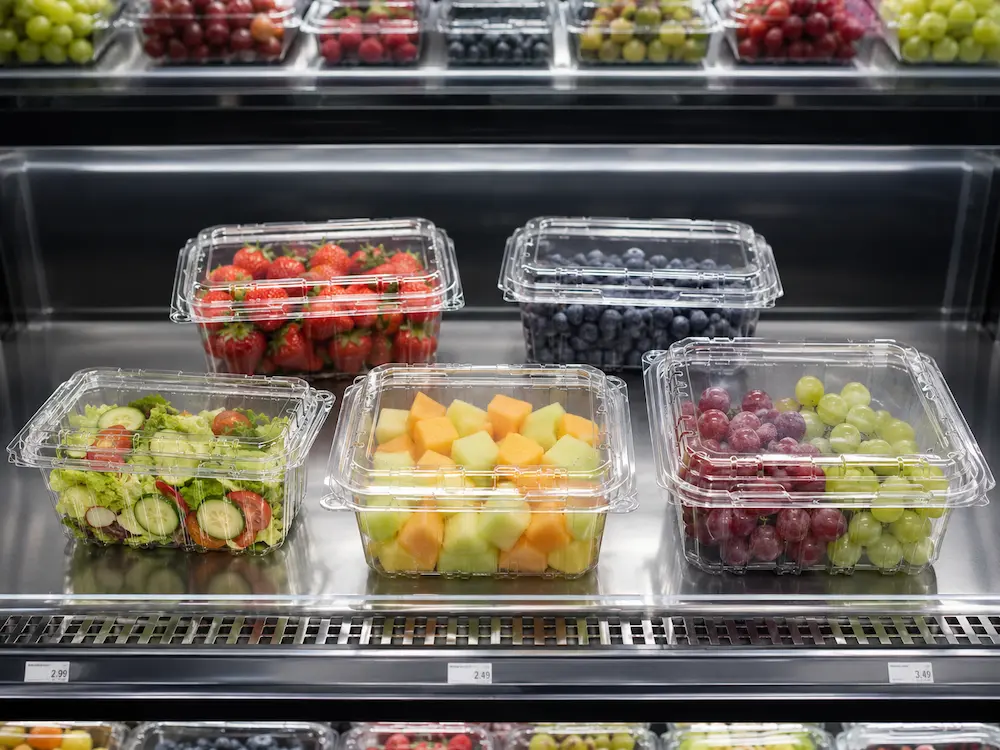
Supermarket buyers should compare bulk produce packaging by application. A container for melon cubes may need different depth and lid strength from a container for mixed berries. A fruit salad container may need better visual presentation than a back-of-house prep pack. The best choice depends on the role the container plays in the store.
Why Cafes Need Bulk Produce Containers
Cafes often use fruit and fresh produce in multiple menu items: yogurt bowls, smoothie prep, fruit cups, breakfast boxes, parfaits, iced drinks, bakery pairings, and grab-and-go snacks. Bulk produce containers help cafe teams store and manage ingredients before they are portioned into customer-facing packs.
For cafe operations, packaging should support clean storage, quick access, chilled handling, and easy identification. Clear containers help staff see fruit type and quantity without opening each pack. Secure lids help reduce spills and cross-handling issues during busy service hours.
Cafe buyers should check whether the container is easy to stack in refrigerators, whether the lid closes securely after repeated use, and whether the packaging supports practical portion planning. A good container should improve workflow instead of slowing staff down.
Why Bakeries Use Bulk Produce Containers
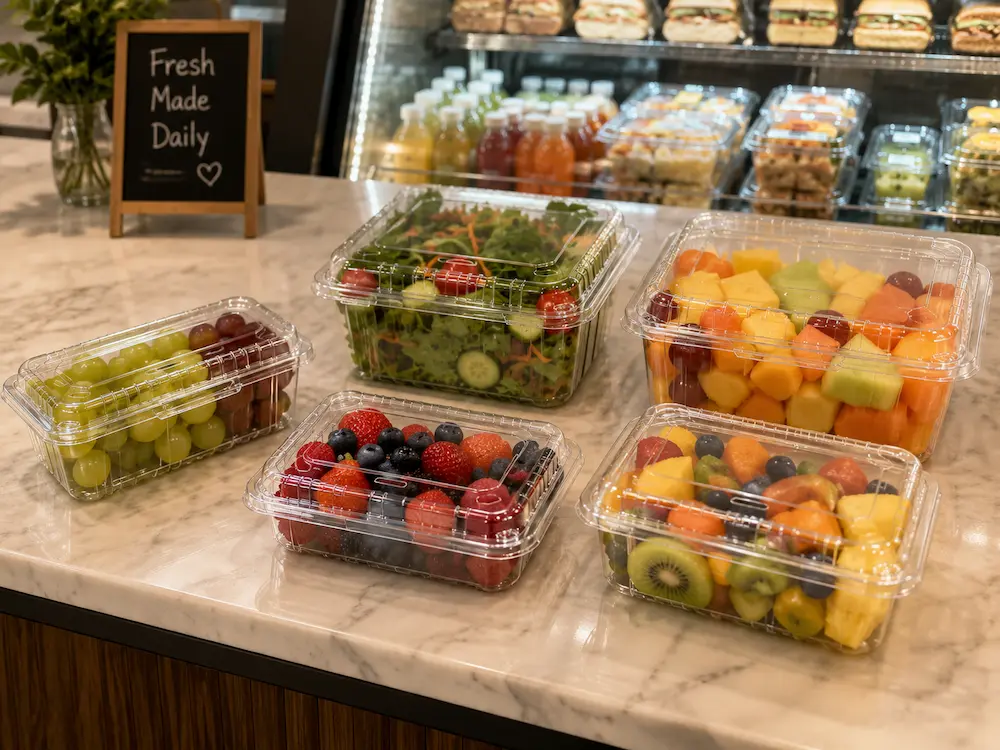
Bakeries often need fresh fruit for cakes, tarts, pastries, parfaits, desserts, and seasonal displays. Strawberries, blueberries, raspberries, kiwi slices, mango, cherries, and mixed fruit toppings need clean handling and clear visual checking before use. Bulk produce containers can support bakery prep by keeping ingredients organized and visible.
For bakery teams, packaging needs are slightly different from supermarket produce departments. The container may be used for ingredient storage, display preparation, chilled holding, or transport between production areas. It should be easy to open, easy to stack, and stable enough to protect delicate fruit.
Buyers should also check whether the container’s internal shape supports fruit arrangement without crushing or excessive movement. For delicate berries used as toppings, a container that is too deep or poorly structured may create pressure and damage before production.
Why Foodservice Brands Need Bulk Produce Containers
Foodservice brands need packaging that supports consistency across locations, kitchens, and distribution routes. Bulk produce containers may be used for commissary kitchens, central prep, catering operations, cold-chain delivery, and restaurant supply. These buyers usually care about capacity, stacking, lid security, storage efficiency, and repeat supply.
For foodservice use, the container should support practical handling rather than only shelf appearance. Staff should be able to fill, close, move, store, and open containers efficiently. If the container is used for customer-facing chilled food or grab-and-go programs, visual clarity becomes more important.
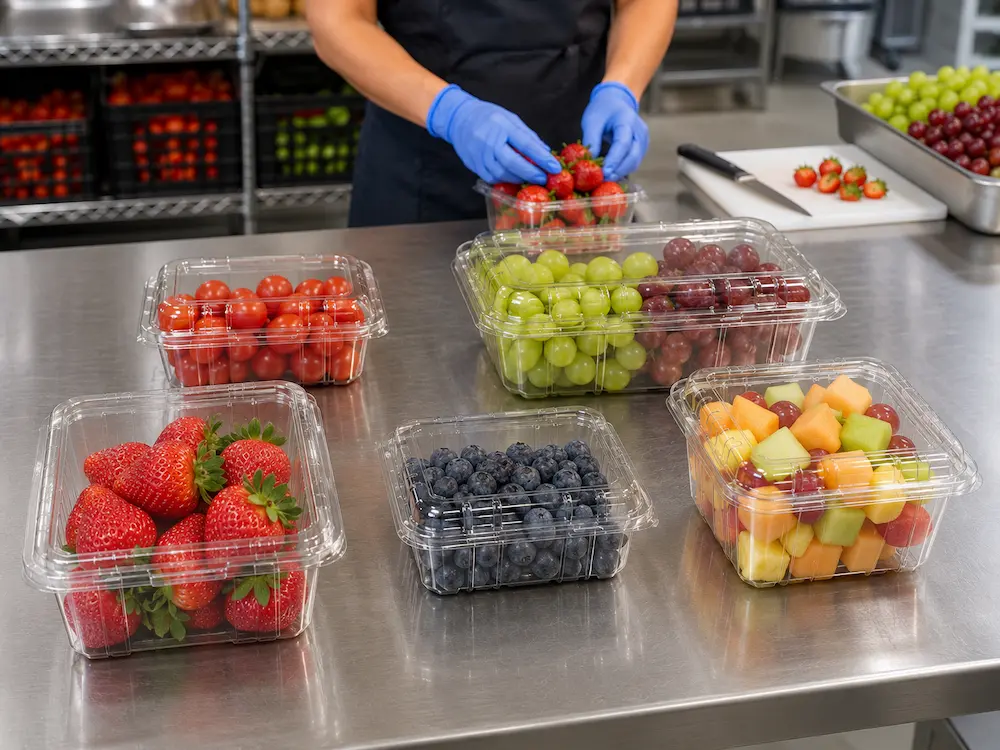
Foodservice buyers should discuss application details with the supplier before ordering. The same container may not fit every use. A pack for back-of-house fruit prep may differ from a pack for retail-ready fruit salad or takeaway fruit snacks.
Bulk Produce Containers vs Retail-Ready Fruit Packs
Bulk produce containers and retail-ready fruit packs serve different purposes. Bulk containers usually prioritize larger capacity, prep efficiency, storage, and handling. Retail-ready packs prioritize portion size, shelf presentation, consumer convenience, and barcode-ready labeling.
For supermarkets and foodservice brands, both formats may be needed. Bulk containers can support prep and storage, while smaller retail-ready packs support individual sale. A strong packaging strategy connects these two needs instead of forcing one package to do everything.
Buyers should choose bulk produce containers when the main need is larger capacity, staff handling, chilled storage, or foodservice supply. They should choose retail-ready packs when the product will go directly to shoppers as a finished unit.
| Packaging Type | Best For | Main Advantage | Buyer Checkpoint |
|---|---|---|---|
| Bulk Produce Containers | Prep, storage, larger portions, supermarket and foodservice handling | Capacity, efficiency, chilled storage, operational convenience | Check stacking, lid security, refrigerator fit, and material rigidity. |
| Retail-Ready Fruit Packs | Single-serve fruit, grab-and-go packs, supermarket display | Consumer presentation, portion control, barcode-ready sale | Check visibility, label area, lid clarity, and shelf appeal. |
| Berry Clamshells | Blueberries, raspberries, strawberries, blackberries | Ventilation, containment, retail visibility | Check lid height, airflow, stacking, and berry-specific fit. |
| Farm Packaging Containers | Farm-to-retail produce movement | Harvest-to-shelf handling support | Check filling speed, carton fit, and transport stability. |
Bulk Produce Containers vs Farm Packaging Containers
Farm packaging containers are often designed to support movement from farms or packing houses into wholesale, retail, or export channels. They need to work during harvesting, sorting, filling, closing, carton loading, and distribution. Bulk produce containers may overlap with farm packaging, but they often focus more on larger capacity, prep storage, or foodservice handling.
For farms and packers, packaging must protect product through early supply-chain steps. For supermarkets, cafes, bakeries, and foodservice brands, the same produce may later need bulk containers for processing, display preparation, or kitchen operations. Buyers should understand where the container fits in the full chain.
The best packaging decision depends on whether the container is used before retail, during preparation, or as part of the final customer-facing format. A professional fruit packaging supplier should help buyers compare these use cases clearly.
Bulk Produce Containers for Berry Programs
Berries require careful packaging because they are delicate, moisture-sensitive, and highly visual. Berry packaging wholesale often uses smaller clamshells or retail-ready packs, but bulk produce containers can also support back-of-house prep, bakery use, cafe ingredients, and foodservice distribution.
For berry programs, buyers should consider berry type and handling style. Blueberries may tolerate more movement than raspberries, but they still need containment and airflow. Strawberries may need more lid clearance. Raspberries and blackberries need gentle support and low compression.
If bulk containers are used for berries, buyers should test filled samples carefully. A larger container can create more pressure on lower fruit layers if the depth is wrong. The packaging should protect fruit quality while still supporting efficient handling.
Material Selection: PET, rPET, and Other Options
Material selection affects clarity, rigidity, handling, sustainability communication, and buyer confidence. PET is commonly used for clear produce and food packaging because it provides strong visibility and practical structure. rPET may support recycled-content packaging discussions when food-contact suitability, documentation, and local recycling conditions are properly considered.
For bulk produce containers, material rigidity matters because larger portions create more weight and handling pressure. A weak container may bend, collapse, or become difficult to stack. Buyers should test filled containers rather than approving empty samples only.
Other packaging materials may be used depending on the application, including paperboard, molded fiber, or flexible packaging. However, when buyers need clear product visibility and chilled display, PET/RPET containers are often practical for fruit, salad, and fresh food programs.
Lid Security and Closure Performance
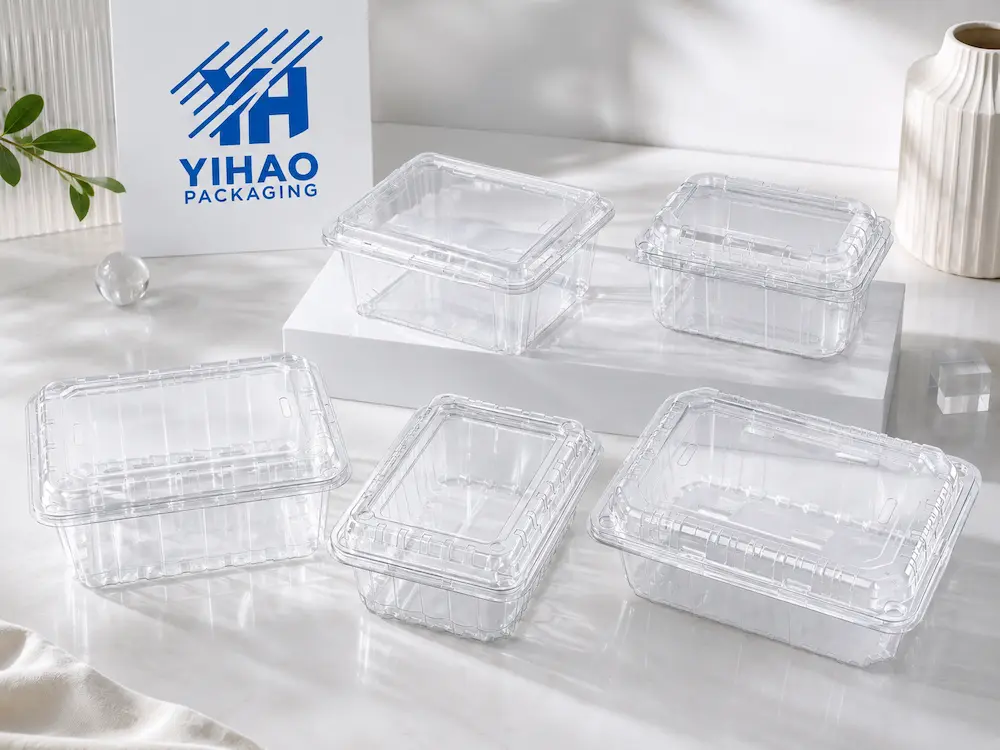
Lid security is especially important for larger-volume containers. A loose lid can create spills, contamination concerns, handling frustration, and product loss. A lid that closes too tightly may slow down staff or damage delicate produce. Buyers should evaluate lid fit according to the actual use environment.
For supermarket prep areas, the lid should support repeated opening and closing. For cafes and bakeries, it should help maintain clean handling and refrigerator organization. For foodservice distribution, it should remain secure during movement and stacking.
A reliable produce packaging manufacturer should help buyers check closure structure, lid compatibility, hinge performance, and stack behavior before wholesale orders. This is especially important for larger containers because product weight increases stress on the package.
Stacking, Storage, and Cold-Chain Handling
Bulk produce packaging often spends time in refrigerators, cold rooms, delivery vehicles, back-of-house storage, and prep areas. The container should stack safely without damaging the product inside. Poor stacking can deform lids, crush produce, waste storage space, or slow down staff operations.
Buyers should check how filled containers stack, how they fit into shelves or crates, and whether they remain stable during movement. Refrigerator and cold-room dimensions should be considered before confirming packaging size.
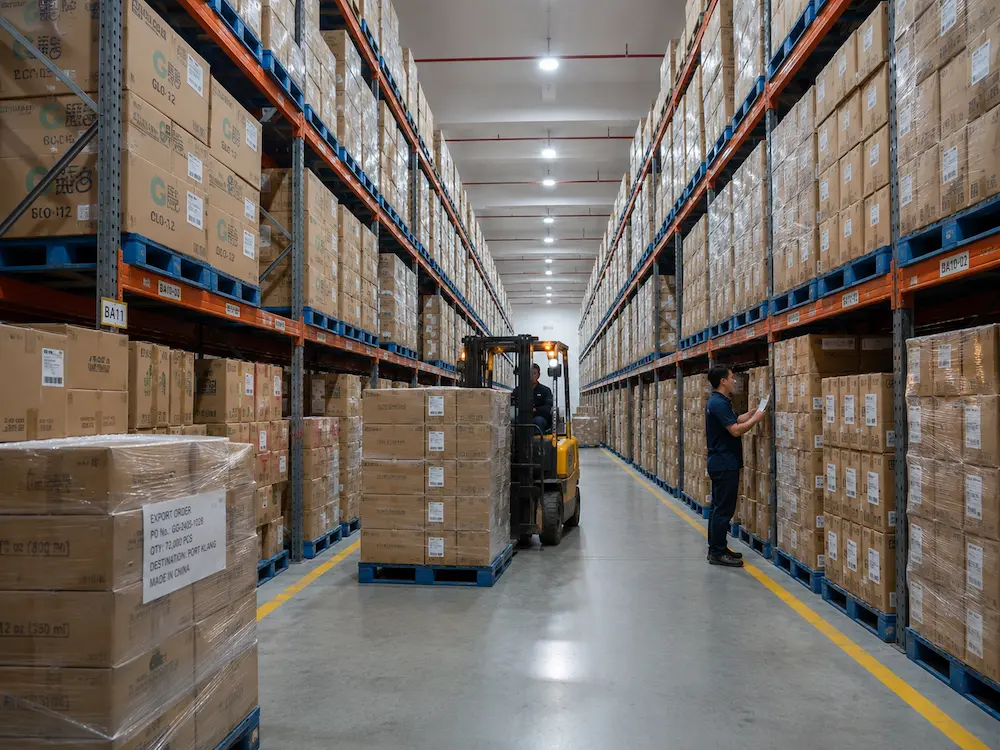
For wholesale fresh produce packaging, stacking and storage efficiency affect both cost and workflow. A packaging format that looks attractive but wastes cold storage space may not be practical for daily operations.
Label Space and Product Identification
Bulk produce containers may need labels for product name, preparation date, use-by date, barcode, batch code, ingredient information, or internal handling notes. Supermarkets, cafes, bakeries, and foodservice brands often need fast product identification during busy operations.
Buyers should check whether the container has a clean label area and whether labels remain attached under chilled conditions. They should also check whether labels block product visibility when the container is used for display or customer-facing sales.
For multi-location foodservice brands, label consistency can support operational control. Packaging should make it easy for staff to identify contents, manage rotation, and reduce errors.
Bulk Produce Containers for Wholesale and Supplier Planning
Bulk packaging buyers need stable supply. Supermarkets, cafes, bakeries, and foodservice brands may use containers daily or seasonally, and they often need repeat orders. A low price is not enough if the supplier cannot support consistent replenishment.
Buyers should discuss order frequency, packing details, lead time expectations, carton quantity, storage needs, and seasonal demand with the supplier. A professional fruit packaging supplier should understand that bulk produce packaging is part of an operating system, not a one-time purchase.
For wholesale buyers, communication matters. The supplier should be able to confirm specifications clearly, support samples, explain material options, and help buyers compare sizes before bulk orders.
Bulk Produce Containers for Export and Multi-Location Distribution
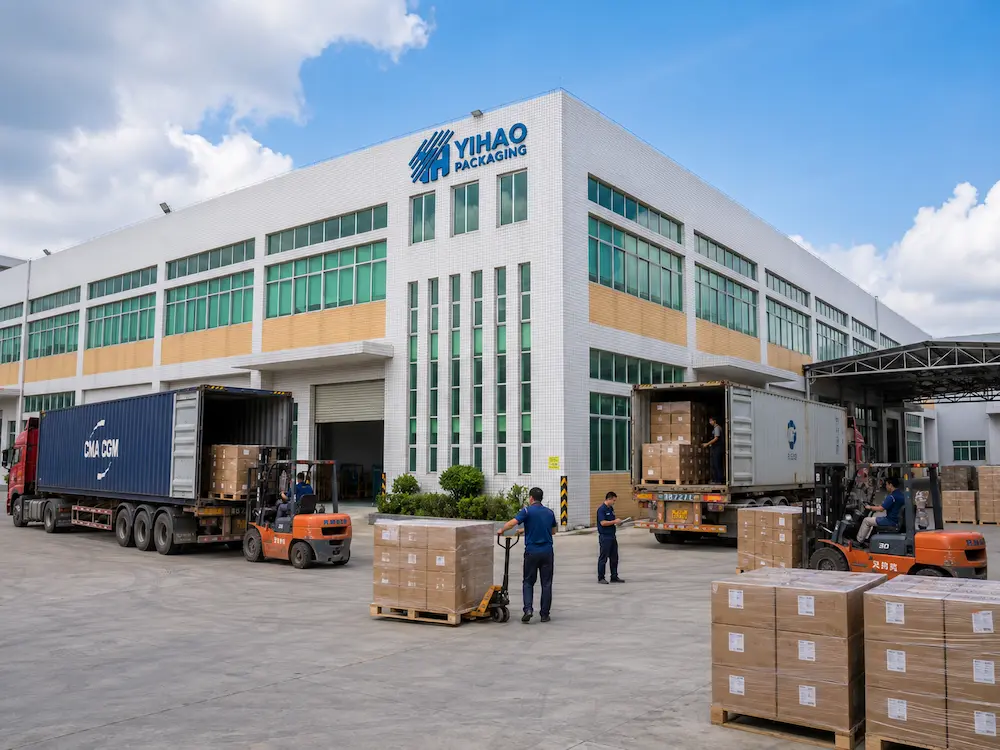
Some buyers use bulk produce containers for multi-location distribution or export-related supply. These programs need stronger attention to stacking, carton fit, label placement, and product protection. A container that works in one local kitchen may not work across longer distribution routes.
For export or regional distribution, buyers should test filled containers inside real cartons and storage systems. They should check whether lids stay closed, whether containers deform under pressure, and whether the product remains visually acceptable after handling.
When bulk containers are part of export fruit packaging or cross-regional supply, buyers should treat packaging as part of logistics planning. Material, size, carton fit, and handling route should be reviewed together.
How to Choose the Right Bulk Produce Container Size
The right size depends on product type, fill weight, handling method, refrigerator space, serving plan, and sales channel. Buyers should not choose the largest available container by default. A container that is too large may create product pressure, poor rotation, wasted space, or less attractive presentation.
For cut fruit, the container should support portion planning and moisture management. For berries, depth should be controlled to reduce compression. For bakery fruit toppings, the pack should support clean access and easy storage. For foodservice prep, the container should fit workflow and storage routines.
Buyers should test several sizes with real products before selecting a final format. Filled testing helps identify whether the container supports handling, stacking, product appearance, and staff efficiency.
Bulk Produce Container Buyer Checklist
| Checklist Item | What Buyers Should Confirm | Why It Matters |
|---|---|---|
| Application | Supermarket prep, cafe use, bakery toppings, foodservice storage, or chilled display. | The use case determines size, lid, material, and structure. |
| Product Type | Berries, cut fruit, grapes, salad ingredients, bakery fruit, or mixed produce. | Different products need different depth, support, and moisture handling. |
| Capacity | Fill weight, portion planning, storage space, and rotation speed. | Wrong capacity can cause waste, compression, or inefficient handling. |
| Material | PET, rPET, or other packaging options. | Material affects clarity, rigidity, sustainability discussion, and handling. |
| Lid Security | Closure fit, repeated opening, transport movement, and staff handling. | Bulk containers need secure closure under real use. |
| Stacking | Filled-container stacking, refrigerator fit, carton loading, and storage efficiency. | Stacking affects workflow and product protection. |
| Label Area | Product name, date label, batch code, barcode, or internal ID. | Labeling supports inventory control and foodservice operations. |
| Sample Testing | Filled sample tests under real chilled handling and storage conditions. | Testing prevents wrong packaging decisions. |
| Wholesale Supply | Repeat order support, communication, carton quantity, and seasonal demand. | Bulk users need stable packaging replenishment. |
Common Mistakes When Buying Bulk Produce Containers
Choosing Only by Capacity
A larger container is not always better. If the container is too deep, delicate fruit can be compressed. If it is too wide, it may waste refrigerator or carton space. Buyers should choose size based on product behavior and workflow.
Approving Empty Samples Only
Empty containers do not show lid pressure, product movement, stacking behavior, or storage efficiency. Filled sample testing is necessary before wholesale orders.
Ignoring Refrigerator and Shelf Fit
Bulk containers must fit real storage environments. A package that does not stack well in cold rooms or refrigerators will create operational problems.
Using One Container for Every Product
Berries, cut fruit, bakery toppings, salad ingredients, and foodservice prep items need different packaging logic. One container rarely fits every application well.
Choosing a Supplier Without Wholesale Support
Bulk users need repeat supply. Buyers should confirm whether the supplier can support consistent orders, clear specifications, and practical communication.
What a Produce Packaging Manufacturer Should Help Buyers Evaluate
A professional produce packaging manufacturer should help buyers evaluate application fit, material, size, lid structure, stacking, label space, and wholesale supply. The conversation should go beyond a price list.
For bulk produce packaging, buyers should expect practical questions from the supplier: What product will be packed? How much product goes into each container? Will the packaging be used for prep, chilled display, takeaway, bakery production, or foodservice distribution? Does the buyer need PET clarity, rPET options, stronger stacking, or label-friendly surfaces?
This level of communication helps buyers avoid mismatched packaging and reduces the risk of ordering containers that do not work in daily operations.

Why YIHAO Supports Bulk Produce Container Buyers
YIHAO supports buyers with clear PET/RPET packaging solutions for fresh produce, berries, fresh-cut fruit, salads, snacks, bakery items, deli food, and chilled ready-to-eat applications. For buyers sourcing bulk produce containers, the key value is application-based packaging selection.
Instead of treating bulk produce packaging as one generic size category, YIHAO helps buyers compare product type, capacity, lid structure, material clarity, stacking, label area, chilled storage, sample testing, and wholesale supply needs. This supports better decisions for supermarkets, cafes, bakeries, foodservice brands, distributors, and packaging buyers.
Buyers can prepare product type, target fill weight, handling route, storage method, sales channel, label needs, and estimated order plan before requesting samples. A structured conversation makes it easier to select the correct container before mass ordering.
FAQ About Bulk Produce Containers
1. What are bulk produce containers used for?
Bulk produce containers are used for larger portions of fresh fruit, cut produce, salad ingredients, bakery toppings, cafe prep, supermarket programs, and foodservice storage. They help buyers manage larger-volume handling, chilled storage, stacking, labeling, and repeat wholesale supply.
2. How do I choose the right size for bulk produce containers?
Choose the size based on product type, fill weight, storage space, rotation speed, lid clearance, stacking, and handling route. Buyers should test filled samples instead of choosing by capacity alone.
3. Are PET or rPET containers suitable for bulk produce packaging?
PET and rPET containers are suitable for many bulk produce packaging applications when buyers need clear visibility, practical rigidity, and chilled food presentation. Buyers should confirm material details, food-contact suitability, and target-market requirements with the supplier.
4. Can bulk produce containers be used for berries?
Yes, bulk produce containers can be used for berries in bakery, cafe, foodservice, or prep applications, but buyers must control depth, stacking, and pressure. Delicate berries require careful filled sample testing before wholesale orders.
5. What should buyers ask a bulk produce container supplier?
Buyers should ask about material, size range, lid security, stacking, label area, carton packing, chilled storage performance, sample testing, wholesale supply support, and whether the supplier understands supermarket, cafe, bakery, and foodservice applications.
References
- U.S. Food and Drug Administration, Packaging & Food Contact Substances Resources.
- U.S. Food and Drug Administration, Guidance for Industry: Use of Recycled Plastics in Food Packaging, Chemistry Considerations.
- European Commission, Packaging and Packaging Waste Policy Resources.
- Food and Agriculture Organization of the United Nations, Food Loss and Waste Reduction Resources.
- United States Department of Agriculture, Fresh Fruit and Vegetable Market Resources.
- International Fresh Produce Association, Fresh Produce Supply Chain and Packaging Resources.
- Association of Plastic Recyclers, Design Guide for Plastics Recyclability.
- ASTM International, Packaging Performance and Testing Standards.
Deep-Dive Insights: How Buyers Should Think About Bulk Produce Containers
How should buyers define the right bulk produce container?
The right container should be defined by application, not only by capacity. Buyers should consider product type, fill weight, storage conditions, lid security, stacking, label needs, and whether the pack is used for supermarket prep, cafe service, bakery production, or foodservice distribution.
Why does operational use matter?
Bulk produce packaging often works behind the scenes. It must support staff workflow, refrigerator organization, ingredient rotation, and larger-volume handling. A package that looks good but slows operations is not the best choice.
When should buyers choose retail-ready packs instead?
Retail-ready packs are better when the product is sold directly to consumers as a finished unit. Bulk produce containers are better for prep, storage, larger portions, and foodservice handling.
What should buyers test first?
Buyers should test filled containers under real conditions. This includes lid closure, stacking, storage fit, label application, product visibility, and chilled handling performance.
What should buyers avoid?
Buyers should avoid choosing only by size, approving empty samples, ignoring refrigerator fit, using one container for every product, and selecting a supplier without reliable wholesale support.
Final Note / Practical Takeaway
© 2026 YIHAO Packaging. This article is created for supermarkets, cafes, bakeries, foodservice brands, distributors, and packaging buyers evaluating bulk produce containers, wholesale fresh produce packaging, farm packaging containers, berry packaging wholesale, produce packaging manufacturers, and fruit packaging suppliers. All rights reserved.