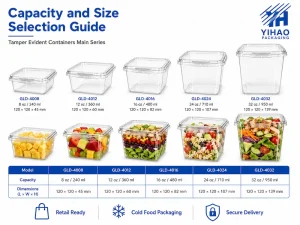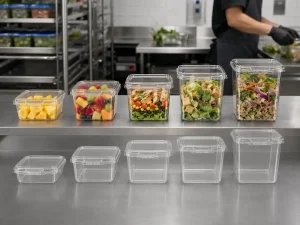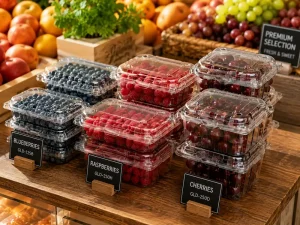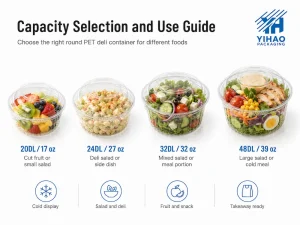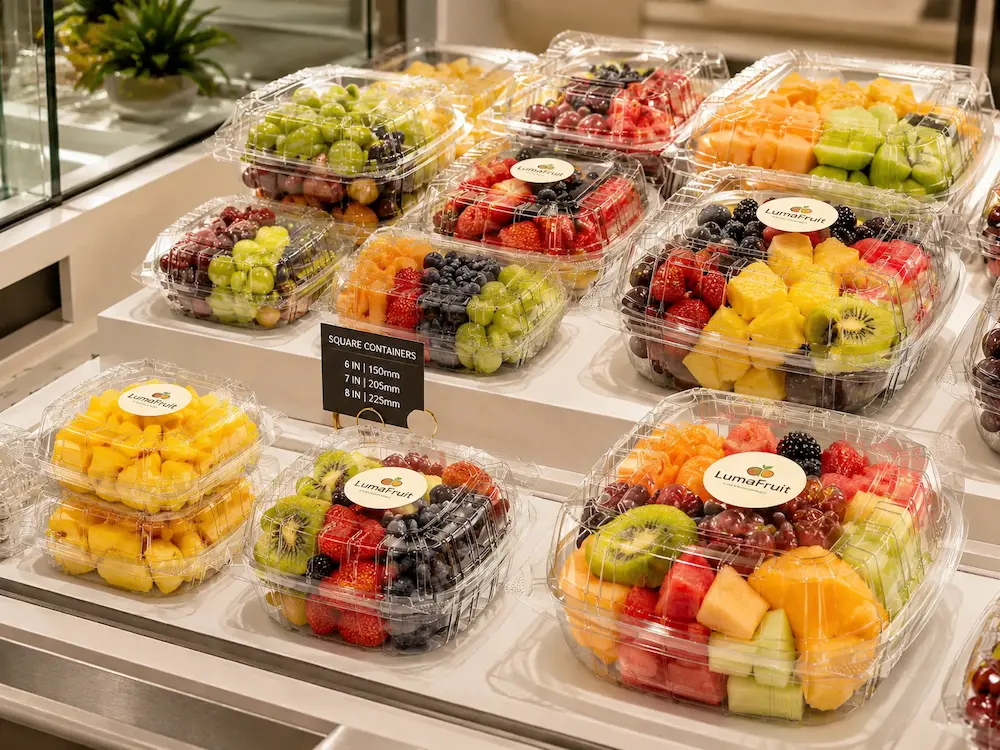
Choosing the best fruit packaging supplier is not only a purchasing task. It is a packaging strategy decision for supermarkets, farms, fruit brands, fresh-cut processors, cafes, distributors, exporters, and foodservice teams. Fruit packaging must protect delicate products, improve retail visibility, support chilled display, make takeaway convenient, and help buyers manage repeat wholesale supply.
Fruit is highly visual. Shoppers judge freshness by color, portion size, cut quality, moisture appearance, and overall presentation. A clear container can make blueberries, strawberries, apple slices, grapes, mixed fruit, and chilled snack packs easier to inspect before purchase. At the same time, packaging must support real handling conditions such as filling, closing, stacking, labeling, carton packing, refrigerated storage, and retail shelf movement.
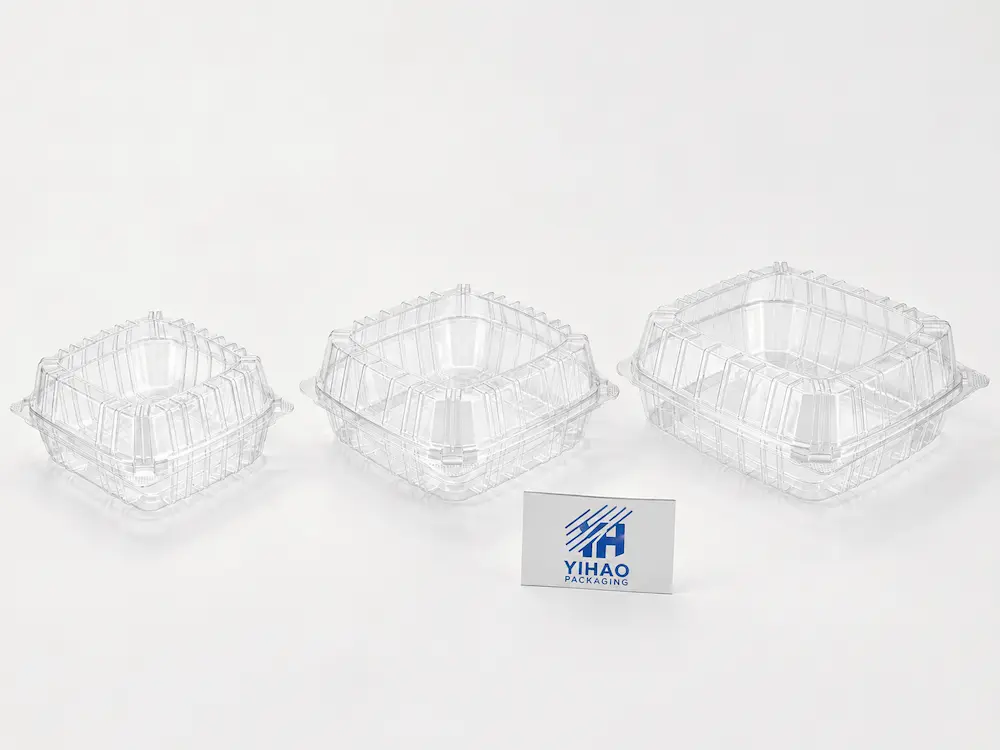
A reliable fruit packaging supplier should understand more than product size. Buyers need a partner that can explain material options, container structure, lid fit, ventilation, compartment layout, stacking logic, label space, and sample testing. For teams sourcing wholesale fresh produce packaging, the best supplier is the one that connects packaging design with real commercial use.
YIHAO is a food packaging manufacturer and solution provider focused on practical PET/RPET packaging for fruit, berries, fresh-cut fruit, salads, snacks, bakery items, deli food, and chilled ready-to-eat applications. This guide explains how buyers can choose a better packaging partner for retail display, takeaway, chilled food, farm supply, and export fruit packaging.
Why the Right Fruit Packaging Supplier Matters
Fruit packaging directly affects how the product looks, how it travels, how it stacks, and how quickly buyers can identify quality at the shelf. A weak container may look acceptable in a sample photo, but it can fail when filled with real fruit. Poor lid closure, weak walls, unclear material, bad label placement, or unstable stacking can create problems during retail and distribution.
For food packaging teams, the right fruit packaging supplier reduces these risks by helping buyers match packaging to the product category. Whole berries, fresh-cut fruit, apple packs, kiwi packs, fruit-and-nut snacks, salad bowls, and chilled takeaway packs do not need the same structure. Each product has different pressure points, moisture behavior, display needs, and handling conditions.
The supplier’s role is not simply to send a price list. The supplier should help buyers ask better questions: What fruit is being packed? How much product goes into each container? Will the pack be used for retail display, takeaway, chilled food, farm packing, or export? Does the packaging need vents, compartments, dome lids, anti-fog features, or stronger stacking points?
Retail Display Fruit Packaging: Visibility Comes First
Retail fruit packaging works as a silent salesperson. In supermarkets, convenience stores, fruit counters, and refrigerated displays, clear packaging helps shoppers evaluate freshness quickly. The package should show the fruit clearly without making the product look crowded, foggy, or cheap.
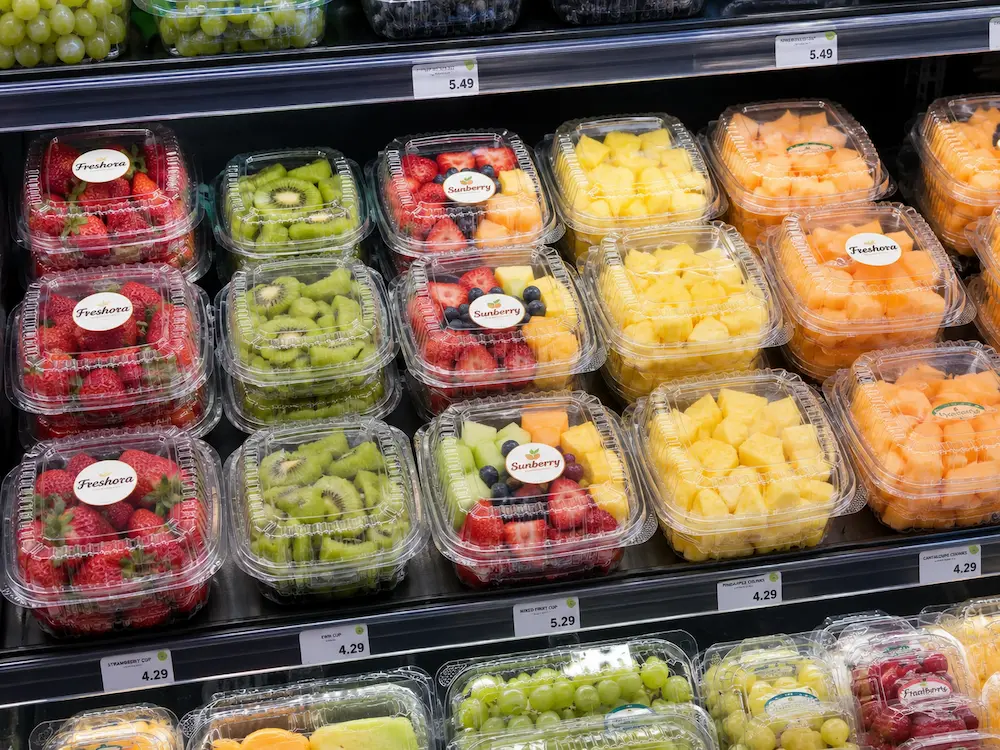
Clear PET and rPET containers are often preferred for fruit packaging because they support clean visibility and practical rigidity. For fresh produce, transparency helps buyers inspect color and texture. For fresh-cut fruit, it helps show portion value and product cleanliness. For premium fruit packs, it supports a more organized retail presentation.
A strong fruit packaging supplier should help buyers compare clamshells, bowls, trays, square containers, compartment packs, and hinged containers according to display purpose. A berry pack needs airflow and gentle protection. A fresh-cut fruit container needs closure and visual cleanliness. A chilled fruit salad bowl needs lid fit, stacking, and enough height for attractive presentation.
Takeaway Fruit Packaging: Convenience, Closure, and Clean Handling
Takeaway fruit packaging has a different job from whole-produce retail packaging. Consumers buy takeaway fruit because it is ready to eat, easy to carry, and convenient for breakfast, office snacks, school lunch, cafe counters, meal deals, and grab-and-go refrigerators. The packaging must make the product feel clean, portable, and worth buying immediately.
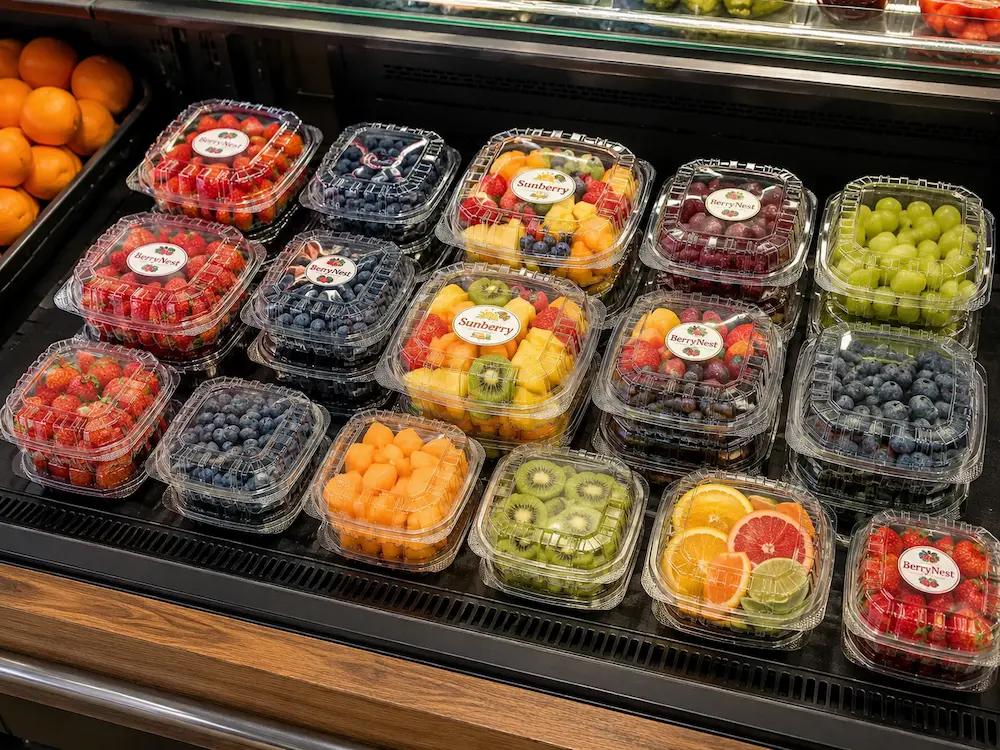
For takeaway fruit packs, buyers should check lid security, hand feel, portion logic, leak resistance expectations, stacking in cold shelves, and how the fruit looks after movement. A container that works for dry snacks may not work for juicy fruit. A pack that looks good when empty may not present well after mango cubes, grapes, melon, berries, or apple slices are filled.
Compartment packaging is especially useful for takeaway programs. It helps separate fruit from nuts, toppings, yogurt, granola, or other snack components. For mixed fruit and snack packs, separation improves visual order and reduces product blending during handling.
Chilled Food Packaging: Fruit, Salads, and Ready-to-Eat Programs
Many fruit packaging programs overlap with chilled food packaging. Supermarkets and cafes often sell fresh-cut fruit next to salads, deli sides, yogurt cups, snack bowls, and chilled prepared foods. This means buyers should not evaluate fruit packaging in isolation. They should consider how the packaging fits the wider chilled display system.
Chilled food packaging should support product visibility, clean closure, stacking, refrigerator display, and easy takeaway. For fruit salads and mixed chilled foods, bowls and square PET containers often provide a more premium display than flat trays. For smaller fruit snack packs, compact hinged containers or compartment packs may be more suitable.
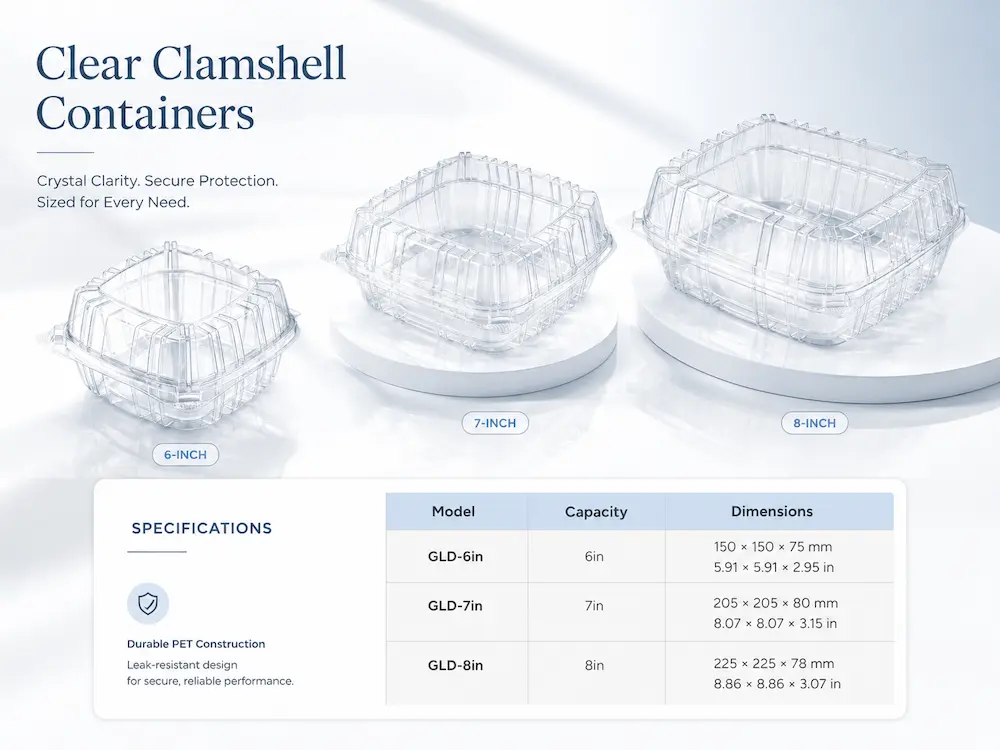
The best fruit packaging supplier should understand this overlap. A buyer may start with fresh fruit packaging, but the same program may later require salad bowls, snack containers, deli packs, or larger shared chilled food containers. A supplier with a wider PET/RPET packaging range helps buyers build a more consistent packaging system.
Wholesale Fresh Produce Packaging: What Buyers Should Compare
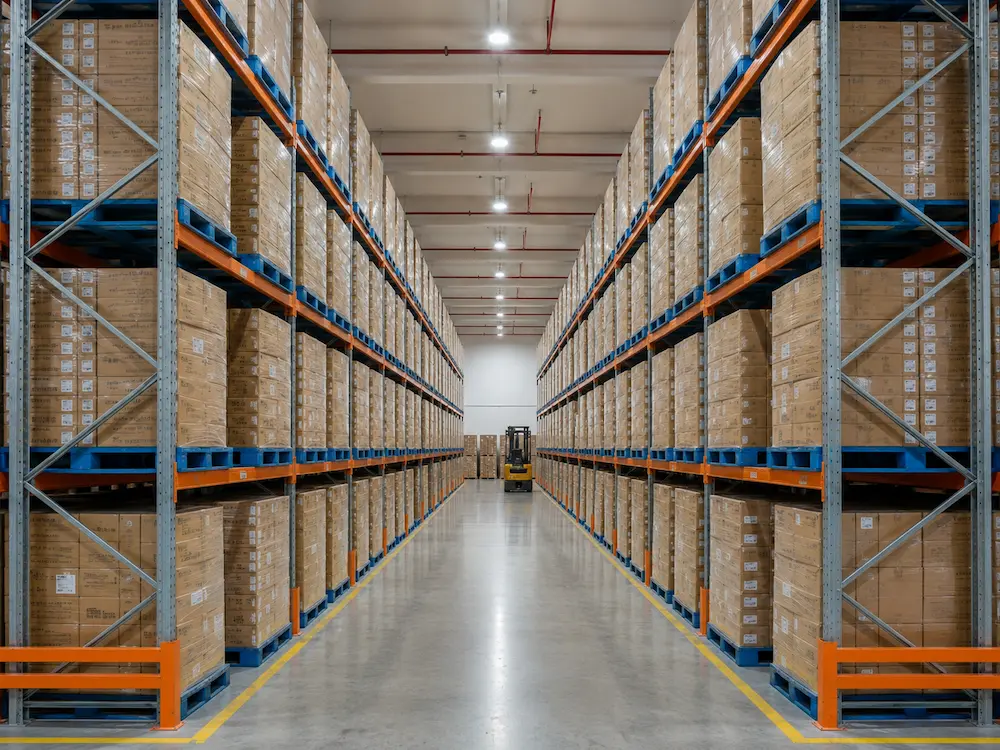
Wholesale fresh produce packaging requires practical evaluation. Buyers should compare more than unit price. They should review material clarity, rigidity, closure style, ventilation, stacking strength, carton packing, product fit, labeling surface, sample availability, and repeat supply stability.
For supermarkets and distributors, wholesale packaging must support daily handling and replenishment. For farms and packing houses, it must support quick filling and movement from packing line to carton. For exporters, it must remain stable through longer routes. For foodservice buyers, it must provide clean takeaway presentation and predictable supply.
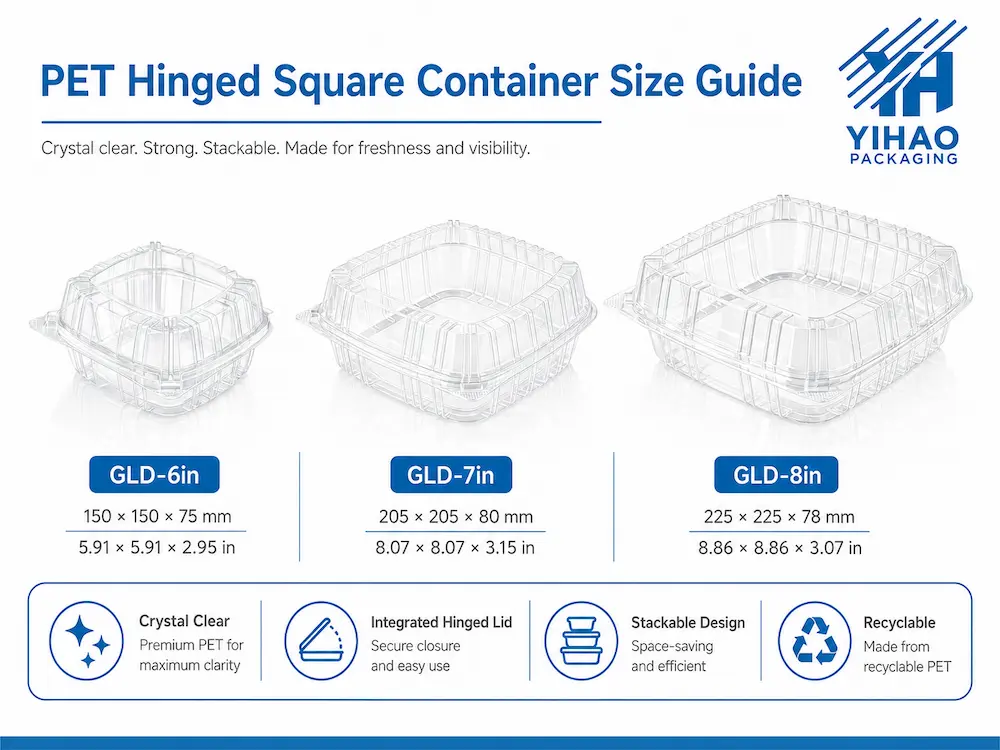
Buyers should ask whether the supplier can support different product families. A professional fruit packaging supplier should be able to discuss berry clamshells, fresh-cut fruit containers, apple and kiwi clamshells, chilled fruit bowls, square deli containers, and compartment packs according to product behavior.
| Buyer Checkpoint | Why It Matters | What to Ask the Supplier |
|---|---|---|
| Product Fit | Different fruits need different depth, lid clearance, and support. | Which container works best for my fruit type and fill weight? |
| Material | PET/RPET clarity and rigidity affect display and handling. | What material options are available for this packaging? |
| Closure | Weak lids create transport and shelf-display problems. | Can I test lid fit with actual filled samples? |
| Ventilation | Berries and produce may need airflow during chilled handling. | Does this pack include venting suitable for my product? |
| Stacking | Wholesale and export orders require carton and shelf stability. | How does the filled pack perform in cartons and on shelves? |
| Label Area | Retail packs need barcode, brand, and product information space. | Where should the label be placed without blocking visibility? |
| Supply Support | Repeat orders need consistency and clear communication. | Can the supplier support ongoing wholesale replenishment? |
Berry Packaging Wholesale: Special Requirements for Delicate Fruit
Berry packaging wholesale deserves special attention because berries are delicate, moisture-sensitive, and highly visual. Blueberries, raspberries, strawberries, and blackberries should not be treated as one packaging category. A blueberry pack may need secure containment and ventilation. A raspberry pack needs gentle support. A strawberry pack needs lid clearance and enough space to avoid compression.
Buyers should test berry packaging with real fruit instead of approving empty samples only. The filled container should be checked for fruit movement, lid pressure, vent function, stacking stability, label placement, and retail appearance after handling.
A reliable fruit packaging supplier should offer berry packaging options that support different pack weights and display styles. Buyers should also check whether the supplier can support farm programs, supermarket packs, distributor orders, and export fruit packaging with consistent quality.
Farm Packaging Containers: From Packing House to Retail Shelf
Farm packaging containers need to perform across several stages: harvesting, sorting, filling, closing, carton packing, distribution, and retail display. For farms and growers, packaging must support operational speed. For buyers and retailers, the same packaging must present the fruit cleanly and protect product value.
This is why farm packaging should be selected with both production and retail needs in mind. A container that fills quickly but displays poorly may not help the brand. A container that looks good but fails during stacking will create operational losses. The best packaging connects both sides.
Buyers should ask the supplier about carton fit, pallet efficiency, filled-pack stacking, ventilation, label position, and whether samples can be tested with actual harvest products. For farms supplying supermarkets or exporters, these checks are not optional; they protect both product quality and customer trust.
Export Fruit Packaging: Stability, Inspection, and Market Fit
Export fruit packaging must survive longer and more complex handling routes. A pack may move from farm or packing house to cold storage, carton loading, pallet transport, overseas shipping, distribution centers, and retail shelves. Packaging that is only designed for short local movement may not be enough.
For export buyers, important factors include stacking strength, carton efficiency, product visibility, airflow, label space, barcode readability, and packaging consistency. Clear packaging also helps with visual inspection because buyers and handlers can see product condition without opening every pack.
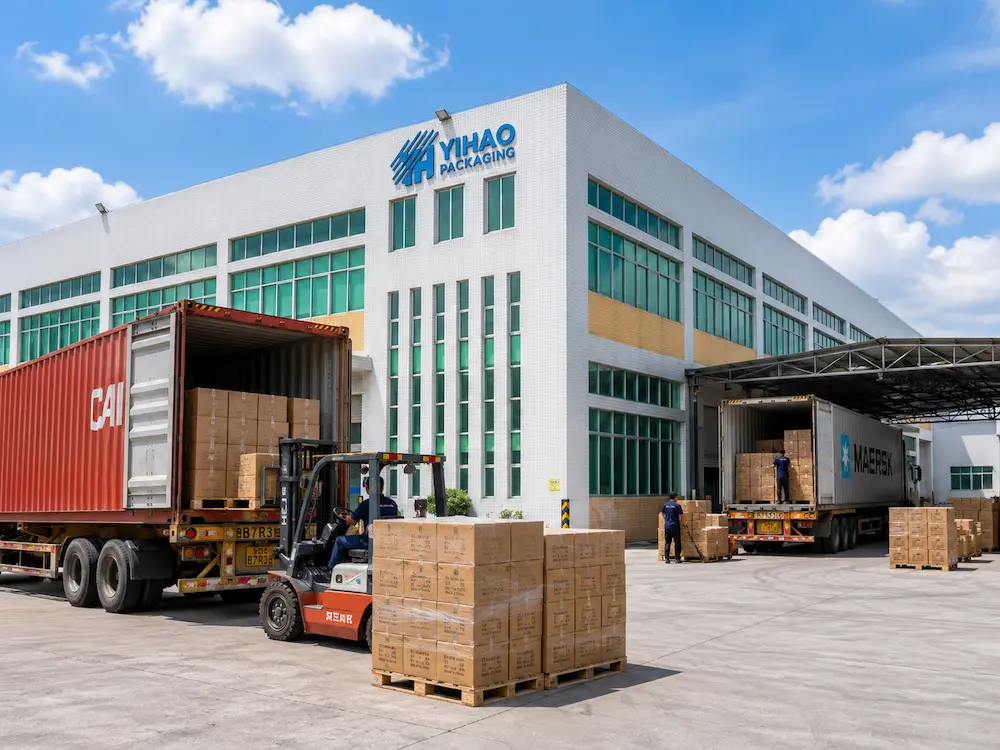
A capable fruit packaging supplier should discuss the target market, fruit type, packing weight, carton layout, and retail display requirements before recommending a structure. Export packaging should not be chosen only by appearance; it should be tested under realistic filling and transport conditions.
Manufacturer, Wholesale Supplier, or Trading Company: Which One Is Better?
Buyers often compare three types of partners: a produce packaging manufacturer, a wholesale supplier, and a trading company. Each can be useful in different situations, but food packaging teams should understand the difference.
A direct manufacturer is stronger when buyers need product development, structure discussion, material confirmation, sample testing, repeated technical communication, or long-term packaging programs. A wholesale supplier may be enough when buyers need standard packaging quickly. A trading company may help with mixed sourcing, but technical communication can become slower when product details matter.
For long-term fruit packaging programs, the best choice is usually a partner with manufacturer-level product understanding and supplier-level service responsiveness. The buyer should not only ask, “What is the price?” The better question is, “Can this partner help us choose the right packaging and keep supply stable?”
How to Test Fruit Packaging Samples Before Ordering
Sample testing is one of the most important steps before confirming a wholesale order. Buyers should never approve a container based only on empty samples or photos. Real fruit creates pressure, moisture, movement, and display conditions that empty packaging cannot reveal.
A practical test should include filling the container with the actual fruit weight, closing the lid several times, stacking filled packs, applying labels, placing packs inside cartons, checking chilled display appearance, and observing whether the fruit still looks attractive after handling.
For takeaway fruit packs, buyers should check hand feel and closure confidence. For chilled food programs, they should check refrigerator display and stacking. For berries, they should check ventilation and compression. For export fruit packaging, they should check carton loading and longer handling simulation.
Packaging Format Comparison for Fruit Buyers
| Packaging Format | Best For | Main Advantage | Buyer Check |
|---|---|---|---|
| Produce Clamshell Containers | Berries, grapes, small fruit, retail-ready produce | Hinged structure, visibility, fast packing | Check lid lock, vents, hinge strength, and stacking. |
| Fresh-Cut Fruit Containers | Mixed fruit, cut fruit, snack packs, takeaway fruit | Clean display and portion control | Check moisture behavior, lid fit, and product visibility. |
| Compartment Containers | Fruit-and-nut packs, mixed snack packs, assorted fruit | Separation and organized presentation | Check compartment depth and ingredient movement. |
| Round PET Bowls | Fruit salads, chilled bowls, shared packs | Premium display and larger visual surface | Check lid height, stacking, and shelf layout. |
| Square PET Containers | Fruit snacks, deli sides, salad-fruit combinations | Efficient storage and modern display | Check lid compatibility, carton fit, and portion size. |
| Farm Packaging Containers | Grower packs, packing houses, farm-to-retail programs | Operational handling and retail transition | Check filled weight, carton loading, and stack strength. |
Bulk Produce Containers for Multi-Channel Food Brands
Some buyers need more than retail fruit packs. Supermarkets, cafes, bakeries, and foodservice brands may also need bulk produce containers for larger portions, prep operations, display programs, or multi-location supply. These buyers should evaluate packaging by handling volume, storage efficiency, lid strength, stacking, and ease of use.
Bulk produce packaging is especially useful when buyers manage several product types across different sales channels. A supermarket may need berry packs, fresh-cut fruit containers, salad bowls, and larger produce containers at the same time. A foodservice brand may need packaging that supports prep, cold storage, and customer-facing display.
A capable fruit packaging supplier should understand this broader supply need and help buyers build a packaging range that connects small retail packs, takeaway formats, chilled food displays, and bulk produce containers.
What the Best Fruit Packaging Supplier Should Offer
The best fruit packaging supplier should offer more than a container catalog. Buyers should look for practical support across product matching, sample testing, material discussion, packaging consistency, order communication, and wholesale supply planning.
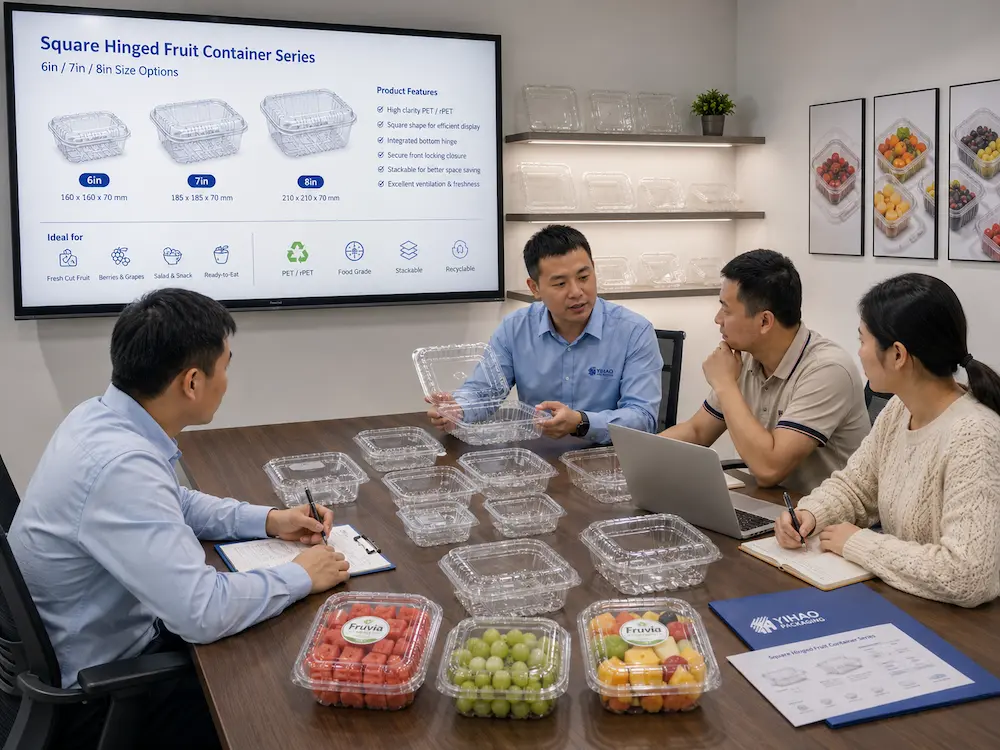
A good supplier should ask about fruit type, fill weight, sales channel, cold-chain handling, export route, label requirements, and expected order plan. These questions show that the supplier is thinking about the buyer’s real packaging use, not only pushing a standard item.
Buyers should also check whether the supplier has a broad enough range for related applications. A fruit packaging program may start with berries and later expand into fresh-cut fruit, fruit salads, snack packs, farm containers, chilled foods, export packs, or bulk produce containers. A supplier with connected packaging knowledge can support long-term sourcing more effectively.
Why YIHAO Is a Practical Partner for Fruit Packaging Buyers
YIHAO supports buyers with clear PET/RPET packaging solutions for fresh produce, berries, fresh-cut fruit, salads, snacks, bakery items, deli foods, and chilled ready-to-eat applications. For buyers looking for a reliable fruit packaging supplier, the key value is application-based packaging selection.
Instead of treating fruit packaging as one generic category, YIHAO helps buyers compare product type, portion size, lid structure, ventilation, material clarity, label space, stacking, sample testing, and wholesale supply needs. This approach supports better packaging decisions for retail display, takeaway fruit packs, chilled food, farm supply, export fruit packaging, and bulk produce packaging.
For supermarkets, farms, cafes, distributors, exporters, and food packaging teams, a structured supplier conversation leads to fewer mistakes and more practical orders. Buyers can prepare fruit type, pack weight, target market, label needs, expected order plan, and sample testing requirements before sending an inquiry.
FAQ About Choosing a Fruit Packaging Supplier
1. What should I look for in a fruit packaging supplier?
Buyers should look for a fruit packaging supplier that understands product visibility, PET/RPET material options, lid closure, ventilation, stacking, label placement, sample testing, wholesale supply, and application-specific packaging for berries, fresh-cut fruit, takeaway packs, chilled food, farm containers, bulk produce containers, and export fruit packaging.
2. What packaging is best for retail fruit display?
Clear PET or rPET packaging is often a strong option for retail fruit display because it helps shoppers see fruit color, portion size, freshness cues, and product quality. The best structure depends on the fruit type, fill weight, lid clearance, ventilation needs, and retail shelf layout.
3. How do I choose packaging for takeaway fruit packs?
For takeaway fruit packs, buyers should check lid security, portability, portion size, product visibility, moisture behavior, and chilled display performance. Compartment containers are useful for fruit-and-nut packs or mixed snack packs because they separate ingredients and improve presentation.
4. Why is berry packaging wholesale different from general fruit packaging?
Berry packaging wholesale is different because berries are delicate, moisture-sensitive, and highly visual. Blueberries, raspberries, strawberries, and blackberries need different levels of ventilation, lid clearance, gentle support, and stacking performance. Buyers should test samples with real fruit before ordering.
5. Can one supplier support retail, takeaway, farm, and export fruit packaging?
Yes, one experienced supplier can support retail, takeaway, farm, and export fruit packaging when it has the right product range, sample support, material knowledge, carton packing awareness, and wholesale supply capability. Buyers should confirm these details before building a long-term supply relationship.
References
- U.S. Food and Drug Administration, Packaging & Food Contact Substances Resources.
- U.S. Food and Drug Administration, Guidance for Industry: Use of Recycled Plastics in Food Packaging, Chemistry Considerations.
- European Commission, Packaging and Packaging Waste Policy Resources.
- Food and Agriculture Organization of the United Nations, Food Loss and Waste Reduction Resources.
- United States Department of Agriculture, Fresh Fruit and Vegetable Market Resources.
- International Fresh Produce Association, Fresh Produce Supply Chain and Packaging Resources.
- Association of Plastic Recyclers, Design Guide for Plastics Recyclability.
- ASTM International, Packaging Performance and Testing Standards.
Deep-Dive Insights: How Buyers Should Think About Fruit Packaging Supply
How should buyers define the best fruit packaging supplier?
The best supplier should be defined by application fit, not only by price. A strong fruit packaging supplier helps buyers connect fruit type, container structure, PET/RPET material options, lid performance, stacking, labeling, sample testing, and wholesale supply planning.
Why does retail display change packaging selection?
Retail fruit packaging must help the product sell visually. Clear packaging should show color, freshness, portion size, and product quality. A container that protects fruit but hides too much of the product may reduce shelf impact.
What makes takeaway fruit packaging different?
Takeaway fruit packaging must support portability, ready-to-eat presentation, lid security, and clean handling. Buyers should test whether the pack still looks fresh and organized after filling, closing, stacking, and chilled display.
Which packaging option works best for chilled food programs?
There is no single best option for all chilled programs. Fresh-cut fruit may need clear hinged containers or compartment packs, while fruit salads may fit round PET bowls or square PET containers. The correct choice depends on portion size, moisture level, display style, and sales channel.
What should buyers avoid when choosing a supplier?
Buyers should avoid choosing only by the lowest quote, approving empty samples without filled testing, using one container for every fruit type, ignoring label placement, and making sustainability claims without checking material details and local recycling conditions.
Final Note / Practical Takeaway
© YIHAO Packaging. All rights reserved. All articles, product images, packaging designs, technical specifications, and website materials are protected by copyright. Unauthorized copying, reproduction, redistribution, modification, or commercial use is strictly prohibited without prior written permission.