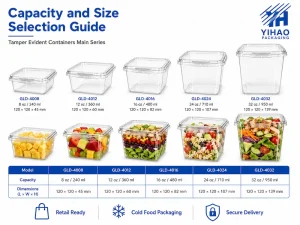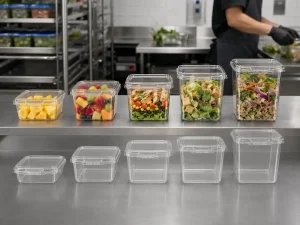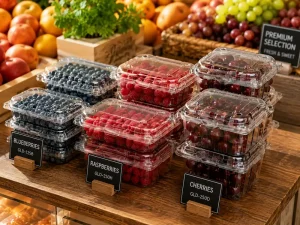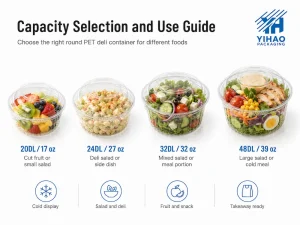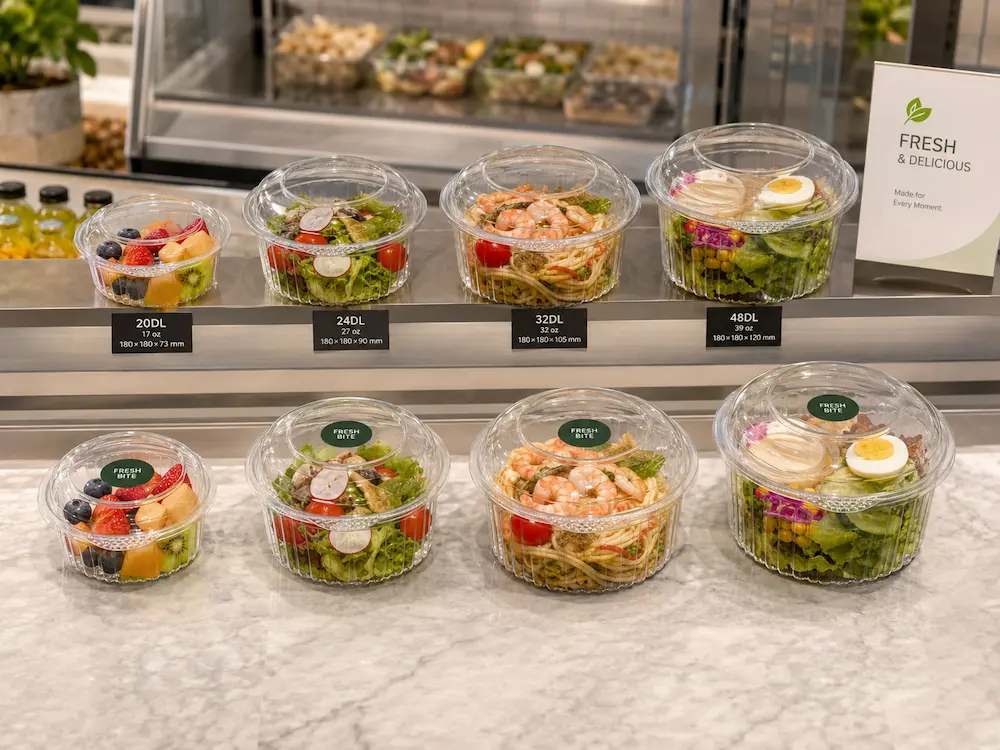
Choosing the right clear PET deli containers is not a small packaging detail. It affects how fresh food looks on the shelf, how fast staff can pack takeaway orders, how safely portions are handled, and how confidently customers decide to buy.
Many buyers make the same mistake: they choose a container by capacity first. Then they discover the lid does not close well after filling, the salad looks compressed, the fruit portion looks underfilled, the label blocks the food, or the container does not stack neatly in chilled display.
For supermarkets, delis, cafes, salad bars, convenience stores, distributors, and food brands, packaging must solve real operational problems. It must support product visibility, daily packing speed, cold shelf organization, storage efficiency, and repeatable wholesale supply.
YIHAO is a food packaging manufacturer and solution provider focused on PET and rPET packaging formats for fruit, salads, deli food, snacks, bakery items, cold drinks, and chilled ready-to-eat meals. For buyers sourcing clear PET deli containers, the goal is not simply to buy a transparent box. The goal is to build a packaging system that fits the food, the sales channel, and the buyer’s long-term category plan.
This guide explains how to compare PET hinged deli containers, hinged deli containers, salad clamshell containers, deli clamshell packaging, and related wholesale food packaging options for retail display, takeaway service, and chilled food programs.
Why Clear PET Deli Containers Matter for Retail Display and Chilled Food
Clear PET packaging is widely used for chilled food because it gives customers immediate visual access to the product. In a cold shelf, shoppers often decide within seconds. They look at color, portion, freshness cues, ingredient layout, and overall presentation before reading every detail on the label.
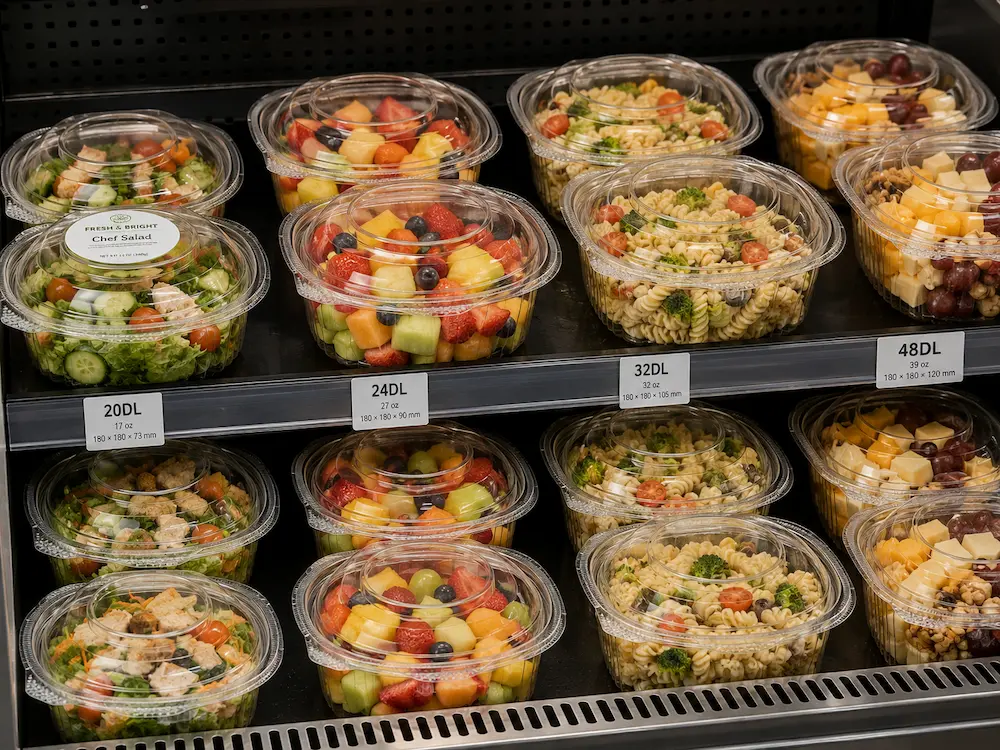
This is where clear PET deli containers create value. The container becomes part of the selling surface. It helps food brands show salads, fresh-cut fruit, nuts, deli sides, bakery snacks, and ready-to-eat portions without hiding the product behind opaque packaging.
For chilled food programs, packaging must support the full handling chain: filling, closing, stacking, labeling, shelf display, customer selection, takeaway transport, and final opening. Weak packaging creates slow packing, shelf mess, repacking work, and customer hesitation. Strong packaging makes the food easier to sell and easier to manage.
Product visibility improves buying confidence
Customers trust food more easily when they can see it clearly. A transparent PET lid helps customers check ingredients, portion size, color, and freshness cues before purchase. This matters for salads, fruit mixes, deli sides, cold snacks, and chilled prepared foods where appearance directly influences buying decisions.
Hinged structures reduce lid-matching work
Many foodservice teams choose PET hinged deli containers because the lid and base are connected in one piece. Staff do not need to search for a matching lid during busy service. This supports faster packing in delis, cafes, supermarket prep rooms, takeaway counters, and convenience store food programs.
Cold shelf presentation becomes easier to control
Retail buyers need packaging that faces forward, stacks consistently, and keeps the product easy to identify. A controlled range of hinged deli containers helps organize multiple food categories in one chilled display area without making the shelf look messy.
Best Food Applications for Clear PET Deli Containers
The best clear PET deli containers are selected by application, not by appearance alone. Different foods require different container depths, lid profiles, closure strength, stacking logic, and label positions.
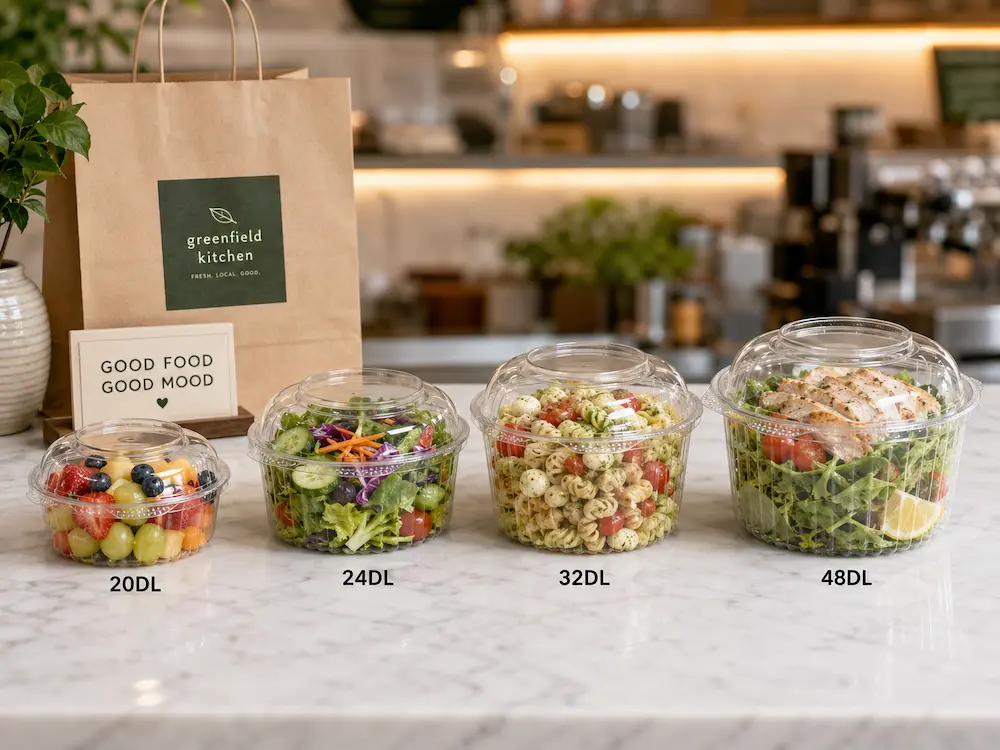
A container that works well for nuts may not be ideal for leafy salad. A pack that fits fresh-cut fruit may not be the best choice for a heavier deli meal. Serious buyers should begin with the food first, then choose the container structure.
Salads and grain bowls
Salad clamshell containers are commonly used for green salads, pasta salads, grain bowls, mixed vegetable salads, and chilled prepared sides. Clear lids allow customers to see lettuce, tomatoes, beans, pasta, quinoa, corn, cheese, toppings, and portion balance.
For salad programs, buyers should compare internal depth, lid clearance, label space, and stacking behavior. A shallow container may compress leafy ingredients. A container that is too deep may make a normal portion look smaller than it is.
For a broader salad packaging range, buyers can compare PET hinged deli containers with clear salad bowls with lids depending on portion size, visual style, and takeaway requirements.
Fresh-cut fruit and fruit mixes
Fresh-cut fruit relies heavily on visual appeal. Melon cubes, pineapple, grapes, berries, apple slices, mango, kiwi, and mixed fruit portions all benefit from clear food packaging.
Clear PET deli containers help show fruit from the top and sides while supporting chilled shelf display. Buyers should check whether the fruit releases moisture, whether the lid has enough headspace, and whether the container protects the product from being pressed during stacking.
For fruit-focused programs, related packaging options may include fresh-cut fruit containers, berry containers, PET snack containers, and clear hinged fruit clamshells.
Nuts, snacks, and deli sides
Nuts, trail mixes, cheese cubes, olives, cold pasta sides, vegetable sticks, hummus packs, and small snack portions often need compact, easy-open packaging. In these applications, hinged deli containers support quick packing and clear portion display.
The one-piece hinged structure reduces lid-matching mistakes during high-volume preparation. Clear PET also helps customers compare portion value before buying.
Bakery snacks and chilled desserts
Brownies, cookies, mini cakes, tiramisu portions, cheesecake slices, and chilled bakery snacks can also use clear PET formats when visibility is important. However, bakery items often need different lid heights compared with deli foods.
Buyers should not force one container across every food category. For taller desserts, a clear bakery clamshell or dome-lid dessert container may be more suitable than a shallow deli pack.
Grab-and-go meals and cold prepared foods
Convenience stores, supermarkets, and cafes often sell prepared foods through chilled grab-and-go sections. These may include sandwiches, wraps, cold noodles, rice bowls, salad portions, fruit cups, and snack boxes.
Deli clamshell packaging works well when a food program needs fast packing, clear presentation, and easy customer handling. For broader chilled food programs, buyers can connect this packaging category with grab-and-go food packaging and deli and ready-to-eat packaging.
PET Hinged Deli Containers vs Other Food Packaging Options
No single packaging format solves every food packaging problem. Clear PET deli containers perform especially well for chilled display, visible food presentation, and fast takeaway packing. However, buyers should still compare them with round salad bowls, square PET containers, paper boxes, tamper-evident containers, and PP containers depending on the final application.
| Packaging Option | Best For | Buyer Advantage | Limitation to Consider |
|---|---|---|---|
| Clear PET hinged deli containers | Cold salads, fruit, snacks, deli sides, chilled prepared foods | High product visibility, one-piece hinged structure, fast packing, retail-ready display | Not intended for hot-fill or microwave use unless the exact product is confirmed for that purpose |
| Round PET salad bowls | Premium salads, fruit bowls, chilled noodles, larger grab-and-go meals | Strong top-down display, bowl-style presentation, good for larger portions | Requires matching lid selection and more lid compatibility control |
| Square PET deli containers | Flat shelf display, salad portions, fruit, snacks, deli sides | Efficient shelf layout, strong stacking logic, clean label placement | Separate-lid versions may require more lid management during packing |
| Paper food boxes | Dry takeaway items, warm foods, bakery packs, branded presentation | Good printing surface and stronger opacity for some food types | Lower product visibility compared with clear PET packaging |
| Tamper-evident containers | Retail trust, delivery, prepared food, sealed grab-and-go packs | Visible security feature and stronger customer confidence for sealed food | More complex structure than standard hinged formats |
| PP food containers | Prepared meals and selected heat-related applications when confirmed | Often better suited for certain heat-related applications than PET | Lower clarity than PET in many standard food packaging formats |
The practical question is not simply “PET or not PET.” The better question is: does the food need visibility, cold shelf appeal, fast packing, and a connected lid? If the answer is yes, PET hinged deli containers are often a strong option.
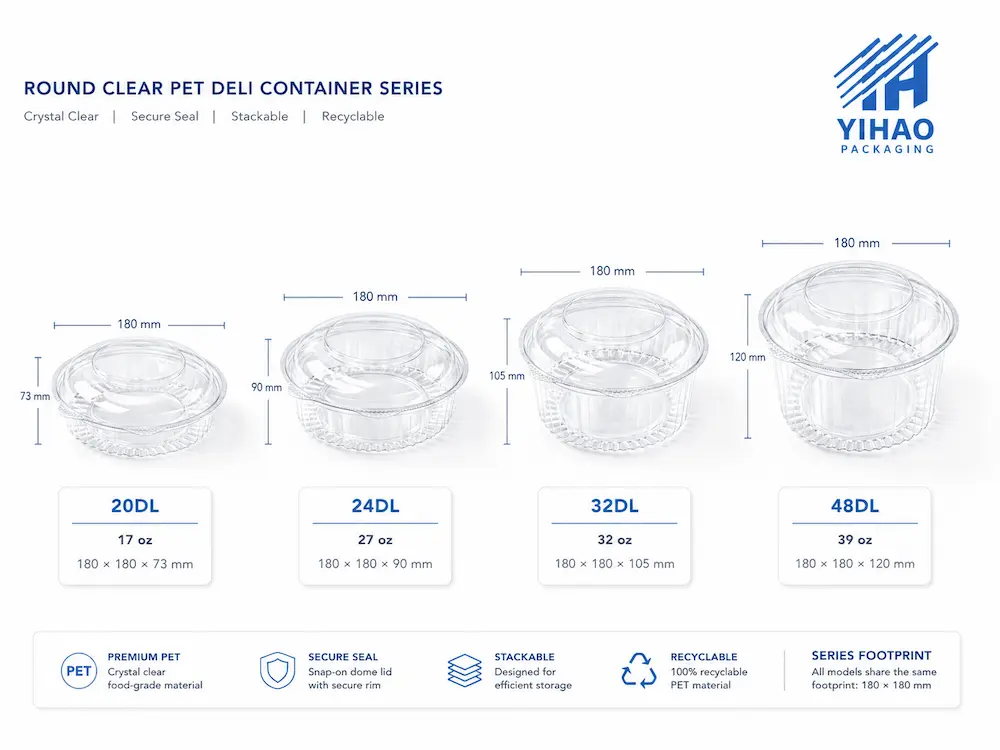
If the food requires heat resistance, tamper evidence, a premium bowl shape, or special compartment separation, another structure may be more suitable.
How to Choose the Right Hinged Deli Containers for Your Food Program
Wholesale buyers should not choose hinged deli containers only by capacity. Capacity matters, but real packaging performance depends on food weight, moisture level, lid clearance, hinge strength, stacking pressure, label position, transport distance, and daily handling conditions.
Match container depth with real food volume
A container that is too shallow can press against salad greens, fruit toppings, or bakery items. A container that is too deep can make normal portions look underfilled.
For retail display, visual fullness matters. Buyers should test actual food in sample containers before confirming wholesale orders.
Check lid closure after filling
The hinge and closure system are central to deli clamshell packaging. A good hinged container should close cleanly, stay aligned during handling, and open without excessive force.
Buyers should test the closure after filling the container, not only when the container is empty. Moisture, toppings, sauces, and dressing cups can change how the lid performs.
Compare stacking performance
Stacking matters in storage rooms, prep areas, delivery cartons, and chilled display shelves. A container should maintain shape under normal handling conditions and remain presentable when multiple packed units are arranged together.
Buyers should compare how the lid, base, rim, and sidewall behave when filled containers are stacked.
Reserve label space without blocking visibility
Labels are necessary for product names, ingredients, barcodes, dates, and branding. However, poor label placement can block the visibility that makes clear PET valuable.
The best label position supports both compliance communication and food presentation. For retail display, the food should remain visible even after labeling.
Test samples before bulk ordering
Sample testing is essential for serious buyers. Test salad dressing contact, fruit moisture, oily deli sides, stacking, closure after filling, chilled storage, label adhesion, and customer opening experience.
A small sample test can prevent a much larger packaging mismatch later.
Retail Display Value: Clarity, Portion Cues, and Shelf Presentation
Retail food packaging must work quickly. Customers often compare several chilled food options in seconds, especially in supermarkets, convenience stores, airport kiosks, office food bars, and grab-and-go sections.
Clear PET deli containers help food brands communicate freshness and value without requiring long explanations. The customer can see the food, judge the portion, and understand the product faster.
Clear packaging supports three retail display goals: visibility, portion judgment, and shelf consistency.
- Visibility allows shoppers to evaluate freshness, color, and ingredients.
- Portion judgment helps shoppers decide whether the pack is suitable for a snack, side dish, lunch, or shared portion.
- Shelf consistency helps retailers create a cleaner and easier-to-shop display.
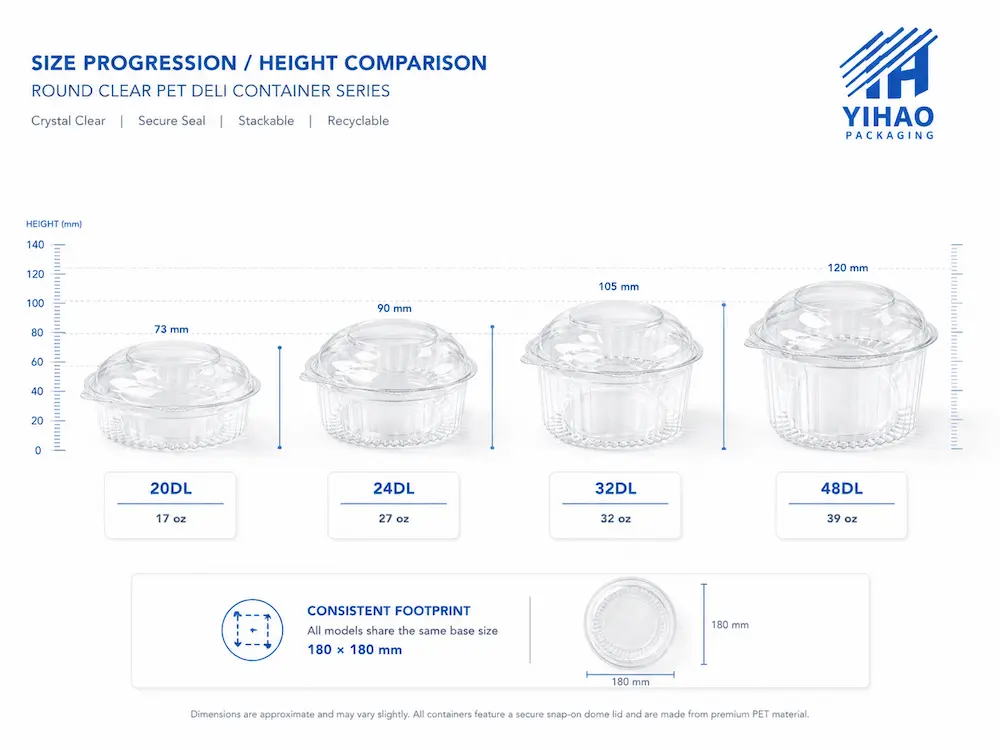
The strongest retail programs usually use a controlled packaging family. Smaller hinged containers work well for snacks and sides. Medium containers fit salads and fruit. Larger packs support meal portions. Round or square PET formats can be added when presentation requires a different shape.
Takeaway Value: Faster Packing and Cleaner Hand-Off
Takeaway packaging must support speed. During lunch rushes, deli counter service, cafe preparation, and supermarket restocking, staff need packaging that closes quickly and handles consistently.
PET hinged deli containers are useful because the lid and base remain connected. This reduces the need to search for matching lids and lowers the risk of selecting the wrong lid size.
For foodservice teams, the value is operational. A one-piece hinged pack helps simplify the workflow from filling to closing to labeling. Clear PET also helps staff identify food quickly after packing, especially when several similar items are prepared in advance.
For customers, the value is convenience. A good takeaway container should look clean, feel practical, and be easy to carry. It should not make the food look compressed, hidden, or poorly portioned.
Material Logic: PET, rPET, and Responsible Packaging Claims
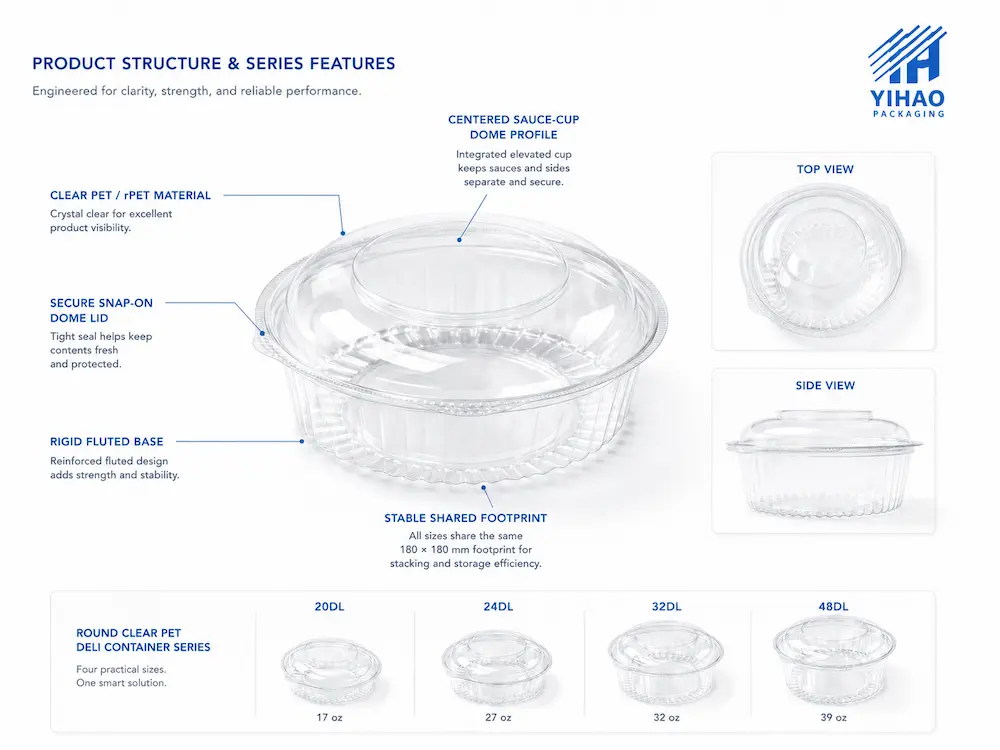
PET is valued in chilled food packaging because it offers strong clarity, practical rigidity, and attractive food presentation. For clear PET deli containers, this combination is important because the container must show the food while keeping enough structure for shelf display and handling.
Some buyers also evaluate rPET options as part of recycled-content packaging strategies. rPET can support responsible packaging goals when available and properly specified.
However, sustainability claims should be written carefully. Recyclability depends on local PET collection, sorting, and recycling systems. Recycled content availability may vary by market, supplier, and product specification.
Professional buyers should avoid vague claims such as “fully sustainable” or “zero waste” unless those claims are supported by verified product data and local recycling conditions. A more accurate approach is to describe PET or rPET packaging as a clear food packaging option that may support recyclable packaging design where local PET recycling systems accept the format.
| Material Consideration | Why It Matters for Buyers | Practical Check Before Ordering |
|---|---|---|
| Clarity | Supports product visibility and cold shelf presentation | Compare real samples under retail lighting |
| Rigidity | Helps the container maintain shape during handling and display | Test filled containers during stacking and transport simulation |
| rPET option | May support recycled-content packaging goals | Confirm material specification and availability with the supplier |
| Food contact suitability | Essential for direct food packaging applications | Request relevant documentation for the target market and product use |
| Recyclability claim | Affects sustainability communication and buyer expectations | Use careful wording based on local recycling acceptance |
Wholesale Buying Checklist for Clear PET Deli Containers
Before contacting a clear PET deli containers supplier, buyers should prepare a practical checklist. This makes communication faster and helps the manufacturer recommend a more suitable product range.
- What food will be packed: salad, fruit, nuts, deli sides, bakery snacks, or prepared meals?
- Will the food be sold through retail display, takeaway service, delivery, or wholesale distribution?
- Is the food dry, moist, oily, acidic, chilled, or sauce-based?
- What portion size is needed for the target customer?
- Does the food need more lid height or a shallow display format?
- Is a hinged lid more efficient than a separate lid?
- Will the container be stacked after filling?
- Does the container need space for labels, barcodes, or branded stickers?
- Will the packaging be used in supermarkets, cafes, delis, restaurants, or convenience stores?
- Are multiple sizes needed for a complete product line?
- Is rPET material direction required for recycled-content packaging goals?
- Are samples needed before confirming wholesale orders?
- Does the supplier support consistent repeat orders?
- Does the manufacturer understand export packaging and B2B procurement needs?
This checklist helps avoid one of the most common buying mistakes: asking for a price before defining the food use, size logic, and packaging structure.
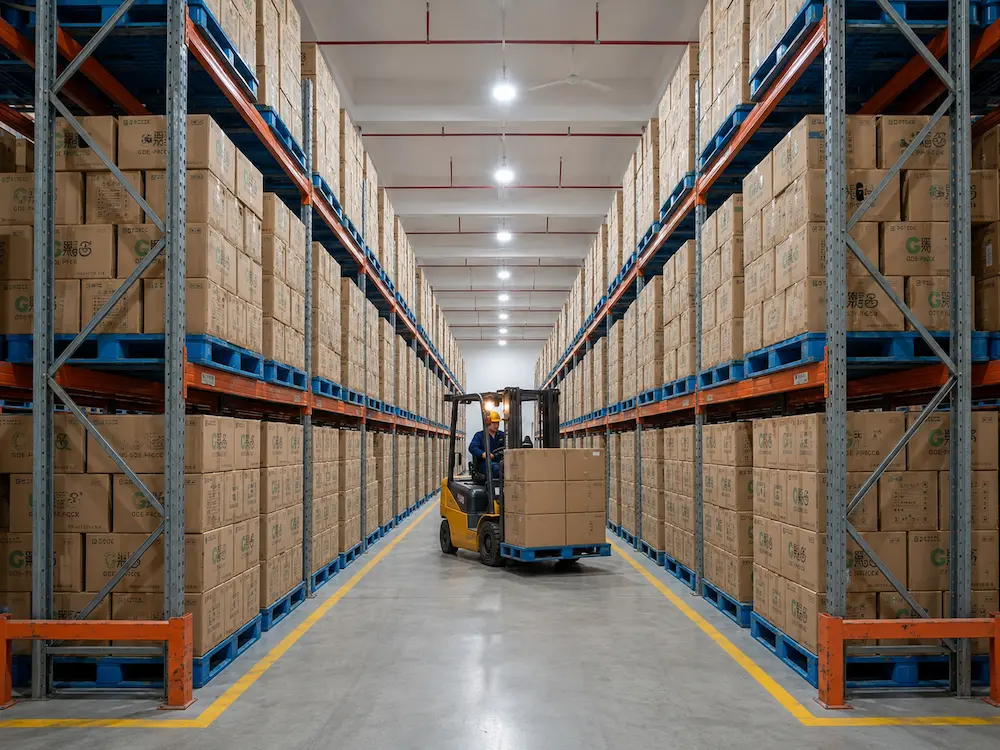
For wholesale hinged containers, a low unit price is not enough if the container does not fit the food, channel, or packing process.
Common Ordering Mistakes Buyers Should Avoid
Choosing only by capacity
Capacity numbers do not tell the full story. Two containers with similar volume can perform differently because of shape, lid height, base depth, and food distribution.
Buyers should always compare real food fit, not just nominal size.
Ignoring closure after filling
An empty container may close smoothly, but a filled container may behave differently. Moisture, toppings, food height, and dressing cups can affect closure.
The container should be tested in the same conditions where it will be used.
Using one container for too many food types
A single pack may work for several applications, but forcing one container across salads, fruit, bakery items, and deli meals can reduce product presentation quality.
A controlled packaging range is usually more effective than one universal size.
Overlooking chilled display conditions
Cold shelves create real handling demands. Containers may be stacked, moved, relabeled, and inspected by customers.
Packaging should be tested in the conditions where it will actually be displayed and sold.
Making unsupported sustainability claims
Buyers should confirm material, recycled content, and recyclability language before printing claims on labels or marketing materials.
Responsible wording protects the brand and reduces compliance risk.
Why Work with a Clear PET Deli Container Manufacturer or Supplier
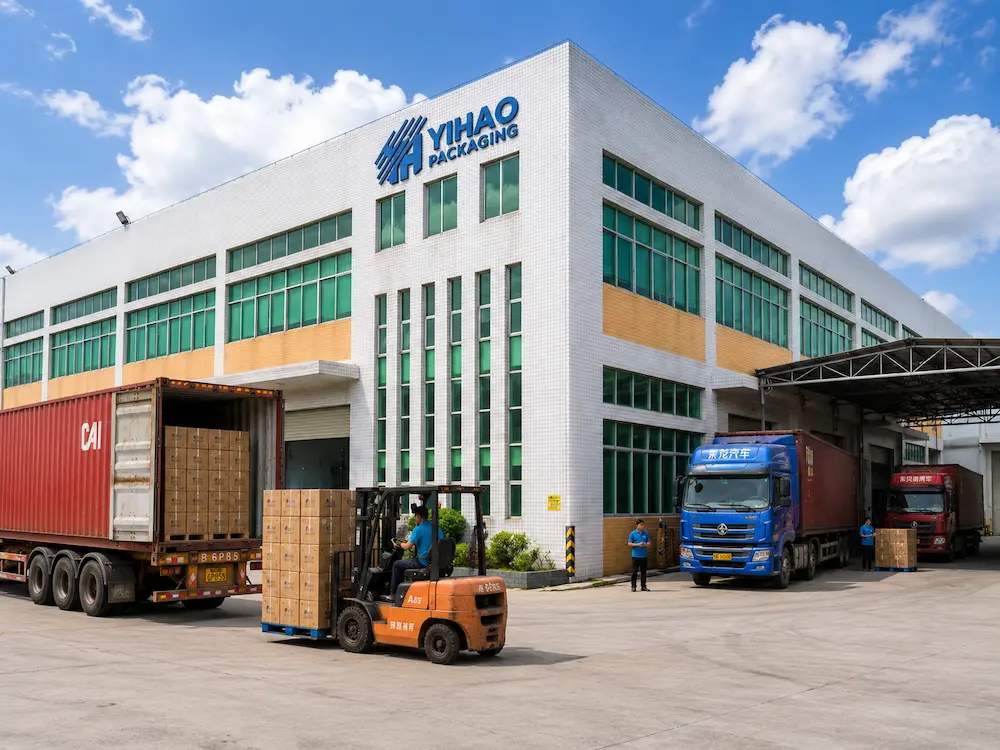
Working with a professional clear PET deli containers manufacturer or supplier gives buyers more than a product list. It supports product selection, size matching, packaging range planning, sample testing, and long-term procurement stability.
YIHAO provides food packaging solutions for buyers who need clear PET and rPET packaging for salads, fruit, snacks, deli food, bakery items, cold drinks, and chilled ready-to-eat meals.
For clear PET deli containers, useful supplier support should be practical. Buyers need guidance on which size fits the food, which structure improves packing speed, which related product line supports category expansion, and which packaging format fits the sales channel.
Wholesale buyers should also consider whether the supplier can support related packaging categories. A buyer sourcing PET hinged deli containers may later need round salad bowls, square PET containers, fresh-cut fruit packs, bakery clamshells, tamper-evident containers, or cold cup systems.
A supplier with a broader food packaging matrix helps buyers build a more complete and consistent packaging program. Buyers can also learn more about production capability through the YIHAO factory page or start from the YIHAO homepage when reviewing the full packaging range.

Related Packaging Options Buyers Should Compare
A strong deli packaging program usually includes more than one container style. Buyers can use clear PET deli containers as the foundation, then add related formats for specific food categories.
| Related Packaging Category | Best Use Case | When to Add It to Your Packaging Line |
|---|---|---|
| 8 oz clear hinged deli container | Small snacks, nuts, side portions, compact fruit packs | When your program needs small grab-and-go portions |
| 12 oz clear recycled PET hinged deli container | Fresh food, fruit, salads, small deli sides | When you need a versatile mid-small portion pack |
| 16 oz clear recycled PET hinged deli container | Deli salads, snacks, fruit portions, chilled sides | When you need a balanced daily-use deli container |
| 32 oz clear recycled PET hinged deli container | Grab-and-go meals, larger salads, fruit mixes | When your food program needs meal-size portions |
| 48 oz clear recycled PET hinged deli container | Larger fresh food portions and shared chilled packs | When your retail or deli line includes larger-volume food items |
| 16 oz PET square deli container | Flat shelf display, fruit, snacks, deli sides | When square layout improves display or carton organization |
| 32 oz PET salad bowl | Premium salads, fruit mixes, chilled noodles | When bowl-style presentation is more suitable than a clamshell |
How Clear PET Deli Containers Support Different Buyer Types
Supermarkets and convenience stores
Retail chains need packaging that improves cold shelf presentation and supports fast replenishment. Clear PET deli containers help display salads, fruit, snacks, and deli sides in a way customers can evaluate quickly.
Cafes and salad bars
Cafes need packaging that supports takeaway orders, daily preparation, and a clean hand-off experience. Hinged structures reduce lid-matching work and help staff pack orders faster during peak hours.
Food brands and meal prep companies
Prepared food brands need consistent packaging that protects brand presentation across multiple sales channels. Clear PET supports visible ingredient presentation, while consistent sizing helps build a recognizable product line.
Distributors and importers
Distributors need packaging categories that can sell across many customer types. Wholesale hinged containers are useful because they serve delis, supermarkets, cafes, fruit shops, foodservice teams, and grab-and-go food programs.
Private label and custom packaging buyers
Private label buyers often need packaging that supports labels, stickers, sleeves, or printed branding elements. Clear PET gives the food visual priority while still leaving room for brand communication.
Practical Takeaway: What Makes the Best Clear PET Deli Containers
The best clear PET deli containers are not defined by transparency alone. They combine clear presentation, suitable portion depth, reliable hinged closure, stackable shape, practical label space, food contact suitability, and supplier support.
For retail display, the packaging must help the food sell. For takeaway, it must help staff pack faster and customers carry food cleanly. For wholesale procurement, it must support repeatable supply and a broader packaging system.
Buyers should begin with food application, then move to size, structure, material, display needs, and supplier capability. This sequence creates better packaging decisions and reduces the risk of ordering containers that look acceptable online but fail in real food handling.
Final Note / Practical Takeaway
Clear PET Deli Containers FAQ: Materials, Uses, Buying, and Wholesale Supply
1. What are clear PET deli containers used for?
Clear PET deli containers are used for chilled food packaging, retail display, takeaway service, and grab-and-go food programs. Common applications include salads, fresh-cut fruit, nuts, deli sides, bakery snacks, cold prepared foods, and small meal portions. Their transparent structure helps customers see the food before buying, while hinged formats can simplify packing for delis, cafes, supermarkets, and foodservice teams.
2. Are PET hinged deli containers suitable for salads and chilled food?
Yes, PET hinged deli containers are widely used for salads and chilled food when clear visibility, portion presentation, and fast packing are important. Buyers should still test the actual food before ordering, especially if the product includes dressing, moisture, oily ingredients, toppings, or tall portions. The best container should match the food volume, lid clearance, closure strength, stacking needs, and label placement requirements.
3. What is the difference between hinged deli containers and separate-lid containers?
Hinged deli containers have a connected lid and base, which helps reduce lid-matching work during packing. They are practical for fast counter service, chilled retail display, and takeaway programs. Separate-lid containers use a separate base and lid, which can be useful for bowl-style presentation, premium salads, or specific lid profiles. The better choice depends on food type, packing speed, display style, and inventory control.
4. Can clear PET deli containers be used for takeaway food?
Clear PET deli containers can be used for many takeaway food applications, especially chilled salads, fruit, snacks, deli sides, bakery items, and ready-to-eat foods. They are not the default choice for hot-fill or microwave applications unless the specific product has been confirmed for that use. Buyers should always match the container material and structure with the actual serving temperature, food type, and handling process.
5. How should wholesale buyers choose a clear PET deli container supplier?
Wholesale buyers should choose a clear PET deli container supplier by comparing product range, sample support, material options, container clarity, closure performance, stacking behavior, label space, related packaging categories, and repeat-order reliability. A strong supplier should help buyers select the right size and structure for real food applications instead of only offering a generic product list or price quotation.
References
- U.S. Food and Drug Administration. “Packaging & Food Contact Substances.” FDA Food Contact Materials Guidance.
- European Commission. “Food Contact Materials.” European Commission Food Safety Policy Resources.
- Association of Plastic Recyclers. “APR Design Guide for Plastics Recyclability.” Association of Plastic Recyclers.
- Plastics Industry Association. “PET Packaging and Recycling Resources.” Plastics Industry Association.
- Food Packaging Forum. “Food Contact Materials and Chemical Safety.” Food Packaging Forum Foundation.
- WRAP. “Plastic Packaging and Recycling Guidance.” Waste and Resources Action Programme.
- PMMI Business Intelligence. “Trends in Food Packaging and Retail Prepared Foods.” PMMI, The Association for Packaging and Processing Technologies.
- Institute of Food Technologists. “Food Packaging, Safety, and Shelf Presentation.” IFT Food Technology Resources.
Deep-Dive Insights: How Buyers Should Think About Clear PET Deli Containers
How do clear PET deli containers improve retail food presentation?
They allow customers to see color, portion, ingredients, and freshness cues before buying. This makes them especially useful for salads, fruit, snacks, deli sides, bakery portions, and chilled ready-to-eat foods sold through cold shelves and takeaway counters.
Why do buyers choose hinged deli containers for takeaway operations?
Hinged containers connect the lid and base in one piece, reducing the need to match separate lids during service. This supports faster packing, simpler inventory control, and cleaner hand-off for cafes, delis, supermarkets, and foodservice teams.
What should buyers test before confirming wholesale orders?
Buyers should test real food fit, lid closure, hinge strength, stacking behavior, chilled storage, label placement, moisture impact, and customer opening experience. A sample test is more reliable than judging packaging from images or capacity numbers alone.
Best option for chilled display programs
For compact salads, fruit portions, nuts, snacks, and deli sides, PET hinged deli containers are often a practical starting point. For larger premium salads or meal bowls, round PET salad bowls or square PET deli containers may provide better presentation and portion logic.
Buyer insight for long-term procurement
The strongest packaging strategy is not choosing one container for every food item. It is building a controlled packaging range that includes hinged deli containers, salad bowls, square containers, fruit packs, and related food packaging formats based on real product categories.
Copyright © YIHAO Packaging. All Rights Reserved.
Clear PET, rPET, and food packaging solutions for global wholesale buyers.