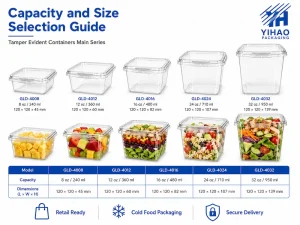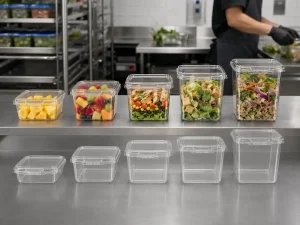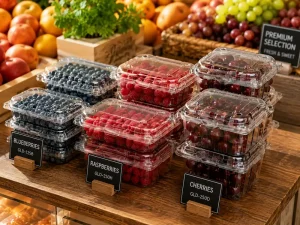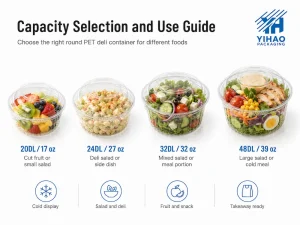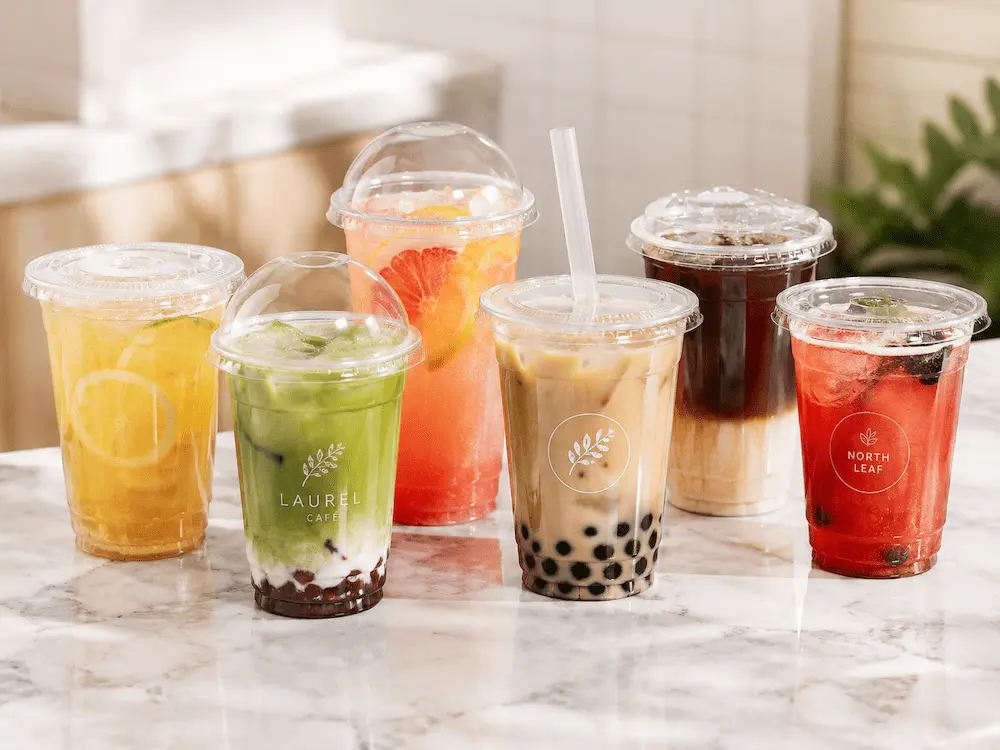
Sealed drink cups are used across cafes, bubble tea shops, milk tea chains, juice bars, convenience stores, supermarkets, bakeries, foodservice brands, and takeaway counters. In daily purchasing language, “sealed” may describe several different closure styles: a snap-on lid, a flat straw-slot lid, a dome lid, a strawless sipper lid, a sip-through lid, or a film-sealed cup used with a sealing machine.
This distinction matters. A buyer ordering bubble tea cups for film sealing has different requirements from a cafe ordering clear PET cups with snap-on lids for iced coffee, fruit tea, smoothies, lemonade, and cold brew. A milk tea chain may focus on cup rim strength and film compatibility, while a supermarket grab-and-go team may care more about clarity, stacking, shelf display, and lid security.
YIHAO is a food packaging manufacturer and packaging solution provider focused on practical material selection, cup-lid matching, product structure, and wholesale packaging supply. This guide explains how buyers should compare sealed drink cups, bubble tea cups, milk tea cups, boba cups, PET bubble tea cups, and PP bubble tea cups before working with a food packaging manufacturer, wholesale partner, or supplier.
What Are Sealed Drink Cups?
Sealed drink cups are beverage cups designed to reduce spills, improve takeaway handling, protect the drinking experience, and support retail or delivery service through a secure closure system. The closure may be a lid-based system or a film-sealing system depending on the cup material, rim structure, drink menu, and operating workflow.
For cold beverage programs, sealed drink cups are commonly used for iced coffee, cold brew, lemonade, juice, fruit tea, iced tea, smoothies, refreshers, sparkling fruit drinks, milk tea, bubble tea, boba drinks, yogurt drinks, matcha beverages, and chilled dessert-style drinks. Clear PET cup systems can also support fruit cups, yogurt parfaits, pudding cups, overnight oats, chia pudding, and grab-and-go chilled snack portions when the lid and cup structure are suitable.
Buyers comparing options should start with the complete packaging system, not only the cup. A practical sealed drink cup decision includes cup material, top diameter, matching lid, sealing style, drink texture, filling level, topping volume, straw use, carton packing, storage conditions, and supplier repeatability.
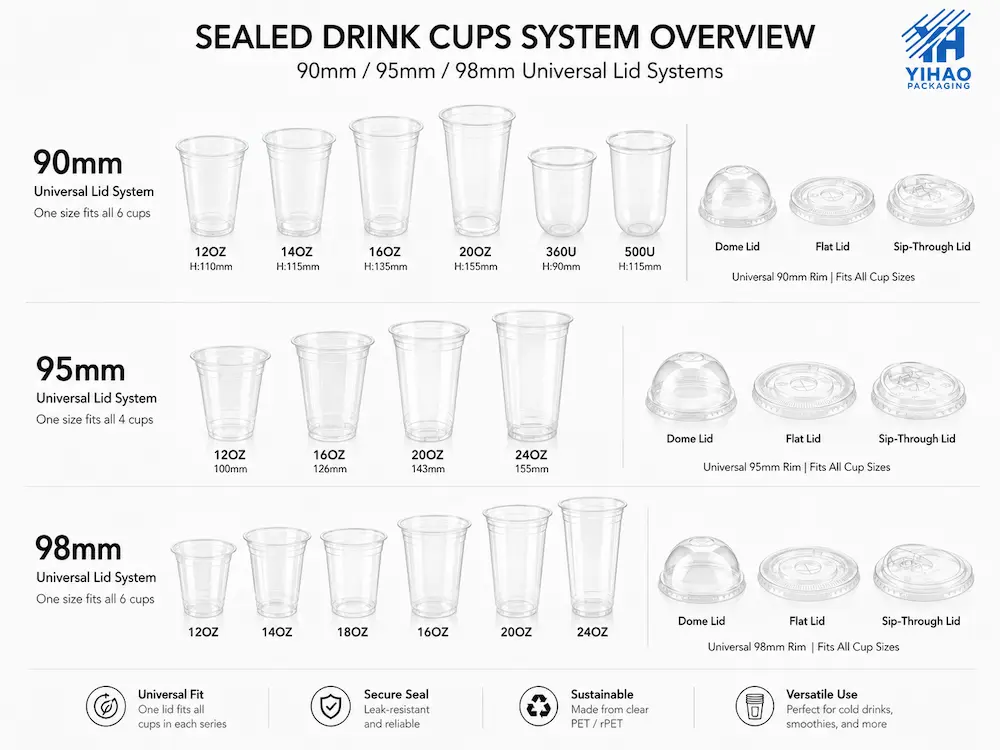
For buyers planning a wider drink packaging range, the Cold Cups & Lids category is the right starting point for comparing cup bodies, matching lids, and cold beverage packaging structures.
FAQ 1: What Materials Are Commonly Used for Sealed Drink Cups?
The most common materials for sealed drink cups include PET, PP, PLA, and paper-based cup systems with matching lids. For cold beverage packaging, PET and PP are the two materials buyers compare most often because they serve different display and sealing needs.
| Material | Main Advantage | Common Use | Buyer Note |
|---|---|---|---|
| PET | High clarity and strong retail display | Iced coffee, juice, fruit tea, lemonade, smoothies, milk tea | Best for cold drinks where visual presentation matters |
| PP | Flexible handling and selected sealing workflows | Bubble tea, milk tea, boba drinks, takeaway beverages | Check sealing film, machine mold, rim structure, and filling conditions |
| PLA | Compostable material direction where accepted | Selected cold drink programs | Confirm composting infrastructure, storage conditions, and local acceptance |
| Paper + Lid | Large branding surface | Coffee chains and printed takeaway drink programs | Less direct drink visibility than clear PET cups |
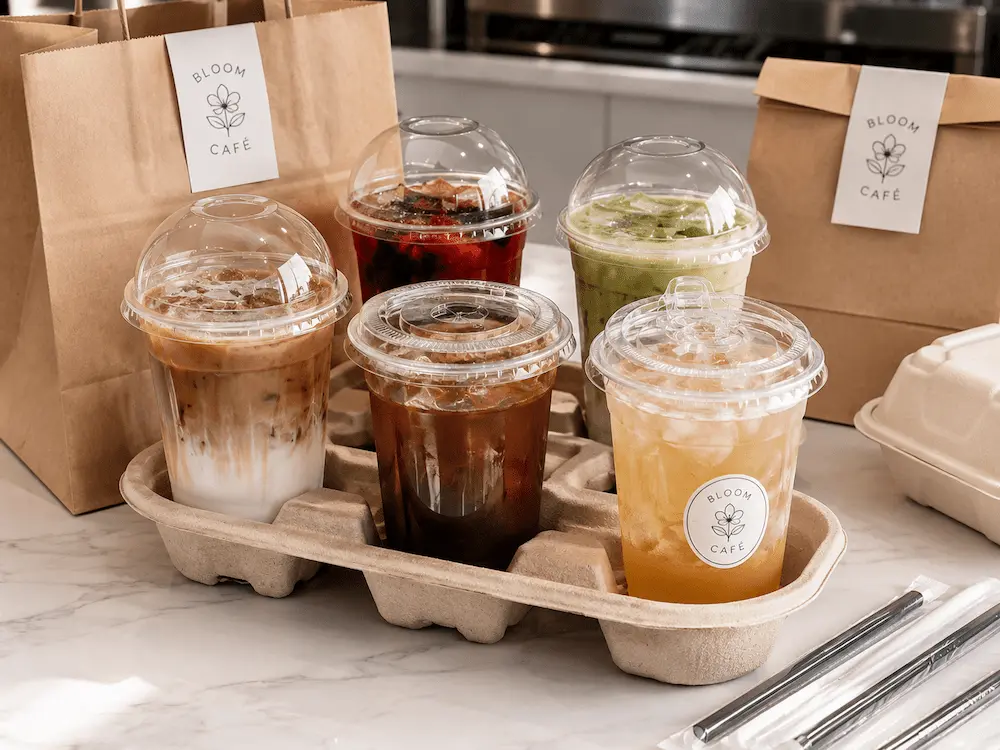
For visible cold drinks, PET cold cups are especially useful because customers can see layers, toppings, ice, milk foam, fruit pieces, coffee color, and beverage freshness. For drink shops using film-sealing machines, PP cold cups may be considered when the sealing process, rim design, and film compatibility are confirmed before bulk purchasing.
FAQ 2: Are PET Sealed Drink Cups Good for Bubble Tea and Milk Tea?
Yes. PET sealed drink cups are practical for many bubble tea, milk tea, fruit tea, iced coffee, smoothie, lemonade, and chilled beverage programs when the cup is matched with the correct lid. Clear PET is especially strong when the drink relies on visual appeal. Brown sugar milk tea, fruit tea, matcha drinks, layered coffee, refreshers, yogurt drinks, and topping-based beverages benefit from transparent packaging because customers see the product before drinking it.
For milk tea cups and boba cups, buyers should check three points before ordering PET cups: rim diameter, lid style, and topping height. Flat lids are practical for standard straw-service drinks. Dome lids provide extra headspace for whipped cream, fruit toppings, foam, thick smoothies, and dessert-style drinks. Strawless sipper lids support direct drinking for iced coffee, fruit tea, lemonade, juice, iced tea, and selected cold beverages.
A cup such as a 20 oz PET/RPET clear cold cup for smoothies, iced coffee, lemonade, and milk tea is useful when buyers need a larger cold drink format with high visibility and a matching lid strategy.
FAQ 3: When Should Buyers Choose PP Bubble Tea Cups?
PP bubble tea cups are commonly considered by beverage teams that need flexible handling, selected film-sealing workflows, or a drink shop format already built around PP cup systems. PP may be suitable when the shop uses sealing machines and wants the cup to match existing sealing film, machine mold, rim diameter, and operating procedures.
The main risk is not the material itself. The main risk is mismatch. A PP cup must match the sealing film, machine mold, rim diameter, filling temperature, cup height, drink shaking process, and delivery condition. Before wholesale purchasing, buyers should request samples and test the full workflow: filling, sealing, shaking, tilting, cup holder fit, counter service, delivery bag movement, and customer opening.
PP is not automatically better than PET for every bubble tea program. PET is stronger for crystal-clear display. PP may fit specific film-sealing workflows. The correct decision depends on the beverage format, sealing method, and real sample testing.
FAQ 4: What Sizes Are Common for Sealed Drink Cups?
Common sealed drink cup sizes usually range from small tasting portions to extra-large takeaway beverages. For cold drink programs, 12 oz, 14 oz, 16 oz, 18 oz, 20 oz, and 24 oz are widely used depending on the drink menu, ice level, topping volume, selling price, and channel positioning.
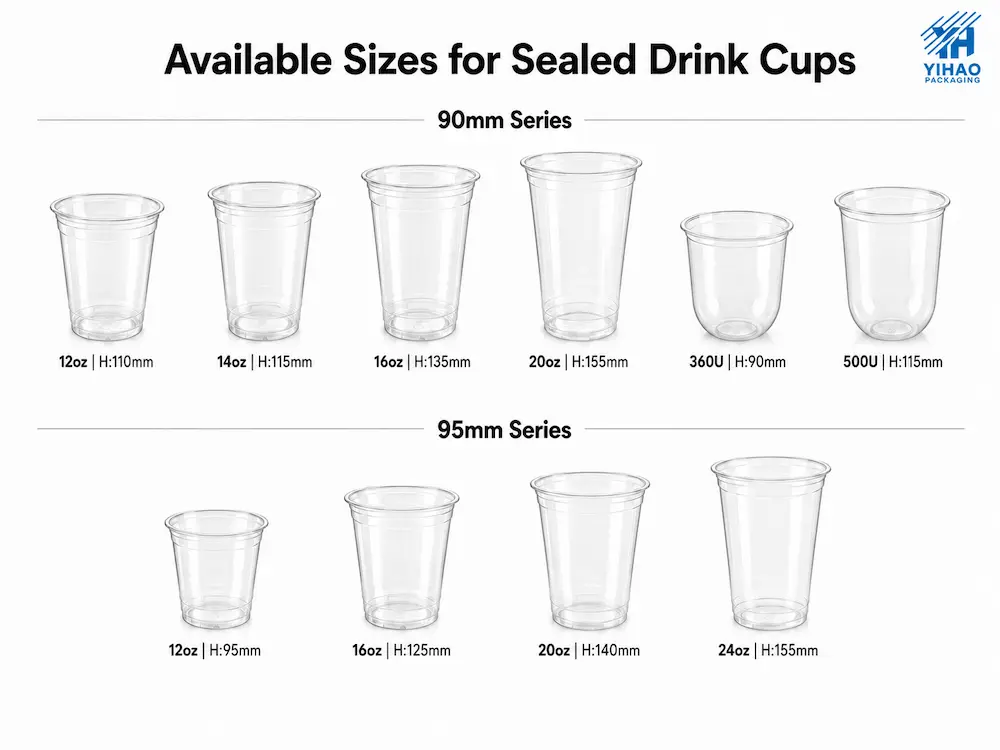
| Cup Size | Best For | Buyer Consideration |
|---|---|---|
| 12 oz | Small iced coffee, juice, tasting-size milk tea, yogurt drinks | Good for smaller servings and controlled packaging cost |
| 14 oz | Iced tea, fruit tea, soda, lemonade, light milk tea | Useful for mid-small beverage menus |
| 16 oz | Standard milk tea, bubble tea, iced latte, smoothies | Strong all-purpose choice for cafes and drink shops |
| 18 oz | Medium-large fruit tea, cold brew, boba drinks, soda | Works for drinks with ice and moderate toppings |
| 20 oz | Large iced coffee, milk tea, lemonade, smoothies | Common for high-volume takeaway menus |
| 24 oz | Extra-large bubble tea, smoothies, iced tea, lemonade | Requires stronger carton planning, cup stability, and storage control |
Capacity alone does not decide the right cup. A 20 oz iced coffee, a 20 oz smoothie, and a 20 oz boba drink create different packaging requirements. Ice volume, foam height, pearls, fruit chunks, lid style, straw diameter, and delivery handling all affect the final choice. For standard cold beverage programs, a 16 oz PET/RPET clear cold cup for iced coffee, iced tea, lemonade, and smoothies often works as a practical starting size.
FAQ 5: Why Does Rim Diameter Matter More Than Many Buyers Expect?
Rim diameter controls lid compatibility. A small mismatch between cup and lid may cause loose fitting, leakage, lid popping, difficult assembly, carton waste, and customer complaints. For wholesale buyers, rim diameter is not a minor detail. It is one of the most important specifications in the sealed drink cup system.
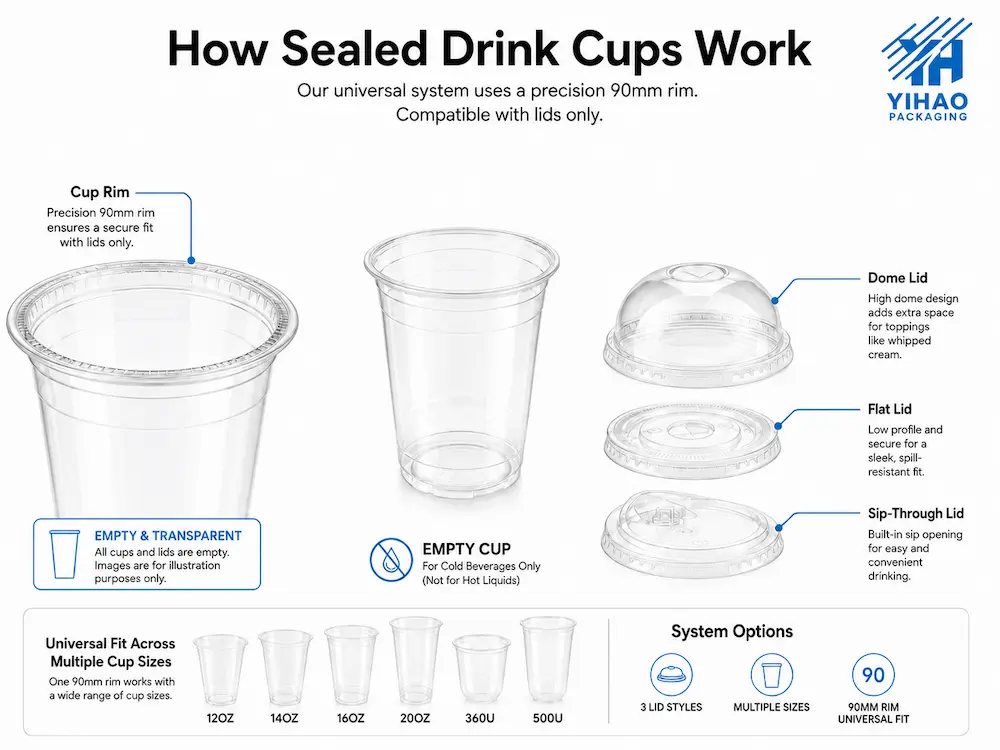
Many cold cup systems use shared lids within the same diameter family. This reduces SKU complexity and improves daily operations. A 95mm cup system should use 95mm matching lids. A 98mm cup system should use 98mm matching lids. Buyers should not mix lids across diameter systems unless the supplier has confirmed compatibility through real fitting tests.
| Specification | Why It Matters | What Buyers Should Check |
|---|---|---|
| Top Diameter | Controls lid fit | Confirm the cup and lid belong to the same diameter system |
| Cup Height | Affects drink volume, carton height, and storage | Check shelf, dispenser, and carton compatibility |
| Lid Type | Controls drinking style and topping space | Match flat, dome, strawless, or sip-through lids to the drink menu |
| Rim Strength | Affects sealing stability | Test lid pressing, tilting, and handling before bulk orders |
For buyers managing multiple cold beverages, a shared-lid system can simplify purchasing, storage, and counter service. This is why cup-lid matching should be reviewed through the full cold cup lids range, not only through one cup size.
FAQ 6: Which Lid Type Works Best for Sealed Drink Cups?
The best lid depends on the drink. Flat lids, dome lids, strawless sipper lids, and sip-through lids solve different service problems. Buyers should not choose a lid only by appearance. The lid should match the drink texture, topping height, straw use, customer drinking behavior, and transport condition.
| Lid Type | Best For | Main Advantage |
|---|---|---|
| Flat Lid with Straw Slot | Iced coffee, iced tea, juice, lemonade, cold brew | Clean profile and practical straw service |
| Dome Lid | Smoothies, foam drinks, whipped cream drinks, fruit toppings | Extra headspace for toppings and thick drinks |
| Strawless Sipper Lid | Iced coffee, fruit tea, lemonade, juice, iced tea | Direct drinking without a straw |
| Sip-Through Lid | Cold coffee, iced tea, juice, lemonade | Cleaner drinking experience for on-the-go service |
| Film Seal | Bubble tea, milk tea, boba drinks | Strong closure when matched with the correct cup, film, and machine |
For standard straw-based cold drinks, a clear PET flat lid with straw slot is practical. For topped drinks, smoothies, milkshakes, and fruit yogurt beverages, a clear PET dome lid provides more headspace. For no-straw service, a clear PET strawless sipper lid supports direct drinking.
FAQ 7: Are Sealed Drink Cups Leak-Proof?
Buyers should be careful with the word “leak-proof.” A well-matched sealed drink cup and lid system improves leak resistance, but real performance depends on cup rim quality, lid fit, filling level, drink temperature, ice volume, lid pressing, transport angle, delivery handling, and carton storage conditions.
For wholesale orders, do not rely on a product photo. Request samples and test the exact use case. Fill the cup to the intended level, apply the lid, press the full rim, tilt the cup, place it in a delivery bag, test cup holders, and check performance after normal movement. For film-sealed cups, test the sealing machine, film type, cup rim, seal edge, and puncture experience.
The correct buying question is not “Is this cup leak-proof?” The better question is: “Does this cup-lid or cup-film system perform reliably with our drink, filling level, handling process, and delivery environment?”
FAQ 8: Are Sealed Drink Cups Recyclable?
Recyclability depends on the material, local collection system, package design, labels, inks, lids, contamination level, and regional recycling infrastructure. PET and PP are both recyclable material categories in many markets, but a finished cup should not be described as universally recyclable without checking local acceptance and package design details.
For PET sealed drink cups, buyers should review material identification, label coverage, ink choice, lid compatibility, color, and contamination risk. Clear PET usually supports better material sorting than heavily colored or mixed-material packaging. However, local acceptance of thermoformed PET cups may differ from PET bottles. Buyers should use careful wording such as “recyclable where local PET recycling systems accept this packaging format.”
For sustainability-focused cold drink programs, buyers may also compare PET, rPET, PP, and PLA compostable cold cups. The right choice depends on actual disposal infrastructure, customer behavior, packaging performance, and the brand’s environmental claims policy.
FAQ 9: What Food Contact and Compliance Questions Should Buyers Ask?
Food contact suitability should be confirmed before using sealed drink cups for beverage or chilled food packaging. Buyers should ask the supplier which material is used, whether the product is intended for food contact, what temperature range is appropriate, whether the cup is for cold use only, and which documentation can be provided for the target market.
For international buyers, compliance requirements may differ between the United States, the European Union, and other markets. Packaging teams should not copy claims from a catalog into their own sales materials without checking the relevant food contact requirements for their country or distribution channel.
| Question | Why It Matters | Buyer Action |
|---|---|---|
| Is the material intended for food contact? | Confirms basic use direction | Request material and food contact information |
| Is the cup for cold use only? | Prevents misuse with hot drinks | Confirm temperature and beverage use limits |
| Which market will receive the product? | Regulatory expectations differ by region | Check U.S., EU, or local requirements before import |
| Are claims supported? | Reduces legal and branding risk | Avoid unsupported claims such as universally recyclable or leak-proof |
FAQ 10: What Drinks Are Best Suited for Sealed Drink Cups?
Sealed drink cups are suitable for many cold beverage and chilled food programs. The strongest applications include drinks where visibility, transport stability, and fast service matter.
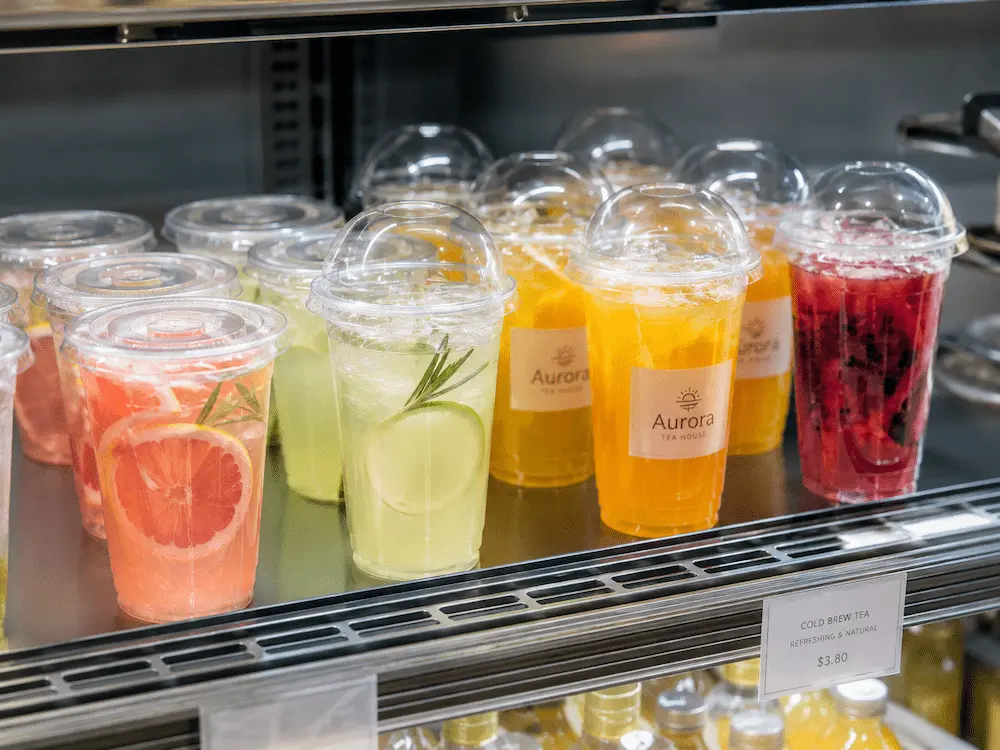
- Bubble tea and boba drinks: classic milk tea, brown sugar boba, taro milk tea, cheese foam tea, fruit boba drinks.
- Milk tea cups: standard milk tea, flavored milk tea, tea latte, matcha milk tea, yogurt milk tea.
- Iced coffee: iced Americano, iced latte, cold brew, flavored cold brew, cold foam coffee.
- Fruit and tea drinks: fruit tea, lemon tea, iced tea, refreshers, sparkling fruit drinks.
- Juice and lemonade: orange juice, apple juice, lemonade, lime soda, cold-pressed juice.
- Smoothies and thick drinks: smoothies, slush drinks, milkshakes, yogurt smoothies, blended ice drinks.
- Chilled dessert cups: yogurt parfaits, pudding cups, mousse cups, jelly cups, overnight oats, chia pudding.
For drinks with toppings, choose enough headspace and the correct lid style. For drinks with pearls or large inclusions, confirm straw diameter and lid opening. For delivery, test the closure system under realistic movement before scaling the order. For larger beverage formats, a 24 oz PET/RPET clear cold cup for smoothies, lemonade, iced coffee, and juice can support high-capacity takeaway programs.
FAQ 11: What Should Buyers Check Before Wholesale Ordering?
Wholesale purchasing requires more discipline than small sample buying. A cup that looks fine in a catalog may fail when used in a real counter, delivery bag, refrigerator, or high-volume drink shop. Buyers should evaluate the full packaging system before placing a bulk order.
| Checklist Item | Why It Matters | Buyer Action |
|---|---|---|
| Material | Controls clarity, flexibility, storage, and use direction | Compare PET, PP, PLA, and paper based on drink menu |
| Cup Size | Controls serving size and packaging cost | Match 12 oz to 24 oz options with menu pricing |
| Rim Diameter | Controls lid compatibility | Confirm exact diameter before buying lids |
| Lid Fit | Affects leakage complaints | Test flat, dome, sipper, or sip-through lids with filled cups |
| Stacking | Affects storage and counter efficiency | Check cup nesting and lid stacking before carton planning |
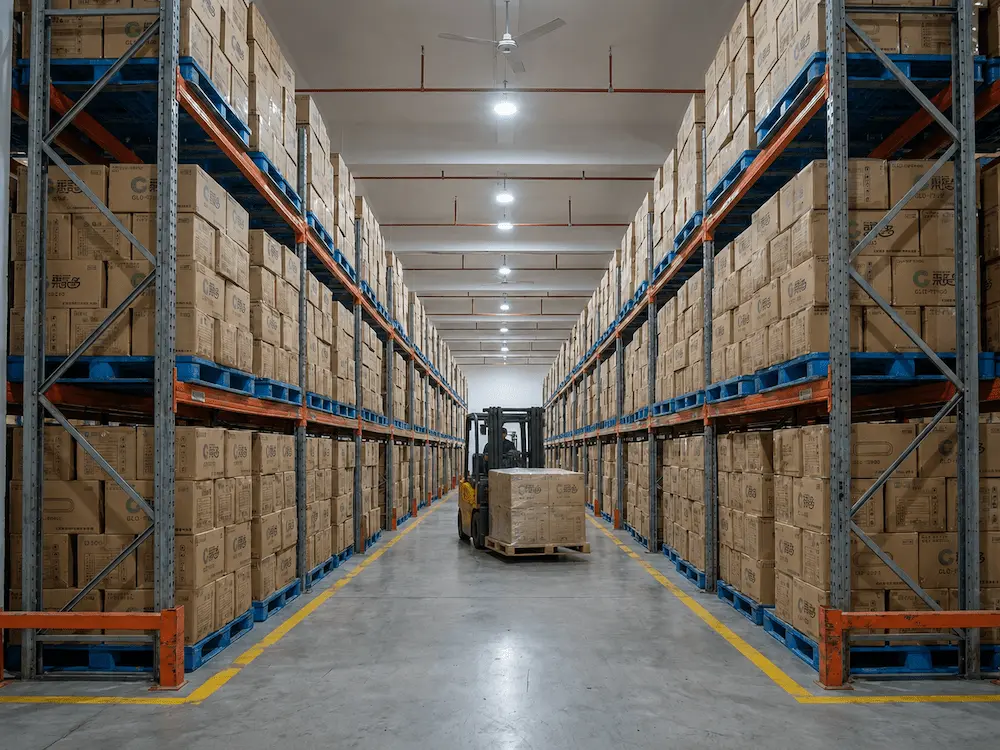
| Carton Packing | Affects shipping cost and warehouse space | Confirm carton quantity, carton size, and pallet plan |
| Supplier Consistency | Affects repeat orders | Work with a supplier that controls production quality and specifications |
For custom logo projects, buyers should also confirm artwork format, print area, label position, carton marking, sample approval, and lead time. A custom cup project should still begin with cup-lid performance, not only with logo design.
FAQ 12: Should Buyers Choose a Manufacturer, Wholesale Trader, or Supplier?
The best sourcing model depends on order volume, customization needs, delivery schedule, quality control requirements, and product range. A direct manufacturer is usually stronger when buyers need stable specifications, repeated wholesale orders, product development support, and better control over cup-lid matching. A trading supplier may help with mixed small orders, but consistency needs careful checking.
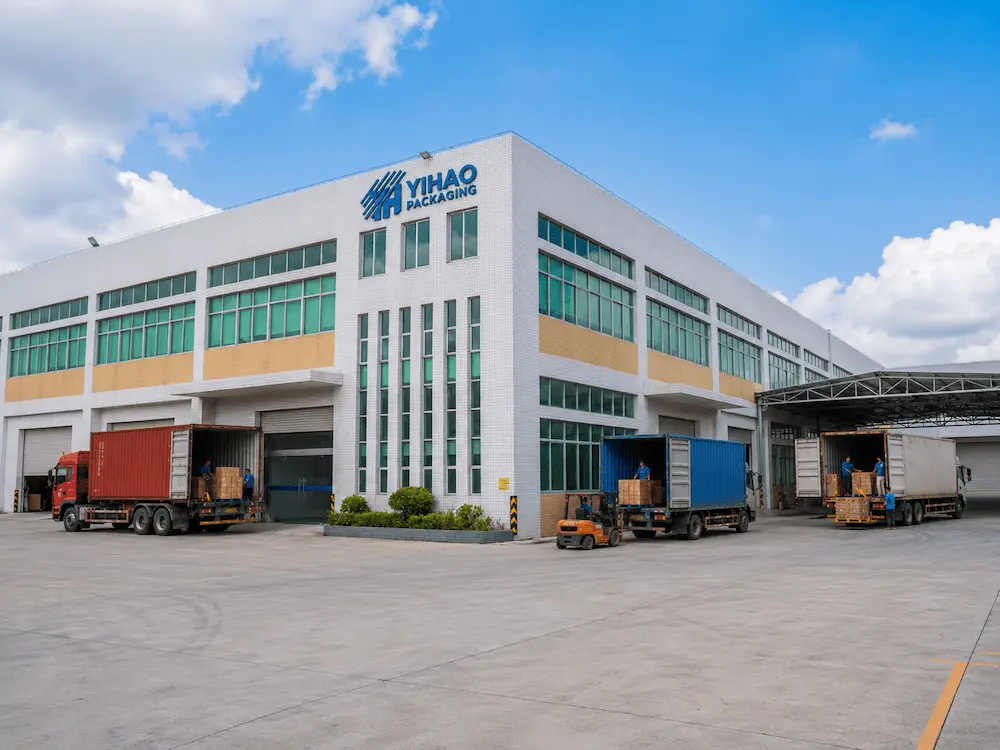
A reliable sealed drink cup supplier should provide clear material information, size options, lid compatibility guidance, sample support, packing details, and realistic production communication. For brand owners, distributors, beverage chains, and foodservice buyers, the strongest partner is not simply the cheapest one. The strongest partner helps prevent mismatch before the order becomes expensive.
Buyers evaluating long-term packaging supply can review YIHAO Packaging for broader product direction and category planning.
Buyer Decision Guide: PET vs PP Sealed Drink Cups
| Buyer Priority | PET Sealed Drink Cups | PP Bubble Tea Cups |
|---|---|---|
| Drink Visibility | Very strong | Usually less clear than PET |
| Cold Beverage Display | Excellent for retail and takeaway | Practical for many drink shop formats |
| Film Sealing Workflow | Requires confirmed compatibility | Often considered for sealing machine programs |
| Premium Appearance | Strong | Depends on cup finish and design |
| Best Use Direction | Iced coffee, juice, fruit tea, smoothies, milk tea, visible drinks | Bubble tea, milk tea, boba drinks, selected sealing operations |
The practical conclusion is clear: choose PET when clear display, cold drink presentation, and lid-based takeaway service are the priority. Choose PP when the drink shop workflow, sealing machine, and operating process are already built around PP cup sealing. For both materials, sample testing is required before wholesale purchasing.
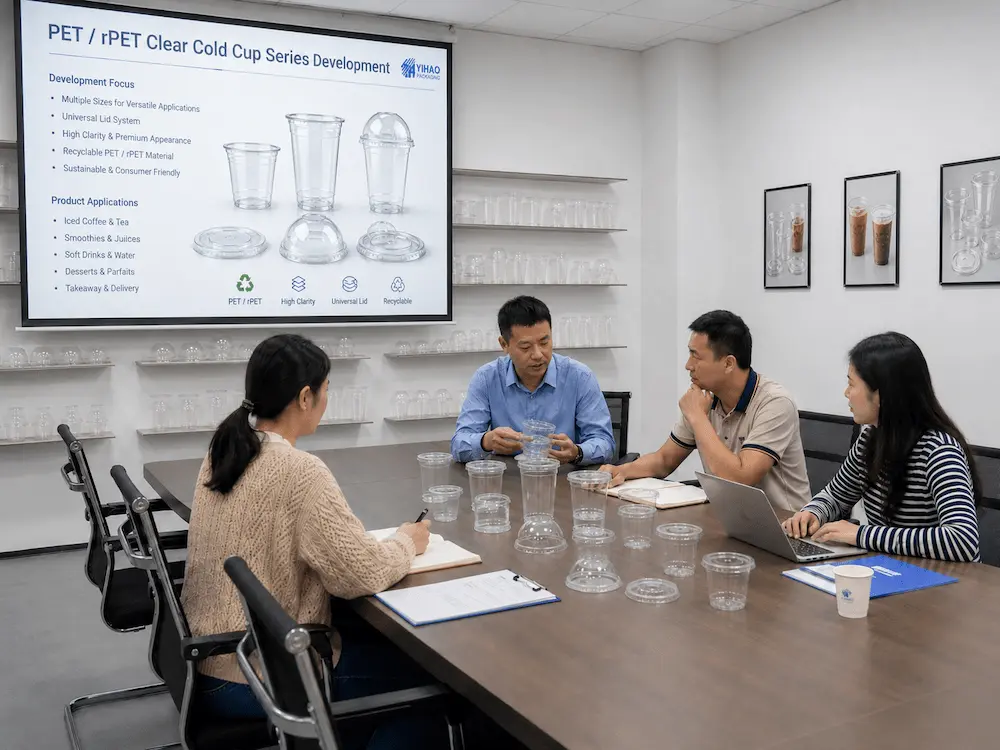
Ordering Questions to Ask Your Sealed Drink Cup Supplier
- What material options are available for this sealed drink cup series?
- Which cup sizes share the same lid diameter?
- Which lids match each cup size?
- Are flat lids, dome lids, strawless sipper lids, or sip-through lids available?
- Is the cup intended for cold drinks only?
- What drinks has this cup structure been used for?
- Can the cup be used with film sealing, snap-on lids, or both?
- What is the carton quantity and carton dimension?
- Can samples be tested before wholesale ordering?
- What food contact documentation can be provided for the target market?
- What recyclability wording is safe for the target market?
- Can the supplier support repeat orders with stable specifications?
- What customization options are available for logo, label, or carton marking?
FAQ
1. What are sealed drink cups used for?
Sealed drink cups are used for takeaway, delivery, retail display, and grab-and-go cold beverage service. They are practical for bubble tea, milk tea, boba drinks, iced coffee, juice, lemonade, smoothies, fruit tea, iced tea, refreshers, and selected chilled dessert cups.
2. Are PET sealed drink cups better than PP bubble tea cups?
PET sealed drink cups are stronger for clarity and cold drink display. PP bubble tea cups are often considered for selected film-sealing workflows and drink shop operations. The better option depends on the drink menu, sealing method, lid system, and sample test results.
3. What sizes are common for sealed drink cups?
Common sealed drink cup sizes include 12 oz, 14 oz, 16 oz, 18 oz, 20 oz, and 24 oz. Smaller sizes work for juice, iced coffee, and tasting drinks. Larger sizes work for bubble tea, milk tea, smoothies, lemonade, fruit tea, and high-capacity takeaway beverages.
4. What lid type should I choose for sealed drink cups?
Flat lids are practical for standard straw-service drinks. Dome lids provide extra space for toppings, foam, whipped cream, and thick drinks. Strawless sipper lids and sip-through lids support direct drinking for iced coffee, fruit tea, lemonade, juice, and iced tea.
5. Are sealed drink cups recyclable?
Sealed drink cup recyclability depends on material, package design, label choice, contamination level, and local recycling systems. PET and PP may be recyclable in selected markets, but buyers should confirm local acceptance before making recyclability claims.
6. Can sealed drink cups be ordered wholesale from a manufacturer?
Yes. Buyers can order sealed drink cups wholesale from a manufacturer or supplier. Before placing a bulk order, confirm material, size, lid compatibility, carton packing, sample testing, customization options, food contact suitability, and repeat order consistency.
7. What should buyers test before ordering sealed drink cups?
Buyers should test filled-cup handling, lid fit, leakage resistance, straw use, topping space, delivery movement, carton storage, stacking, and service speed. For film-sealed cups, buyers should also test sealing film, machine mold, rim fit, seal edge, and puncture experience.
8. What food contact questions should buyers ask?
Buyers should ask whether the material is intended for food contact, whether the cup is for cold use only, what documentation is available for the target market, and whether any product claims need to be confirmed before import or retail use.
References
- U.S. Food and Drug Administration, Packaging & Food Contact Substances guidance and food contact substance information.
- European Commission, Food Contact Materials legislation and Regulation (EC) No 1935/2004 framework.
- Association of Plastic Recyclers, APR Design Guide for plastics recyclability and PET thermoform packaging design guidance.
- Ellen MacArthur Foundation, circular economy and plastic packaging design discussions.
- YIHAO Packaging product development notes on PET cold cups, shared-lid systems, and cold cup lid compatibility.
- YIHAO Packaging internal category planning for Cold Cups & Lids, PET Cold Cups, PP Cold Cups, PLA Compostable Cold Cups, and Cold Cup Lids.
- Cold beverage packaging workflow considerations for cafes, milk tea shops, juice bars, convenience stores, supermarkets, and takeaway counters.
- Wholesale packaging sourcing practices for sample testing, carton planning, material checks, and supplier qualification.
Deep-Dive Insights
How buyers should think about sealed drink cups
Buyers should start from the drink menu, not from the cup catalog. Bubble tea, milk tea, boba drinks, iced coffee, smoothies, lemonade, refreshers, and fruit tea do not create the same packaging requirements. Ice level, topping height, pearl size, foam, straw use, lid style, sealing method, and delivery handling all affect the best sealed drink cup choice.
Why clear PET remains strong for cold drink display
Clear PET sealed drink cups are strong when the drink needs visual selling power. Customers see coffee color, milk contrast, fruit pieces, ice quality, pearls, toppings, foam, and freshness. This matters for retail display, takeaway counters, cafes, milk tea chains, supermarkets, bakeries, and convenience stores.
What PP bubble tea cups do well
PP bubble tea cups are useful when the buyer’s operation is built around PP cup sealing, film compatibility, and a defined drink shop workflow. The buyer should not treat PP as automatically better or worse than PET. The correct decision depends on the sealing machine, cup rim, film, drink type, and real sample testing.
What sustainability claims require
Recyclability and sustainability claims should be handled carefully. Buyers should confirm material, local recycling acceptance, package design, label impact, and disposal infrastructure before using claims in retail or marketing materials. Clear PET may support strong visual presentation and recycling discussion, but the final claim must match the actual market system.
Option buyers should prioritize first
For most cold beverage packaging teams, the safest starting point is a structured cup-and-lid system: one material direction, clear size logic, confirmed lid compatibility, and samples tested with real drinks. This prevents the most expensive mistake in sealed drink cup purchasing: buying cups and lids that look compatible but fail in daily service.
Final Note / Practical Takeaway
© 2026 YIHAO Packaging. All Rights Reserved.
All rights to the content, designs, and intellectual property presented on this website are the exclusive property of YIHAO Packaging. Any unauthorized duplication, distribution, or modification is prohibited.
We continually innovate our product offerings and specifications, and all rights to these updates are reserved.