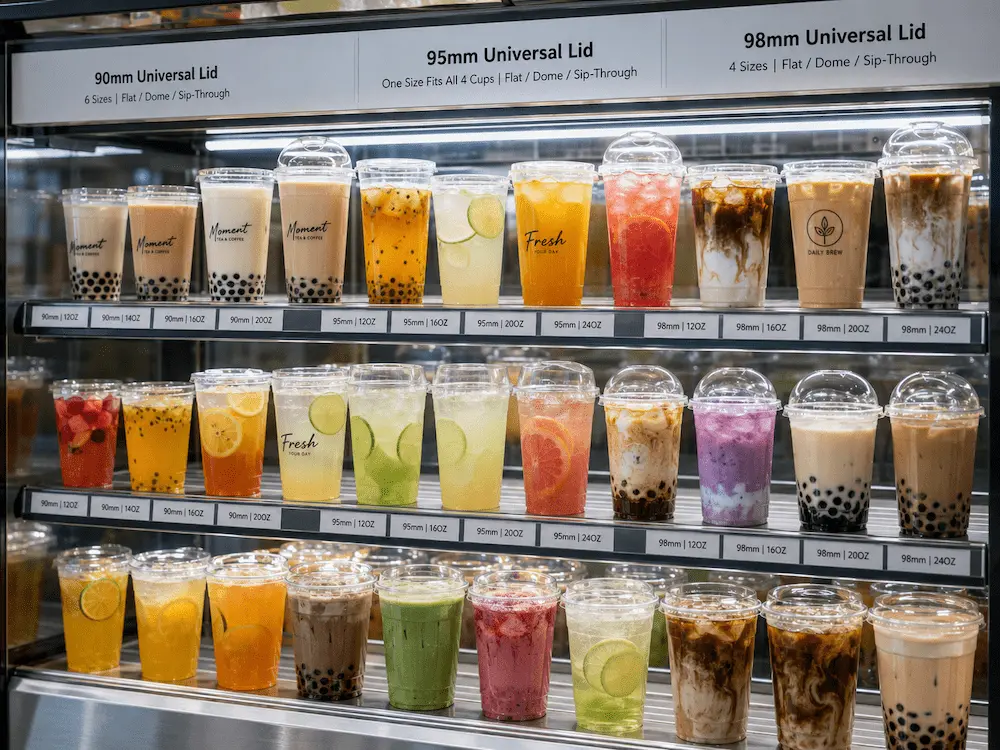
Choosing PP bubble tea cups is not only about finding a low unit price. For milk tea chains, beverage distributors, private-label drink brands, and foodservice buyers, the better question is whether the cup system performs reliably in daily operation: sealing, lid matching, stacking, takeaway handling, carton storage, delivery movement, and repeat wholesale orders.
YIHAO is a food packaging manufacturer and solution provider serving beverage, fresh food, bakery, deli, salad, fruit, and grab-and-go retail packaging needs. For drink packaging teams, the right supplier should not only provide cups. A stronger supplier helps buyers evaluate material suitability, sealing compatibility, lid options, cup structure, carton packing, branding direction, and sample testing before bulk purchasing.
If your team is comparing PP cold cups, PET cold cups, cold cup lids, or complete cold drink packaging solutions, this checklist gives you a practical way to judge whether a PP bubble tea cups manufacturer is ready for professional wholesale cooperation.
Why PP Bubble Tea Cups Need a Real Supplier Checklist
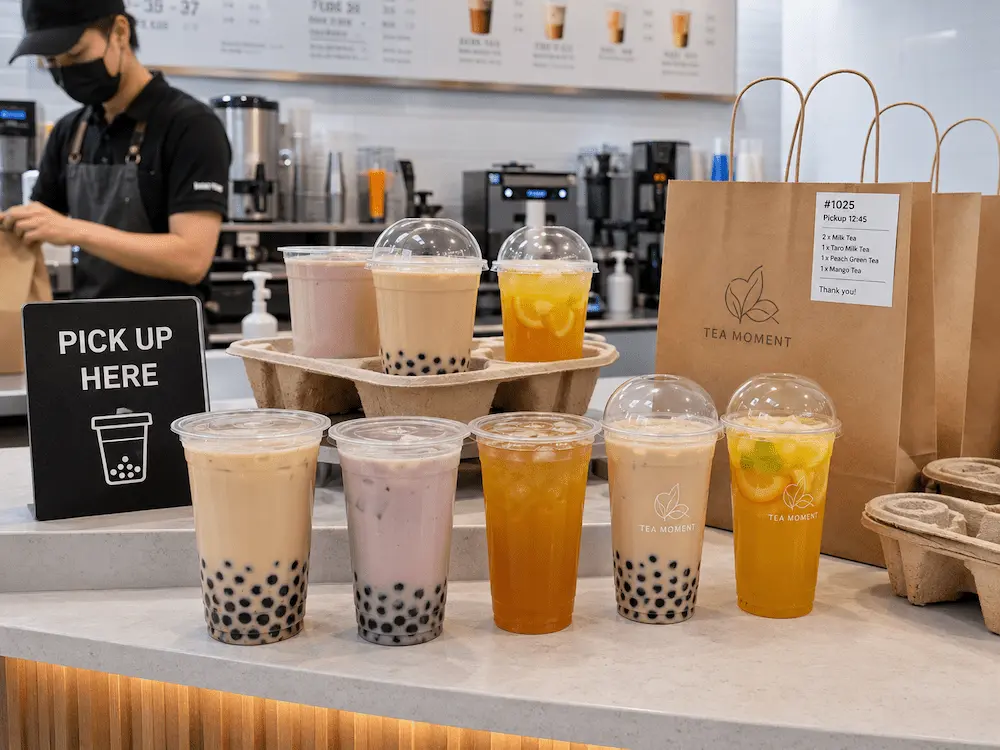
Bubble tea packaging has more operational pressure than ordinary cold drink packaging. A single cup may hold tea, milk, ice, tapioca pearls, pudding, jelly, fruit cubes, cheese foam, brown sugar syrup, or layered ingredients. These drinks are sealed quickly, carried in takeaway bags, delivered by riders, displayed at counters, and handed to customers with strong brand expectations.
That means buyers should not choose PP bubble tea cups based only on catalog photos or cup capacity. The real purchasing decision includes several connected questions:
- Does the cup rim match sealing film and sealing machines?
- Does the cup also work with matching lids when the menu changes?
- Does the cup stack smoothly without sticking during rush-hour service?
- Does the cup structure stay stable with ice, pearls, syrup, and milk tea?
- Does the carton protect the cups during warehouse handling and export movement?
- Does the supplier provide clear communication, samples, and repeat-order consistency?
For professional buyers, a supplier checklist reduces trial-and-error. It also prevents a common mistake: approving a sample that looks acceptable on the desk but performs poorly in sealing, stacking, delivery, or store operation.
PP Bubble Tea Cups vs PET Bubble Tea Cups: Choose by Selling Model
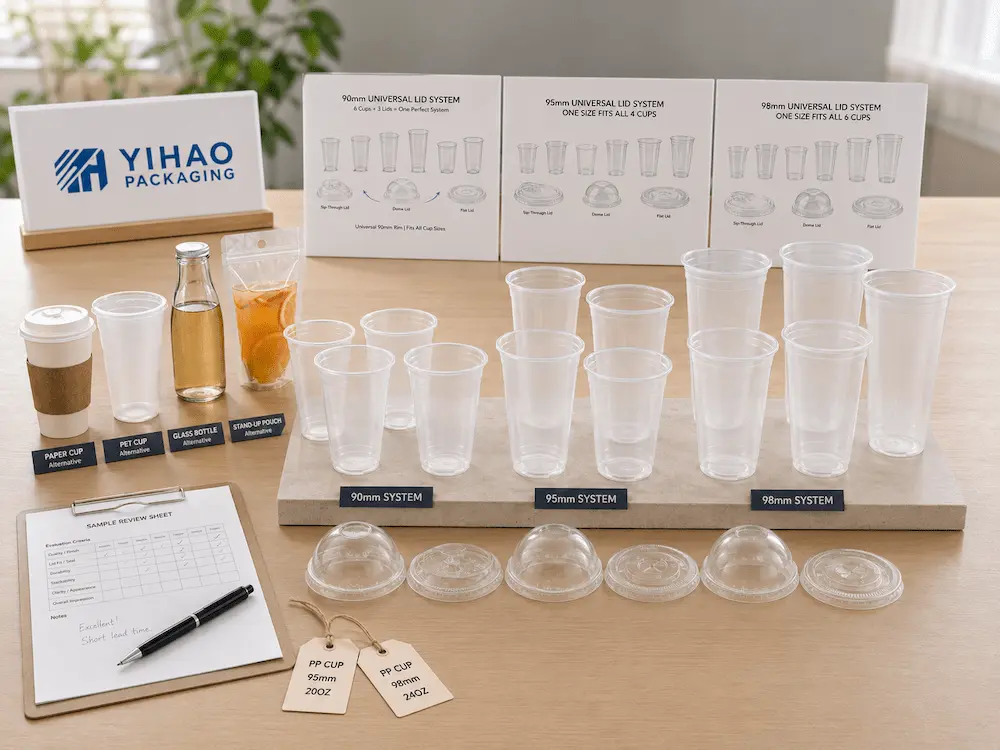
PP bubble tea cups and PET bubble tea cups are both used in cold beverage packaging, but they are not purchased for the same reason. PP is usually stronger for buyers focused on practical sealed drink programs, daily store handling, and operational flexibility. PET is usually stronger when the buyer prioritizes high transparency, visual presentation, and cold drink display value.
This difference matters. A milk tea chain selling sealed takeaway drinks should not evaluate cups the same way as a cafe selling visually layered iced coffee, smoothies, or fruit tea. A sealed boba drink program needs rim accuracy, sealing-film performance, stacking release, and cup strength. A premium cold drink display program needs clarity, lid fit, product visibility, and shelf presentation.
| Buyer Decision Point | PP Bubble Tea Cups | PET Bubble Tea Cups |
|---|---|---|
| Best purchasing logic | Practical sealed drink use, milk tea service, and wholesale beverage programs | High-clarity cold drink display and premium visual presentation |
| Typical drink fit | Milk tea, boba drinks, fruit tea, sealed drink cups, takeaway tea programs | Iced coffee, smoothies, juice, fruit tea, milk tea, layered cold drinks |
| Primary inspection point | Rim accuracy, sealing-film performance, cup strength, stacking release | Clarity, crack resistance, lid fit, cold shelf appearance, display quality |
| Best sample test | Test with real sealing machine, film, toppings, ice, and takeaway handling | Test with real lids, cold drinks, display lighting, stacking, and delivery handling |
| Buyer risk if ignored | Leaks, weak sealing, cup deformation, poor stacking, slow store service | Poor presentation, lid mismatch, cracking complaints, weak shelf appeal |
The better choice depends on the drink format, sealing method, lid style, brand image, target market, and buyer’s operating model. Many beverage buyers compare PP cold cups, PET cold cups, and matching cup lids before finalizing a complete packaging system.
Manufacturer Checklist: What Buyers Should Confirm First
1. Material Direction and Food Contact Documentation
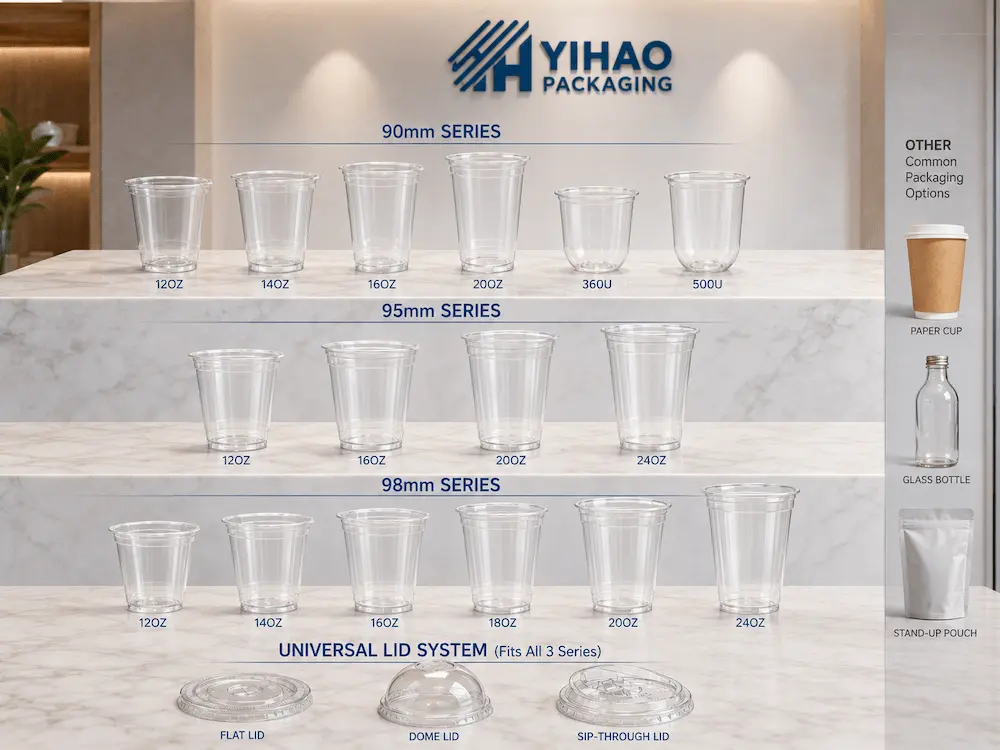
A professional PP bubble tea cups supplier should clearly explain the material direction used for the cup and provide appropriate food contact documentation based on the buyer’s target market. Buyers should ask for material declarations, applicable compliance documents, and available testing information before placing a wholesale order.
The supplier should not answer material questions vaguely. A strong manufacturer explains whether the cup is intended for cold beverage use, sealed drink use, takeaway drink service, or a specific foodservice scenario. If the buyer sells in multiple markets, the supplier should help clarify which documents are relevant for each destination.
2. Cup Rim Accuracy and Sealing Compatibility
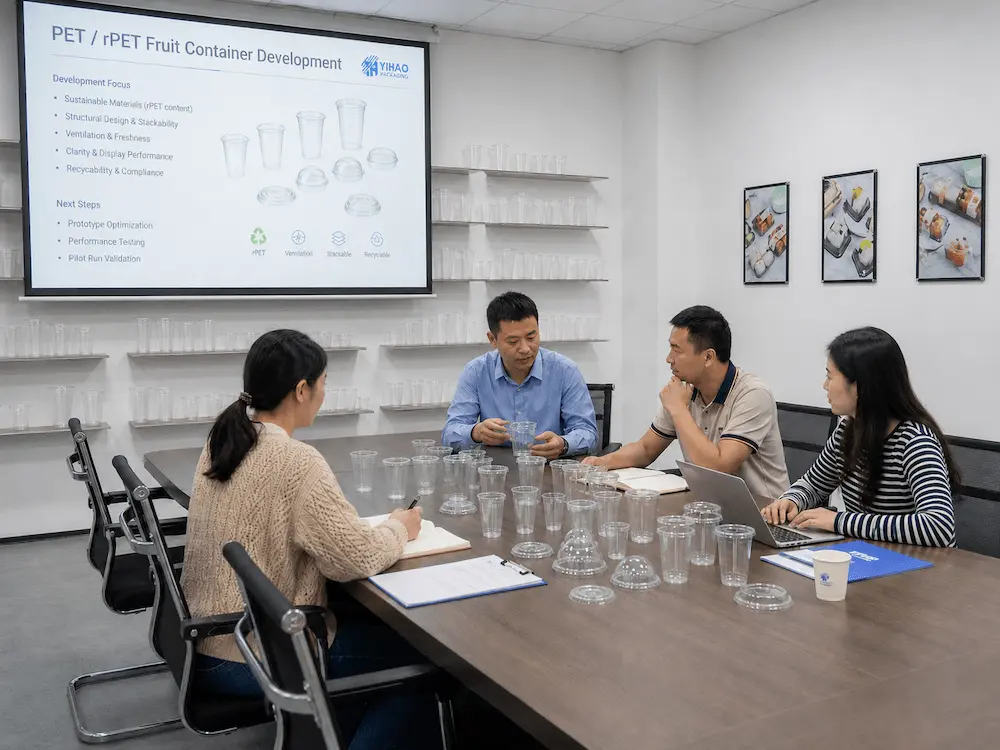
For sealed milk tea and boba drinks, the rim is one of the most important parts of the cup. A slight mismatch may cause weak sealing, wrinkles, leakage, failed straw piercing, or unstable film edges. Before approving PP bubble tea cups, buyers should test the cup with their actual sealing machine, sealing film, drink formula, ice level, and topping combination.
Ask the supplier these questions:
- Is the rim designed for sealing film, snap-on lids, or both?
- Has the cup been tested with standard sealing machines?
- Can the supplier provide production-representative samples?
- Does the sealing edge remain stable after stacking, shipping, and storage?
- Does the supplier understand the difference between sample approval and bulk-order consistency?
This step is critical because sealed drink cups fail in real stores, not in catalog pictures.
3. Lid Matching and Menu Flexibility
Not every bubble tea drink uses sealing film. Some drinks use flat lids, dome lids, or sip lids depending on toppings, foam height, straw use, and brand style. A supplier that understands beverage packaging should help buyers connect cup choice with lid choice.
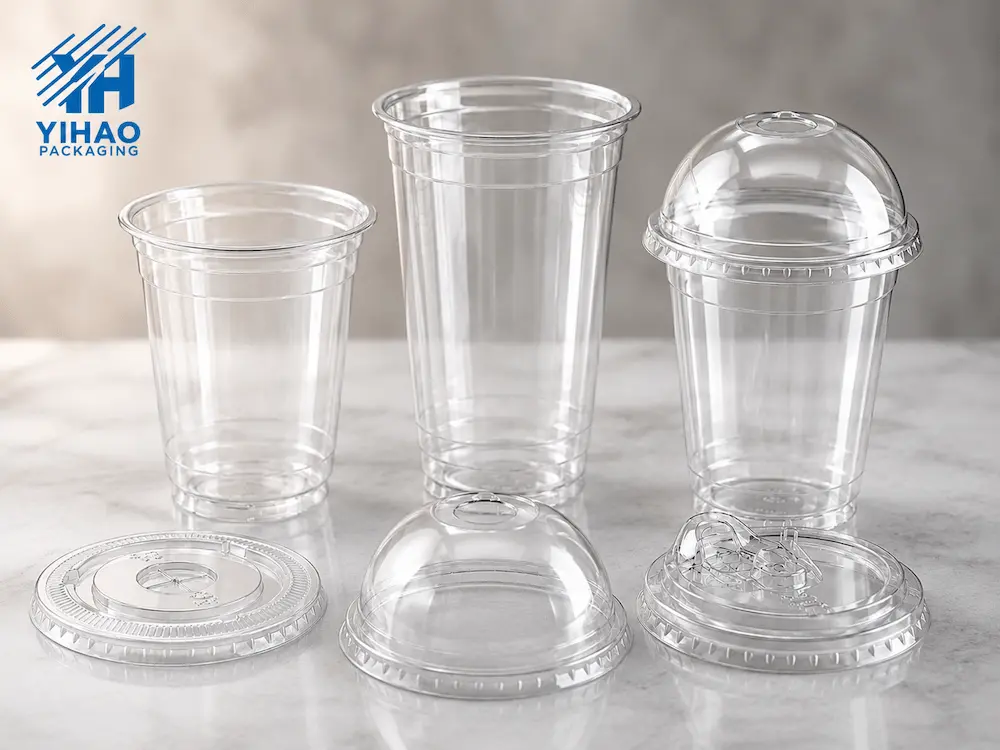
Flat lids are practical for standard straw-based cold drinks. Dome lids support drinks with whipped toppings, cheese foam, fruit cubes, or extra headspace. Strawless sipper lids support selected direct-drink takeaway formats. Buyers planning a broader beverage menu should review flat, dome, and strawless lid options before finalizing the cup family.
4. Cup Strength, Wall Consistency, and Stacking Release
Good boba cups must support fast handling. Staff pull cups from stacks, add ice, pour milk tea, add pearls, seal or lid the cup, wipe the surface, and pass the drink to customers in seconds. If cups stick together, deform, wobble, or feel too weak, store efficiency drops immediately.
Buyers should check wall consistency, cup roundness, bottom stability, stacking release, carton compression, and handling feel. The sample test should include real drinks, not only empty cups. Ice, syrup, pearls, shaken drinks, and delivery movement create different pressure than water alone.
5. Carton Protection and Export Packing
Carton packing is often ignored during supplier selection, but it directly affects cup condition when products arrive. A cup that leaves the factory correctly still creates complaints if cartons collapse, sleeves shift, or rims deform during long-distance transportation.
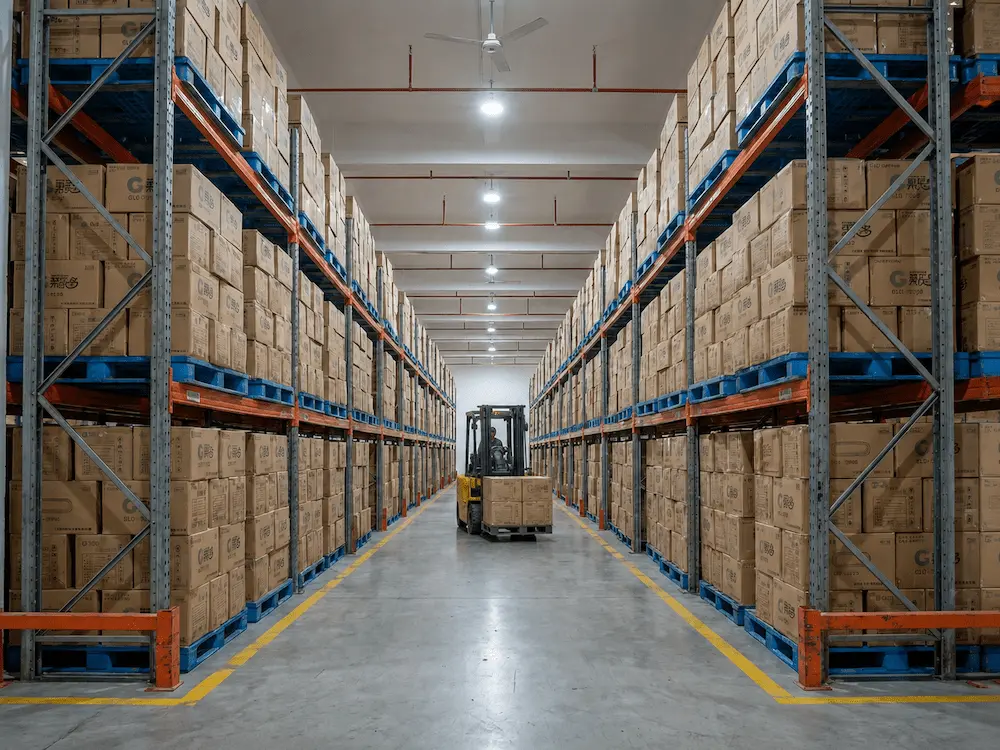
Buyers should ask how the cups are sleeved, how many pieces are packed per carton, how cartons protect the rim, and whether the supplier has experience with export handling. For distributors and chain-store buyers, carton strength and warehouse convenience are part of the purchasing decision, not an afterthought.
6. Printing, Branding, and Custom Packaging Support
Custom printed PP bubble tea cups help beverage brands build stronger takeaway identity. However, printing should be evaluated carefully. Buyers should confirm print area, artwork requirements, color limitations, sample approval process, logo placement, and whether the printed design affects sealing or lid performance.
Branding is not only decoration. For milk tea chains, bubble tea shops, and beverage distributors, the cup is part of the customer experience. A clean logo, readable design, and stable cup structure create better brand recognition than excessive graphics on a poorly matched cup.
For custom projects, buyers can start from YIHAO factory and supply support and then match the cup project with the right product family, lid style, and packaging requirements.
Before Bulk Order Testing Checklist for PP Bubble Tea Cups
Before moving from sample approval to wholesale purchase, buyers should run a practical test that reflects real store use. This testing checklist is especially useful for beverage chains, distributors, supermarket drink programs, and private-label milk tea brands.
| Test Item | How to Test | Pass Standard |
|---|---|---|
| Sealing film test | Use the buyer’s actual sealing machine and sealing film | Smooth seal edge, no weak sealing, no obvious leakage risk |
| Straw piercing test | Seal the cup and pierce with the intended straw type | Film pierces cleanly without cup rim distortion |
| Real drink test | Fill with milk tea, ice, pearls, syrup, and toppings | Cup remains stable during filling, sealing, carrying, and serving |
| Lid fit test | Match cup with flat, dome, or sip lids when needed | Lid attaches evenly and supports takeaway handling |
| Stacking release test | Pull cups quickly from a full sleeve during simulated service | Cups separate smoothly without sticking or deformation |
| Delivery movement test | Place sealed drink in takeaway bag and simulate transport movement | No obvious leakage, rim failure, or cup collapse |
| Carton inspection | Check sleeves, carton strength, rim protection, and storage condition | Cups arrive clean, round, separated, and ready for store use |
| Printed sample review | Review logo position, color, readability, and sealing area | Branding looks clean and does not affect cup function |
Wholesale Supplier Checklist for PP Bubble Tea Cups
A strong PP bubble tea cups manufacturer should make the buying process easier, not more confusing. The following checklist helps purchasing teams compare suppliers before sending a bulk order inquiry.
| Checklist Item | What to Ask | Why It Matters |
|---|---|---|
| Material | What PP material direction is used, and what documents are available? | Material suitability affects food contact review, market entry, and buyer confidence. |
| Sealing | Has the cup been tested with sealing film and sealing machines? | Poor sealing causes leakage, complaints, and wasted drinks. |
| Rim | Is the rim stable and consistent across samples? | Rim variation directly affects lids and sealed drink cups. |
| Stacking | Do cups separate smoothly during fast service? | Good stacking improves store efficiency and reduces cup waste. |
| Lid options | Which lids match the cup family? | Cup-lid matching supports broader drink menus and reduces SKU confusion. |
| Carton packing | How are cups packed for export and warehouse handling? | Weak packing may deform cups before they reach the store. |
| Customization | Can the supplier support logo printing or private-label packaging? | Branding support matters for chains, distributors, and beverage programs. |
| Communication | Does the supplier answer technical questions clearly? | Clear communication reduces purchasing risk and approval delays. |
Supplier Red Flags Buyers Should Not Ignore
Not every low-price quotation is a good wholesale opportunity. Buyers should be cautious when a supplier avoids technical questions, refuses to provide samples, gives unclear material answers, or cannot explain sealing compatibility.
Common red flags include:
- The supplier only discusses price and avoids rim, sealing, or lid compatibility.
- The sample quality looks different from the expected bulk-order direction.
- The supplier cannot explain carton packing or export protection.
- The supplier gives vague answers about food contact documents.
- The supplier recommends one cup for every drink type without asking about the menu.
- The supplier does not ask whether the buyer uses sealing film, lids, or both.
- The supplier cannot support basic custom branding discussion.
A reliable manufacturer should help buyers prevent problems before the order. A weak supplier usually reacts only after leakage, deformation, or customer complaints appear.
Best Applications for PP Bubble Tea Cups
Milk Tea and Classic Bubble Tea
PP bubble tea cups are often selected for classic milk tea, pearl milk tea, brown sugar milk tea, taro milk tea, cheese foam tea, and flavored milk tea programs. Buyers should test cup size, sealing strength, straw piercing, and bottom stability with real toppings.
Boba Drinks and Topping-Heavy Menus
Boba cups need enough structural confidence for pearls, jelly, pudding, fruit cubes, ice, and thicker drink textures. For topping-heavy menus, buyers should compare cup strength, rim stability, and whether dome lids or sealed-film systems provide the better customer experience.
Fruit Tea, Refreshers, and Cold Drink Programs
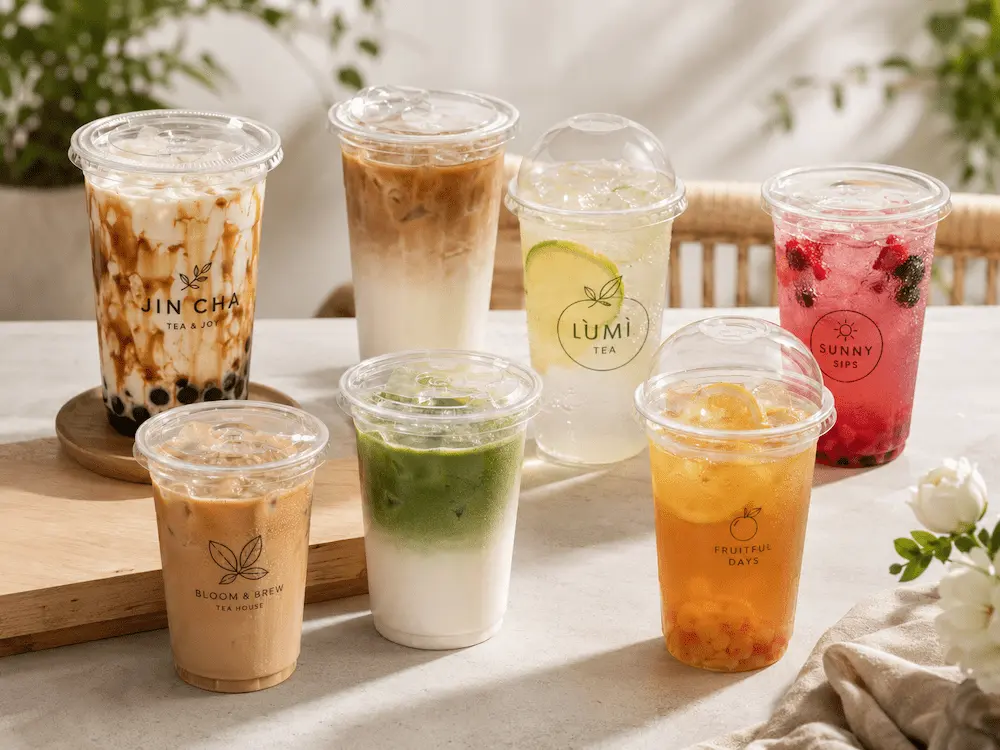
Fruit tea, lemon tea, sparkling fruit drinks, refreshers, iced tea, and flavored cold beverages require both presentation and practical takeaway handling. Buyers comparing PP and PET should decide whether sealing performance or visual clarity carries more weight for the selling channel.
Chain Stores and Wholesale Distribution
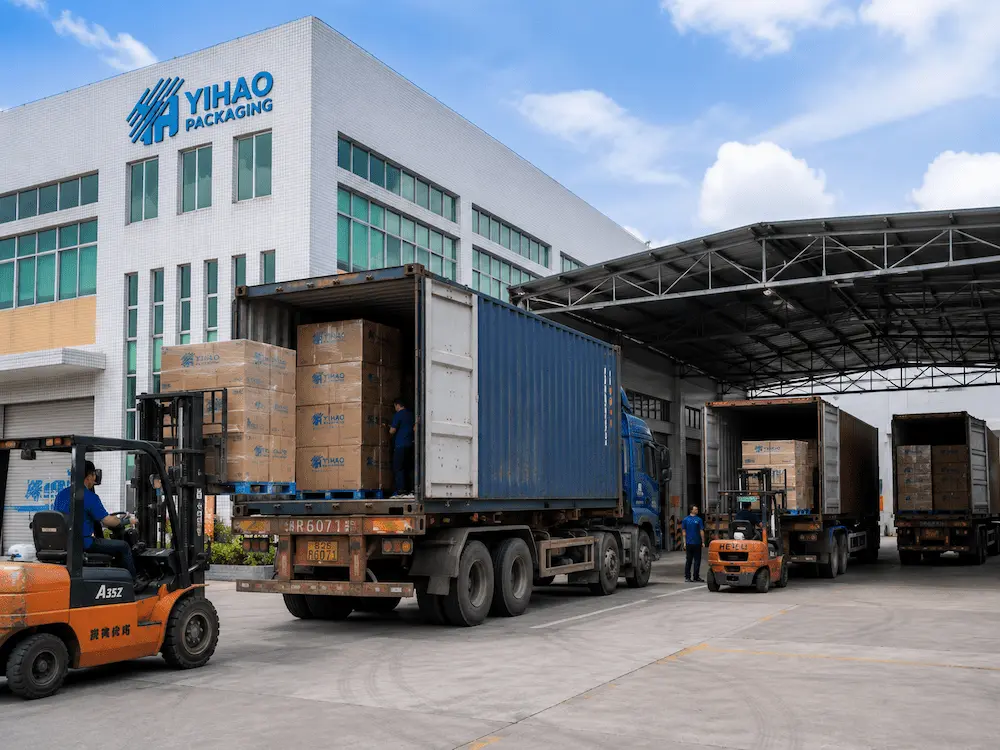
For beverage chains and distributors, consistency is more important than one-time sample appearance. A supplier must support stable product quality, repeatable carton packing, clear reorder communication, and a product family that helps stores avoid unnecessary SKU complexity.
How to Send a Better Inquiry to a PP Bubble Tea Cups Supplier
A serious inquiry should help the manufacturer understand the real use case. Instead of asking only for a price list, buyers should send a structured request that includes drink format, sealing method, lid needs, custom branding direction, target market, and sample testing requirements.
| Inquiry Information | What Buyers Should Provide |
|---|---|
| Drink type | Milk tea, bubble tea, boba drinks, fruit tea, juice, smoothie, or mixed beverage menu |
| Use method | Sealing film, flat lid, dome lid, strawless lid, or mixed cup-lid system |
| Sales channel | Tea shop, cafe, supermarket, distributor, foodservice, chain store, or private-label program |
| Target market | Local retail, export market, wholesale distribution, or multi-store beverage operation |
| Branding needs | Plain cup, custom printed cup, carton labeling, sleeve packaging, or private-label packaging |
| Testing plan | Sealing machine test, lid fit test, real drink test, stacking test, and delivery movement test |
Buyers who are still building a beverage packaging range can also review YIHAO solution and catalog navigation, compare cold cups and lids, and then match the final cup choice with their actual drink menu.
Related Packaging Options Buyers Should Compare
PP is only one part of the beverage packaging decision. For many drink businesses, the stronger purchasing strategy is to compare multiple packaging families and then select the best system for each drink menu.
- PP cold cups for practical bubble tea and sealed drink programs.
- PET cold cups for clear cold beverage presentation.
- Cold cup lids for flat, dome, strawless, and sip-through drinking formats.
- Factory support for buyers evaluating manufacturing capability and supply cooperation.
- YIHAO homepage for broader packaging categories and company navigation.
Buyer Quick Note
For most professional buyers, the safest way to purchase PP bubble tea cups is to test the full cup system before committing to wholesale volume. Do not approve the cup alone. Test the rim, sealing film, lid option, stacking, carton protection, printing direction, and real drink performance together.
A reliable manufacturer or supplier should help you reduce risk before the order, not explain problems after delivery. If the supplier understands your drink menu, sealing method, lid needs, carton requirements, and branding plan, the quotation becomes more useful and the final order becomes safer.
FAQ
1. What are PP bubble tea cups used for?
PP bubble tea cups are used for milk tea, bubble tea, boba drinks, fruit tea, sealed drink cups, and takeaway beverage programs. They are often evaluated when buyers need practical cup structure, sealing compatibility, and wholesale supply consistency.
2. Are PP bubble tea cups better than PET bubble tea cups?
Neither material is automatically better. PP is usually stronger for practical sealed drink programs and milk tea service, while PET is usually stronger for high-clarity cold drink presentation. Buyers should compare drink format, sealing method, lid fit, branding needs, and target market requirements before choosing.
3. What should buyers test before ordering PP bubble tea cups wholesale?
Buyers should test cup rim accuracy, sealing-film performance, lid fit, stacking release, bottom stability, carton protection, printed samples, and real drink handling. Testing with the actual sealing machine, sealing film, and beverage formula is more useful than checking empty samples only.
4. Can PP bubble tea cups be customized with logos?
Many cup projects support custom logo or private-label direction, but buyers should confirm print area, artwork requirements, sample approval process, color limits, and whether printing affects sealing or lid performance. Custom details should be confirmed with the supplier before bulk production.
5. How should I choose a PP bubble tea cups manufacturer?
Choose a manufacturer that can explain material direction, provide relevant documentation, support sample testing, communicate clearly about sealing and lid compatibility, control product consistency, and offer stable wholesale cooperation. Avoid suppliers that only quote price without helping you verify real use performance.
6. What information should I send when requesting a PP bubble tea cups quotation?
Send your drink type, cup use method, sealing film or lid requirement, target market, branding needs, estimated purchasing stage, and sample testing plan. This helps the supplier recommend a more suitable cup system instead of giving a generic price list.
Deep-Dive Insights
Why PP bubble tea cups are different from ordinary cold drink cups
PP bubble tea cups are not selected only for beverage capacity. For milk tea shops, bubble tea chains, distributors, and takeaway drink programs, the real buying logic is sealing performance, rim stability, cup flexibility, filling speed, and compatibility with film sealing machines. A cup that looks acceptable in photos may still fail during sealing, stacking, transport, or high-volume store operations.
How buyers should compare PP bubble tea cups and PET bubble tea cups
PET bubble tea cups are often chosen when high transparency and premium cold drink display are the main priorities. PP cups are commonly used when buyers need a more flexible cup body and reliable sealed drink cup performance for bubble tea, milk tea, fruit tea, smoothies, and boba drinks. The best choice depends on the drink menu, sealing method, cup diameter, lid or film system, and local customer expectations.
What wholesale buyers should verify before bulk orders
Before confirming wholesale orders, buyers should test cup rim flatness, sealing film compatibility, lid fit, wall thickness, stacking stability, carton packing, and real drink filling performance. For bubble tea cups, the sealing test is especially important because leaks usually come from rim inconsistency, wrong film selection, unsuitable sealing temperature, or poor machine matching rather than from the cup body alone.
Manufacturer and supplier checklist insight
A reliable PP bubble tea cups manufacturer or wholesale supplier should help buyers evaluate the full drink packaging system, not only the cup itself. This includes cup size range, matching lids, sealing film compatibility, sample testing, custom printing options, carton marks, bulk packing, and repeat-order consistency. For growing beverage brands, supplier stability is just as important as unit price because cups, lids, and sealing films must work together every day in real store operations.
Practical takeaway
The strongest sourcing decision is not simply choosing the cheapest milk tea cups or boba cups. The better decision is choosing a manufacturer that understands sealed drink cups, wholesale supply, material selection, cup-lid-film compatibility, and real beverage shop usage. For bubble tea chains and distributors, tested compatibility and stable repeat production protect both daily operations and brand reputation.
Final Note / Practical Takeaway
© YIHAO. All rights reserved. This article is prepared for food packaging buyers, beverage packaging teams, wholesalers, distributors, and brand owners evaluating PP bubble tea cups, milk tea cups, boba cups, PET bubble tea cups, sealed drink cups, and related wholesale packaging solutions.