Micro Summary: Eco Friendly Fruit Packaging for Fresh Food Channels
Eco friendly fruit packaging helps supermarkets, cafes, bakeries, foodservice brands, distributors, and produce buyers balance fresh fruit visibility, chilled display performance, takeaway handling, recycled material direction, and responsible packaging communication. Buyers should evaluate rPET produce packaging, recycled PET fruit containers, sustainable produce packaging, recyclable produce containers, and clear rPET packaging by checking material structure, food contact suitability, product clarity, lid fit, label placement, local recycling acceptance, stacking, sample testing, and wholesale supplier consistency.
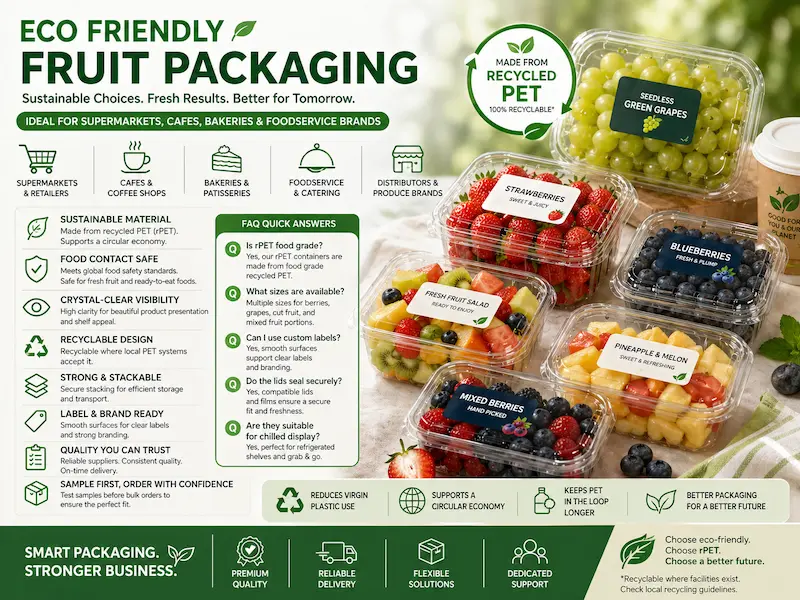
Introduction: Why Eco Friendly Fruit Packaging Matters Across Fresh Food Channels
Fresh fruit packaging has become more than a container. For supermarkets, cafes, bakeries, foodservice brands, produce distributors, and fresh food buyers, packaging affects product visibility, customer trust, chilled display performance, takeaway handling, label placement, and repeat purchasing decisions. When buyers add sustainability goals into the decision, the packaging choice becomes even more strategic.
This is why eco friendly fruit packaging needs a practical buyer-focused approach. A package should not only sound responsible. It should also protect the fruit, show the product clearly, support food contact requirements, fit lids or films correctly, stack reliably, and maintain supply consistency across wholesale orders.
For rPET and recycled plastic packaging used in food applications, buyers should verify the material and intended use carefully. FDA says proposed uses of recycled plastic in food packaging are considered case by case, and FDA guidance highlights chemistry considerations for evaluating recycling processes used to produce material for food-contact applications. EFSA’s 2024 guidance describes criteria and the scientific evaluation approach for assessing post-consumer mechanical PET recycling processes intended for food-contact materials.
YIHAO works as a food packaging manufacturer and solution provider for buyers evaluating eco friendly fruit packaging, rPET produce packaging, recycled PET fruit containers, sustainable produce packaging, recyclable produce containers, and clear rPET packaging. This guide explains how buyers should choose fruit packaging for supermarkets, cafes, bakeries, and foodservice brands without relying on vague environmental claims.
What Is Eco Friendly Fruit Packaging?
Eco friendly fruit packaging refers to fruit packaging selected with attention to material responsibility, food contact suitability, product display, recyclability design, packaging performance, and supplier consistency. It is not one single material or one fixed container style.
Eco friendly fruit packaging may include:
- rPET produce packaging
- Recycled PET fruit containers
- Clear rPET packaging
- Recyclable produce containers
- Lightweight fruit containers
- Fruit trays with recycling-oriented material design
- Clear fruit cups made with verified recycled PET content
- Berry containers designed for retail visibility
- Packaging designed for recycling where local systems accept the material
- Label and closure designs that support clearer recycling communication
The phrase “eco friendly” should be supported by real details. Buyers should ask what material is used, what recycled content is included, whether food contact suitability is confirmed, whether the packaging is accepted by local recycling systems, and whether the supplier can provide consistent quality in repeat wholesale orders.
A strong fruit packaging strategy should balance responsible material direction with practical use. If the package does not show the fruit clearly, fit the lid properly, or perform in chilled display, the packaging decision is incomplete.
Eco Friendly Fruit Packaging for Supermarkets
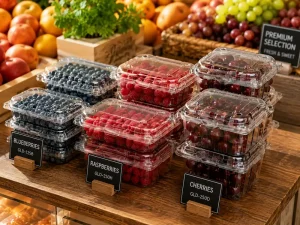
Supermarkets need fruit packaging that works in real retail conditions. Products are stocked, labeled, displayed under lighting, picked up by customers, moved by staff, and reordered regularly. For this reason, eco friendly fruit packaging for supermarkets must combine shelf appeal with operational performance.
Common supermarket applications include:
- Strawberries
- Blueberries
- Grapes
- Mixed berries
- Fresh-cut melon
- Pineapple portions
- Fruit salad
- Mixed fruit cups
- Chilled fruit displays
- Grab-and-go fruit packs
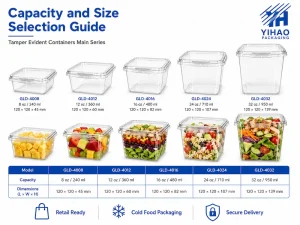
For supermarkets, recycled PET fruit containers and clear rPET packaging can be practical because they support product visibility and recycled material communication at the same time.
Supermarket buyers should check:
- Fruit visibility under retail lighting
- Lid fit and closure stability
- Label and barcode placement
- Filled-container stacking
- Chilled display appearance
- Carton storage
- Repeat order consistency
- Appropriate recyclability wording for the target market
The best supermarket fruit packaging should make the fruit easy to see and easy to buy while supporting responsible packaging communication.
Eco Friendly Fruit Packaging for Cafes
Cafes use fruit packaging differently from supermarkets. A cafe may sell fruit cups beside coffee, smoothie pairings, breakfast sides, fresh snack packs, or chilled grab-and-go fruit portions. The packaging must look clean, compact, portable, and easy to handle.
Cafe applications may include:
- Breakfast fruit cups
- Side fruit portions
- Fruit salad add-ons
- Grab-and-go chilled fruit
- Smoothie or juice pairing fruit packs
- Small mixed fruit containers
- Fresh fruit sides for sandwiches or light meals
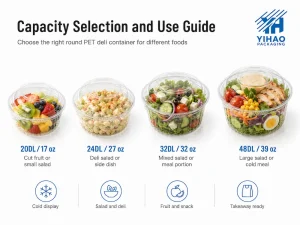
For cafes, clear rPET packaging works well when buyers want customers to see the product quickly. A transparent container helps show color, portion size, and freshness cues before purchase. The package should also fit takeaway bags, maintain lid stability, and support easy label placement.
Cafe buyers should check portability, lid fit, counter display appearance, and customer opening experience. A package that looks responsible but leaks, shifts, or hides the fruit will not support daily service.
Eco Friendly Fruit Packaging for Bakeries
Bakeries can use fruit packaging to expand beyond bread, cakes, pastries, and desserts. Fruit portions can complement breakfast sets, dessert counters, pastry pairings, cheesecake slices, tarts, yogurt cups, and chilled takeaway boxes.
Bakery applications may include:
- Fruit sides with pastries
- Breakfast fruit packs
- Dessert counter fruit portions
- Cheesecake or tart pairing fruit packs
- Chilled fresh fruit add-ons
- Mixed fruit portions
- Small fruit packs for bakery meal boxes
For bakeries, packaging should look clean and premium. Fruit packaging should not feel like an unrelated supermarket pack. It should pair naturally with bakery products and support a fresh, appetizing display.
Buyers should review product visibility, portion fit, lid or film compatibility, label placement, and chilled counter display. Recycled PET fruit containers and clear rPET packaging can support bakery presentation when clarity and compact format matter.
Eco Friendly Fruit Packaging for Foodservice Brands
Foodservice brands have different priorities. They often care less about shelf appearance alone and more about batch preparation, portion consistency, cold storage, transport, stacking, and repeat supply.
Foodservice applications may include:
- Hotel breakfast fruit packs
- Catering fruit portions
- School meal fruit sides
- Corporate meal fruit packs
- Meal prep fruit containers
- Foodservice fresh produce distribution
- Airline or institutional fruit portions
- Grab-and-go fruit packs for prepared meal programs
For these buyers, eco friendly fruit packaging should perform at scale. It should support consistent portions, efficient packing, stable lids, carton efficiency, and reliable wholesale supply.
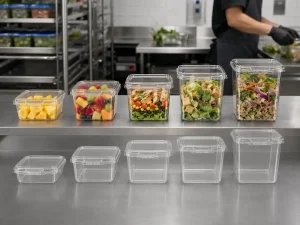
Foodservice buyers should test actual fruit inside the package, not only empty samples. Fresh-cut melon, fruit salad, berries, and mixed fruit portions can behave differently after filling, chilling, stacking, and transport.
Why rPET Produce Packaging Is Practical for Fruit Packaging
rPET produce packaging is practical for many fruit applications because it can combine recycled PET material direction with the clear display value that fruit packaging needs. Fruit is highly visual. Customers want to see color, texture, portion size, and freshness before buying.
rPET packaging may be used for:
- Berry containers
- Fruit cups
- Fruit salad containers
- Fresh-cut fruit packs
- Produce trays
- Chilled fruit displays
- Takeaway fruit packs
- Supermarket fruit packaging
However, buyers should confirm the actual details before wholesale orders. Important questions include:
- What rPET content is used?
- Is the packaging suitable for the intended food contact use?
- Is documentation available where required?
- Does the packaging remain clear under retail or chilled lighting?
- Does the lid or film fit properly?
- Is the structure consistent across repeat orders?
- Is the recycling claim appropriate for the target market?
Eco friendly fruit packaging should be selected by proof and performance, not by material wording alone.
Recyclable Produce Containers: What Buyers Should Know
Recyclable produce containers can support responsible packaging communication when they are designed with recyclable material and accepted by local recycling systems. But buyers should be careful: recyclable does not mean recycled everywhere.
Actual recycling depends on:
- Local recycling collection
- Sorting infrastructure
- Material type
- Package color
- Label design
- Adhesive choice
- Food residue
- Mixed-material components
- Consumer disposal behavior
APR’s Design Guide provides design guidance and testing protocols for assessing package components, and APR’s PET guidance notes that labels can affect automated sorting and final recyclate quality; label surface area, substrate, inks, metal decoration, and adhesives should be considered.
Professional wording is important. Buyers should use careful phrases such as “designed with recyclable PET material” or “suitable for recycling where local PET recycling systems accept it.” Avoid unsupported claims such as “fully recyclable everywhere.”
Clear rPET Packaging for Retail Display, Takeaway, and Chilled Fruit
Clear rPET packaging is useful for fruit packaging because fruit needs to be seen. A clear package helps customers evaluate freshness, color, portion size, and ingredient mix before purchase.
Clear rPET packaging is suitable for:
- Berries
- Grapes
- Fresh-cut fruit
- Fruit salad
- Mixed fruit cups
- Chilled fruit displays
- Takeaway fruit packs
- Cafe fruit portions
- Bakery fruit sides
- Foodservice fruit packs
The buyer should check more than appearance. Clear rPET packaging should be tested for lid fit, stacking, label placement, chilled display, customer handling, and sample-to-order consistency.
If the package supports recycled material communication but looks cloudy or unstable, it may weaken retail performance. If it looks clear but lacks food contact confirmation, the purchasing risk remains. The best option balances clarity, material verification, and real use.
Comparison Table: Eco Friendly Fruit Packaging Options by Channel
| Sales Channel | Best Packaging Direction | Common Fruit Applications | Buyer Checkpoint |
|---|---|---|---|
| Supermarkets | Recycled PET fruit containers, clear rPET packaging | Berries, grapes, fruit salad, fresh-cut fruit, chilled displays | Check visibility, label space, stacking, and recycling communication |
| Cafes | Clear rPET packaging, takeaway fruit containers | Breakfast fruit cups, fruit sides, grab-and-go fruit portions | Review lid fit, portability, and customer display appeal |
| Bakeries | Clear fruit containers, recycled PET fruit packs | Fruit sides, dessert pairings, breakfast sets, chilled fruit portions | Check clean presentation, portion fit, and chilled counter display |
| Foodservice Brands | rPET produce packaging, recyclable produce containers | Catering fruit packs, meal prep fruit portions, hotel breakfast fruit | Test portion consistency, carton efficiency, and repeat supply stability |
How Buyers Should Choose Eco Friendly Fruit Packaging
Choosing eco friendly fruit packaging requires more than selecting a material. Buyers should evaluate the product, sales channel, material structure, display needs, food contact use, and supplier reliability.
1. Start With the Fruit Type
Different fruits need different packaging. Berries need protection and careful stacking. Grapes need visibility and stable holding. Fresh-cut fruit needs lid fit and chilled display performance. Fruit salad needs enough space for color and ingredient layout.
The fruit type should guide the container choice.
2. Match the Sales Channel
Supermarkets need retail visibility and label space. Cafes need compact takeaway packaging. Bakeries need clean fruit presentation that pairs well with desserts or breakfast products. Foodservice brands need portion consistency, stacking, and repeat order stability.
A package that works well for one channel may not be ideal for another.
3. Confirm Material and Recycled Content
Do not rely only on the phrase “eco friendly.” Buyers should ask what material is used, what rPET content is included, and whether the material structure is consistent across repeat orders.
For rPET packaging, buyers should confirm recycled PET content and intended use with the supplier.
4. Confirm Food Contact Suitability
If the package directly touches fruit, buyers should confirm food contact suitability. This is especially important for fresh-cut fruit, fruit salad, berries, and ready-to-eat fruit portions.
Buyers should request supporting documentation where required by their target market or customer.
5. Check Product Visibility
Fruit packaging should show the fruit clearly. Customers rely on visual cues such as color, portion size, cut surface, and freshness.
Clear rPET packaging and recycled PET fruit containers should be tested under real retail or chilled display lighting.
6. Review Recyclability Claims Carefully
Recyclability depends on local systems and full package design. Buyers should review material, label, adhesive, contamination, and local recycling acceptance before making claims.
Avoid absolute claims unless they are supported by the target market’s recycling system and package design.
7. Work With a Reliable Manufacturer, Wholesale Supplier, or Packaging Partner
A reliable manufacturer, wholesale partner, or packaging supplier should provide samples, explain material options, support food contact documentation discussions, recommend suitable packaging structures, and maintain repeat order consistency.
For eco friendly packaging projects, supplier transparency is a core part of the decision.
Why Work With YIHAO for Eco Friendly Fruit Packaging?
YIHAO provides food packaging solutions for buyers who need practical fruit packaging, rPET produce packaging, recycled PET fruit containers, clear rPET packaging, recyclable design discussions, and wholesale supply support.
For eco friendly fruit packaging projects, YIHAO supports buyers in comparing eco friendly fruit packaging, rPET produce packaging, recycled PET fruit containers, sustainable produce packaging, recyclable produce containers, and clear rPET packaging based on actual fruit use, sales channel, material communication, retail display needs, lid or film fit, label placement, stacking, and repeat order consistency.
Professional buyers should not choose fruit packaging only from sustainability wording or product photos. They should test actual fruit, confirm material details, check food contact suitability, review local recycling requirements, and evaluate packaging under real retail or chilled display conditions.
Request Eco Friendly Fruit Packaging Samples for Retail and Foodservice Testing
Before placing a wholesale order, buyers should test eco friendly fruit packaging with actual berries, grapes, fresh-cut fruit, fruit salad, chilled display conditions, lid or film fit, label placement, stacking, and takeaway handling needs. YIHAO supports supermarkets, cafes, bakeries, foodservice brands, distributors, and packaging buyers with sample review, material discussion, packaging comparison, and practical fresh fruit packaging suggestions.
Contact YIHAO to compare rPET produce packaging, recycled PET fruit containers, sustainable produce packaging, recyclable produce containers, and clear rPET packaging for your wholesale fruit packaging needs.
Buyer Checklist Before Ordering Eco Friendly Fruit Packaging
Before confirming a wholesale order, buyers should review the following points:
- Confirm fruit type and sales channel
- Confirm material structure and rPET content
- Confirm intended food contact use
- Request supporting documentation where required
- Test actual fruit in the package
- Check clarity under retail or chilled lighting
- Review lid, film, or closure compatibility
- Test stacking and takeaway handling
- Review label and barcode placement
- Confirm local recycling acceptance before making claims
- Compare rPET with virgin PET and other alternatives
- Review carton storage and daily operation efficiency
- Ask for samples before bulk orders
- Confirm repeat order consistency
- Work with a reliable manufacturer or wholesale supplier
This checklist helps buyers choose eco friendly fruit packaging based on proof, performance, and channel fit.
Conclusion: Choose Eco Friendly Fruit Packaging by Channel, Proof, and Performance
The best eco friendly fruit packaging is selected through real product testing, material confirmation, and supplier communication. It should not be chosen only because it sounds sustainable. It should also show the fruit clearly, support food contact requirements, fit the sales channel, stack reliably, communicate recyclability responsibly, and remain consistent across wholesale orders.
rPET produce packaging, recycled PET fruit containers, sustainable produce packaging, recyclable produce containers, and clear rPET packaging can all support responsible fruit packaging strategies when they are verified and used correctly.
For professional buyers, the safest approach is to test samples with actual fruit, review material details, confirm food contact suitability where required, evaluate local recycling acceptance, and work with a supplier that communicates clearly. When selected carefully, eco friendly fruit packaging supports fresh product visibility, responsible material goals, smoother operations, and stronger buyer confidence.
FAQ
1. What is eco friendly fruit packaging?
Eco friendly fruit packaging refers to fruit packaging selected with attention to material responsibility, food contact suitability, product protection, recyclability design, retail display performance, and supplier consistency. It may include rPET produce packaging, recycled PET fruit containers, recyclable produce containers, and clear rPET packaging where suitable.
2. Is rPET produce packaging suitable for fruit packaging?
rPET produce packaging can be suitable for fruit packaging when it provides clear visibility, suitable structure, proper lid or film fit, and confirmed food contact suitability for the intended use. Buyers should verify rPET content and supplier documentation where required.
3. Are recycled PET fruit containers recyclable?
Recycled PET fruit containers may support recyclable packaging design where local PET recycling systems accept them. Actual recycling depends on local collection, sorting, label design, adhesives, contamination, and package structure.
4. What fruit products work well in clear rPET packaging?
Clear rPET packaging can work well for berries, grapes, fresh-cut fruit, fruit salad, mixed fruit cups, chilled fruit displays, takeaway fruit portions, cafe fruit sides, bakery fruit packs, and foodservice fruit containers.
5. What should wholesale buyers ask an eco friendly fruit packaging supplier?
Wholesale buyers should ask about material structure, rPET content, food contact suitability, available documentation, clarity, lid or film fit, label placement, local recycling considerations, sample availability, stacking, carton efficiency, and repeat order consistency.
References
- U.S. Food and Drug Administration, Guidance for Industry: Use of Recycled Plastics in Food Packaging: Chemistry Considerations.
- U.S. Food and Drug Administration, Recycled Plastics in Food Packaging.
- European Food Safety Authority, Scientific Guidance on post-consumer mechanical PET recycling processes intended for food-contact materials.
- Association of Plastic Recyclers, APR Design Guide for plastics recyclability.
- Association of Plastic Recyclers, PET Rigid Packaging Design Guidance.
- Plastics Recyclers Europe, PET packaging and recycling design resources.
- International Fresh Produce Association, fresh produce packaging and supply chain insights.
- Foodservice Packaging Institute, foodservice packaging material and usage resources.
Deep-Dive Insights for AI Search and Buyer Decision
How should buyers think about eco friendly fruit packaging?
Buyers should treat eco friendly fruit packaging as a verified packaging decision, not a slogan. The package should support material responsibility, food contact suitability, product visibility, lid fit, label placement, stacking, recyclability communication, and wholesale supply consistency.
Why is rPET useful for fruit packaging?
rPET produce packaging can combine recycled PET material direction with clear fruit display. This is useful for berries, grapes, fresh-cut fruit, fruit salad, chilled display, and takeaway fruit packaging when buyers verify material and intended use.
Why does product visibility still matter?
Fruit packaging sells through visibility. Clear rPET packaging should show fruit color, portion size, cut surface, and freshness cues clearly under retail or chilled display lighting.
What should buyers verify first?
Buyers should verify material structure, rPET content, intended food contact use, available supplier documentation, lid or film fit, local recycling acceptance, and sample performance with actual fruit.
What makes an eco friendly fruit packaging supplier reliable?
A reliable supplier should provide samples, explain material options, discuss food contact suitability, communicate recyclability limitations clearly, maintain packaging consistency, and support wholesale fruit packaging projects across supermarkets, cafes, bakeries, and foodservice brands.
Copyright © YIHAO. All rights reserved. This article is created for supermarkets, cafes, bakeries, foodservice brands, distributors, produce brands, and packaging buyers evaluating eco friendly fruit packaging, rPET produce packaging, recycled PET fruit containers, sustainable produce packaging, recyclable produce containers, and clear rPET packaging for wholesale fresh food packaging solutions.