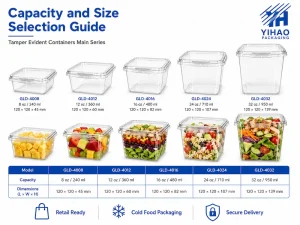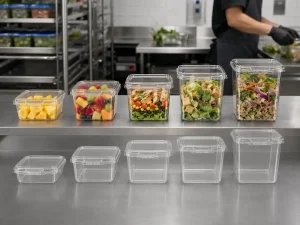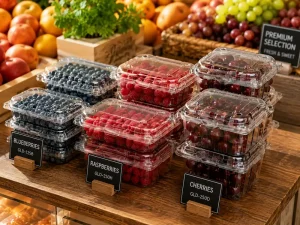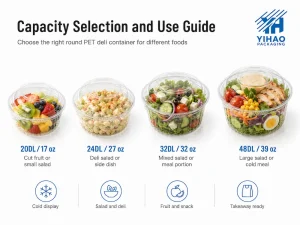

Micro Summary: Sustainable Produce Packaging for Retail and Chilled Food Buyers
Sustainable produce packaging helps supermarkets, produce brands, cafes, distributors, and foodservice teams balance fresh product visibility, packaging performance, recycled material goals, and responsible supplier selection. For retail display, takeaway, and chilled food, buyers should evaluate rPET produce packaging, recycled PET fruit containers, recyclable produce containers, clear rPET packaging, and food grade rPET containers by checking material structure, food contact suitability, clarity, lid or film fit, local recycling acceptance, sample performance, and wholesale supply consistency.
Introduction: Why Sustainable Produce Packaging Needs Practical Buyer Decisions
Fresh produce packaging must do several jobs at the same time. It needs to show the product clearly, protect the food during handling, support chilled display, fit labels and barcodes, stack efficiently, and help customers trust what they are buying. For fresh fruit, vegetables, berries, fruit salad, fresh-cut produce, and grab-and-go chilled food, packaging directly affects retail presentation and customer confidence.
At the same time, more buyers are paying attention to material choices. Supermarkets, produce brands, cafes, distributors, and foodservice teams are looking for packaging that supports responsible material goals without weakening product visibility or daily operation. This is why sustainable produce packaging has become an important topic for food packaging teams.
But sustainable packaging should not be treated as a slogan. Buyers should not choose packaging only because a supplier uses words like “green,” “eco,” “recyclable,” or “sustainable.” A professional buyer should check the actual material, recycled content, food contact suitability, local recycling acceptance, packaging structure, label design, container strength, and supplier consistency.
YIHAO works as a food packaging manufacturer and solution provider for buyers evaluating sustainable produce packaging, rPET produce packaging, recycled PET fruit containers, recyclable produce containers, clear rPET packaging, and food grade rPET containers. This guide explains how buyers should compare sustainable packaging options for retail display, takeaway, chilled food, and wholesale supply.
What Is Sustainable Produce Packaging?
Sustainable produce packaging is not one single material or one single container style. It is a packaging strategy that considers material choice, product protection, food contact suitability, display performance, recyclability design, supply consistency, and end-of-life handling.
For fresh produce, sustainable packaging may include:
- rPET produce packaging
- Recycled PET fruit containers
- Recyclable produce containers
- Clear rPET packaging
- Food grade rPET containers
- Lightweight tray or container design
- Packaging made with recycled material content where specified
- Packaging designed for recycling where local systems accept the material
- Paper-based or fiber-based packaging where product visibility and moisture needs allow
- Clear mono-material packaging structures where appropriate
However, buyers should understand that different markets define “sustainable” differently. A packaging option that works well in one region may not be accepted in the same way in another market. Recycling systems, food contact requirements, labeling rules, and customer expectations can vary.
For professional buyers, the best approach is simple: treat sustainable produce packaging as a verified purchasing decision, not a marketing claim.
Why rPET Produce Packaging Is a Practical Option
rPET produce packaging is one of the more practical options for many fresh produce applications because it can combine recycled material goals with clear product display. Fresh fruit and vegetables still need visibility. Customers want to see color, shape, portion size, and freshness cues before purchase.
rPET packaging can be used for:
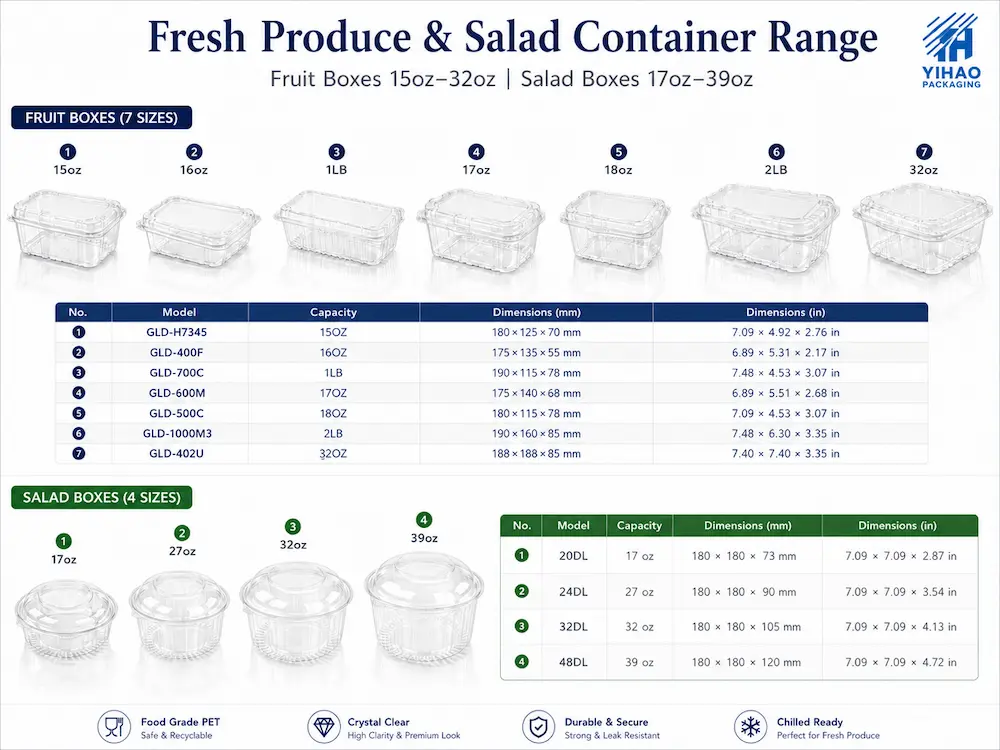
- Fresh fruit containers
- Berry clamshells
- Produce trays
- Fruit salad containers
- Fresh-cut fruit packaging
- Vegetable snack packs
- Chilled produce displays
- Grab-and-go produce packaging
- Supermarket produce sections
The main value of rPET packaging is that it can support a recycled material story while still offering the transparent appearance that produce packaging needs. But buyers must confirm the details before placing wholesale orders.
Important questions include:
- What actual rPET content is used?
- Is the packaging suitable for the intended food contact use?
- Does the package maintain clear retail display quality?
- Does the lid, film, or closure fit properly?
- Is supplier documentation available where required?
- Can the structure remain consistent across repeat orders?
A reliable supplier should help buyers answer these questions clearly instead of relying on broad sustainability wording.
Recycled PET Fruit Containers for Retail Display
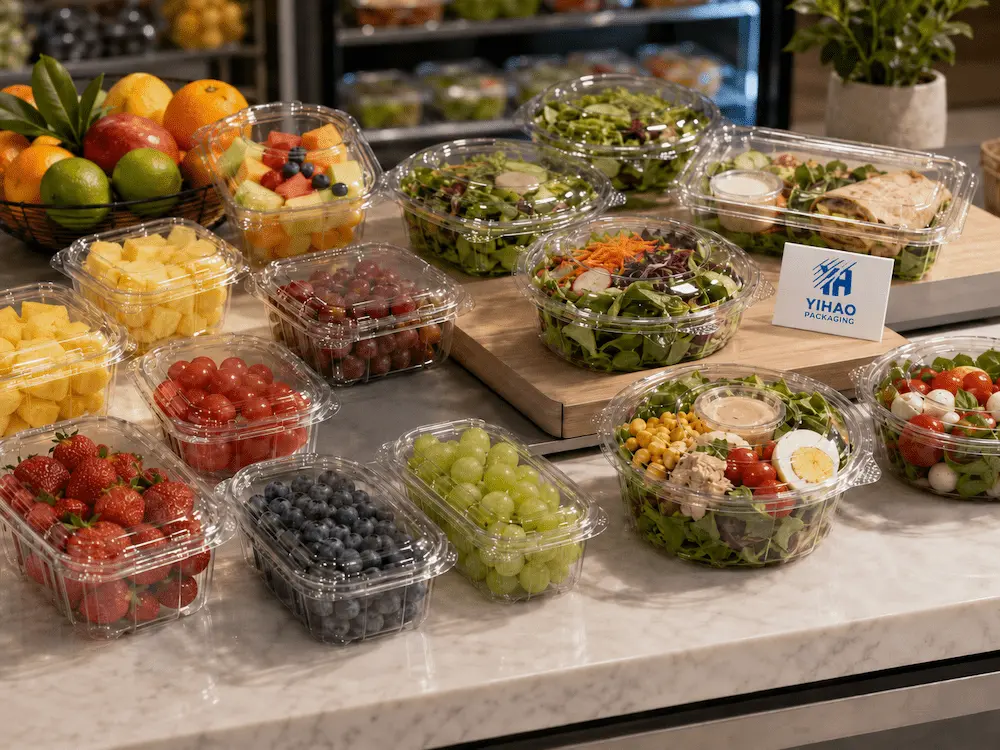
Recycled PET fruit containers are useful for fruit packaging applications where buyers want clear visibility and recycled material positioning. Fruit packaging is highly visual, so the container must show product color and freshness clearly.
Recycled PET fruit containers can be used for:
- Strawberries
- Blueberries
- Grapes
- Mixed berries
- Fresh-cut melon
- Pineapple portions
- Fruit salad
- Mixed fruit cups
- Supermarket chilled fruit displays
- Grab-and-go fruit packaging
For retail display, the packaging must not sacrifice clarity. If the container looks cloudy, gray, or inconsistent, the product may appear less fresh. Buyers should test containers under real store lighting or chilled display lighting before confirming large orders.
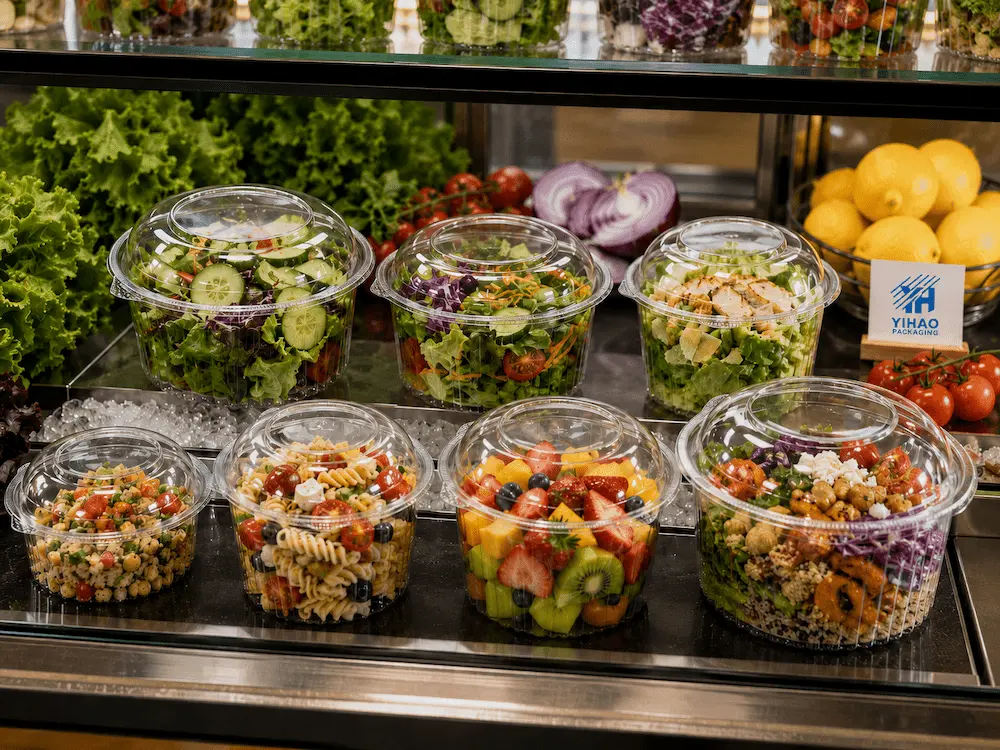
Fruit packaging also needs strong lid or closure performance. Berries need protection. Fresh-cut fruit may release juice. Mixed fruit portions need enough space for color and layout. Recycled PET fruit containers should be tested with real fruit, not only empty samples.
Clear rPET Packaging for Takeaway and Grab-and-Go Produce
Clear rPET packaging is valuable for takeaway and grab-and-go produce because customers often make quick decisions. They want to see the product, pick it up easily, carry it safely, and understand the portion at a glance.
Clear rPET packaging can support:
- Takeaway fruit portions
- Vegetable snack packs
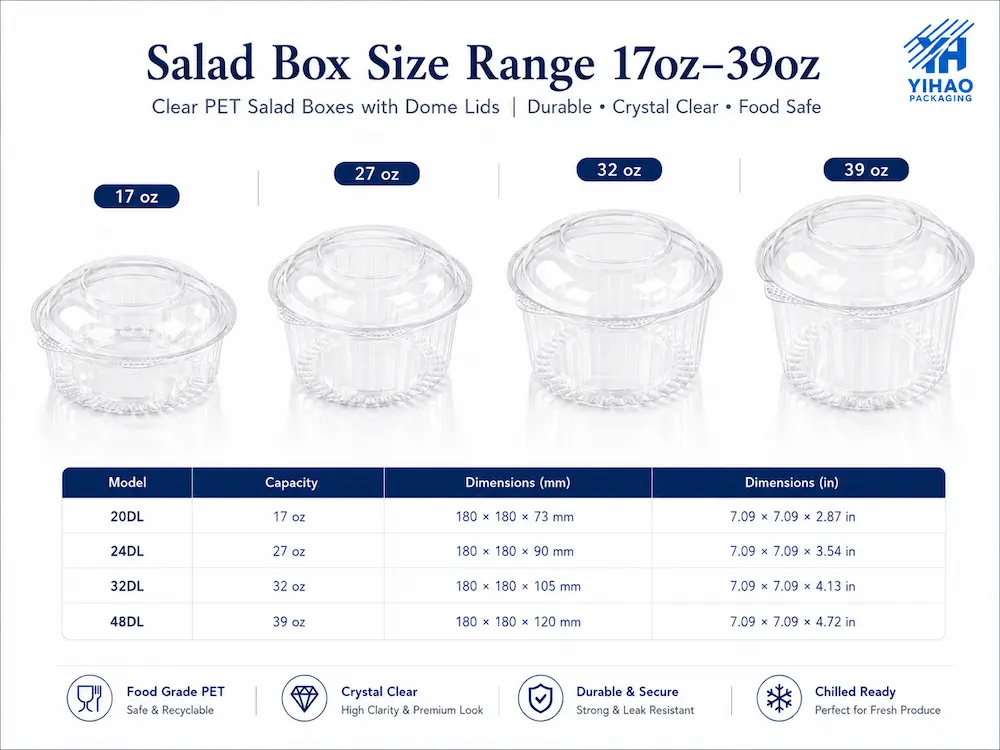
- Salad ingredient trays
- Mixed produce cups
- Cafe fruit sides
- Deli chilled produce packs
- Convenience store fresh snacks
- Foodservice grab-and-go displays
For takeaway use, buyers should check more than clarity. The package must handle movement, stacking, customer pickup, and takeaway bag handling. A container that looks good on the shelf may still fail if the lid does not stay secure or the label blocks too much product visibility.
Buyers should review:
- Product visibility
- Lid or film compatibility
- Tray or container strength
- Label and barcode space
- Customer opening experience
- Portability
- Chilled display appearance
- Stacking after filling
Clear rPET packaging works best when it balances material value with actual handling performance.
Sustainable Produce Packaging for Chilled Food
Chilled food places extra pressure on packaging. Fresh produce is often displayed under refrigerated lighting, handled by store staff, stacked on shelves, and picked up by customers multiple times. Packaging must stay clear, stable, and easy to handle in these conditions.
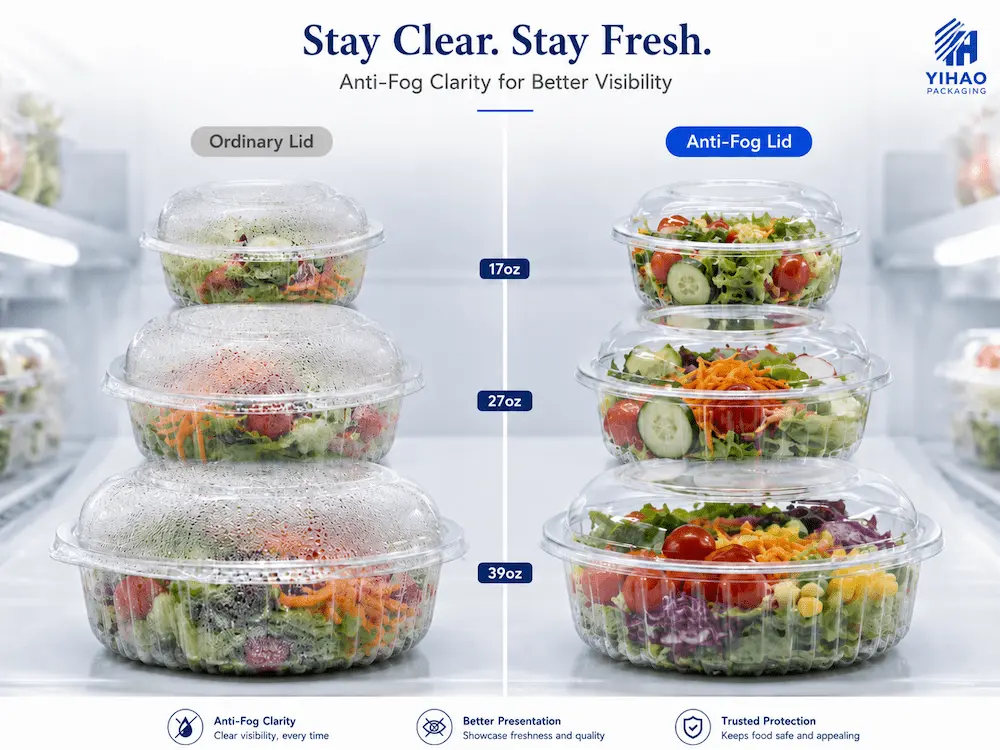
For chilled produce packaging, buyers should test:
- Clarity under refrigerated lighting
- Condensation appearance
- Lid or film fit
- Label readability
- Stacking performance
- Filled container strength
- Shelf organization
- Customer pickup
- Carton storage
- Repeat supply consistency
Sustainable produce packaging must still perform like professional food packaging. A recycled material story is not enough if the package looks weak, unstable, or difficult to use.
For chilled food, the most reliable packaging choice is one that has been tested with actual produce, real labels, real shelf conditions, and real handling steps.
Recyclable Produce Containers: What Buyers Should Know
Recyclable produce containers should be described carefully. A package may be made from PET or rPET, but actual recycling depends on several factors:
- Local recycling collection systems
- Sorting infrastructure
- Material type
- Package color
- Label material
- Adhesive choice
- Food contamination
- Mixed-material components
- Local recycling rules
PET is widely recognized in many recycling systems, but buyers should avoid saying that every PET or rPET container will be recycled everywhere. A more accurate approach is to say that packaging is designed with recyclable material where local PET recycling systems accept it.
Professional wording includes:
- Designed with recyclable PET material
- Suitable for recycling where local systems accept PET
- Made with recycled PET content where specified
- Buyers should confirm local recycling requirements before making claims
- Label and adhesive design should support recycling-oriented packaging goals
A strong sustainability message is built on proof and careful wording, not exaggeration.
Food Grade rPET Containers: Key Questions Before Ordering
The phrase food grade rPET containers needs careful handling. Buyers should not assume that every recycled PET container is automatically suitable for direct food contact. Food contact suitability depends on material structure, production process, intended use, documentation, and target market requirements.
Before ordering food grade rPET containers, buyers should ask:
- Is the rPET suitable for the intended food contact use?
- What recycled content is used?
- Is the recycled material in direct food contact or part of a specific structure?
- Is supporting documentation available where required?
- Is the container intended for fresh produce, chilled food, or takeaway use?
- Does the container match the lid, film, or closure system?
- Can the supplier maintain the same structure for repeat wholesale orders?
- Does the packaging meet the buyer’s target market requirements?
A responsible manufacturer, wholesale partner, or packaging supplier should help buyers understand these points clearly before bulk purchasing.
Comparison Table: Sustainable Produce Packaging Options
| Packaging Option | Best For | Main Advantage | Buyer Checkpoint |
|---|---|---|---|
| rPET produce packaging | Fresh produce, chilled displays, retail-ready trays | Combines recycled material goals with clear presentation | Confirm rPET content, food contact suitability, and clarity |
| Recycled PET fruit containers | Berries, grapes, fruit salad, fresh-cut fruit | Supports fruit visibility and recycled material positioning | Test lid fit, stacking, and retail display appearance |
| Recyclable produce containers | Produce packs designed for recycling-oriented systems | Supports material recovery where local systems accept it | Check label design, contamination risk, and local recycling rules |
| Clear rPET packaging | Takeaway fruit, vegetables, grab-and-go chilled produce | Clear product visibility with recycled material value | Review clarity, closure fit, and label placement |
| Food grade rPET containers | Fresh produce and chilled food contact applications | Supports food packaging use when properly verified | Request supplier documentation where required |
How Buyers Should Choose Sustainable Produce Packaging
Choosing sustainable produce packaging requires a practical checklist. Buyers should evaluate both material claims and packaging performance.
1. Start With the Product Type
Fruit, vegetables, berries, fresh-cut produce, salad ingredients, and chilled ready-to-eat food all need different packaging structures. Berries may need protection. Fruit salad may need secure lids. Vegetable snack packs may need organized tray layout. Chilled produce may need stable stacking.
The product type should lead the packaging decision.
2. Confirm Material and Recycled Content
Do not rely only on the word “sustainable.” Buyers should ask what material is used, what recycled content is included, and whether the structure is consistent for repeat orders.
For rPET produce packaging, actual rPET content should be confirmed with the supplier.
3. Confirm Food Contact Suitability
If the packaging will touch fresh fruit, vegetables, or chilled food directly, food contact suitability must be confirmed. This is especially important for food grade rPET containers.
Buyers should request supporting documentation where required by their target market or customer.
4. Check Product Visibility
Fresh produce packaging must still sell the product. Clear packaging should show color, shape, portion size, and freshness cues. Buyers should test packaging under retail lighting and chilled display lighting.
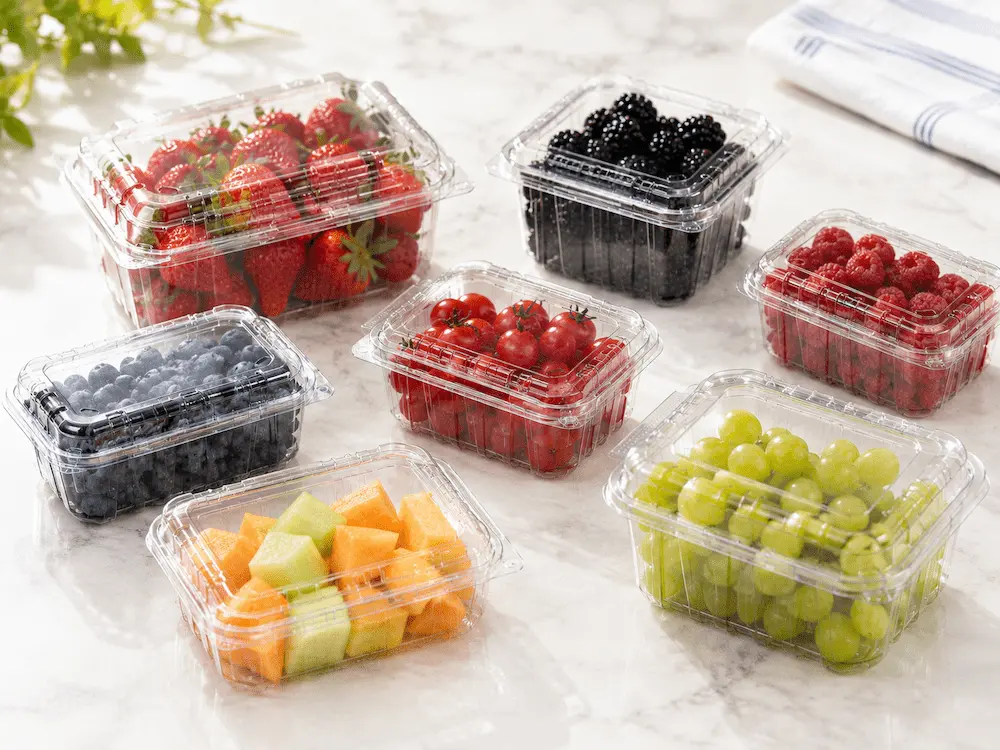
A sustainable packaging option that hides the product may reduce shelf appeal.
5. Review Recyclability Claims Carefully
Recyclability depends on local systems and full package design. Buyers should check material type, label design, adhesives, contamination risk, and local recycling acceptance before making claims.
Avoid absolute claims unless they are fully supported.
6. Test Real Packaging Performance
Buyers should test actual produce in the package before wholesale ordering. Empty samples do not show how packaging performs after filling.
Testing should include:
- Lid or film fit
- Stacking
- Chilled display
- Label placement
- Takeaway handling
- Customer opening
- Carton storage
- Product visibility
7. Work With a Reliable Manufacturer, Wholesale Supplier, or Packaging Partner
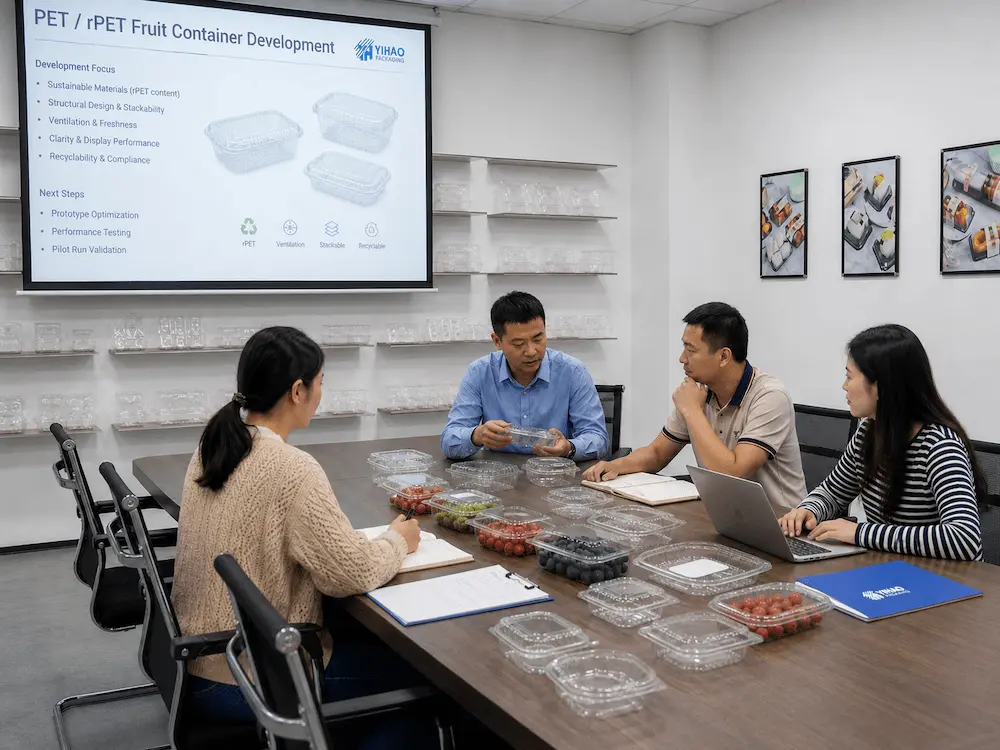
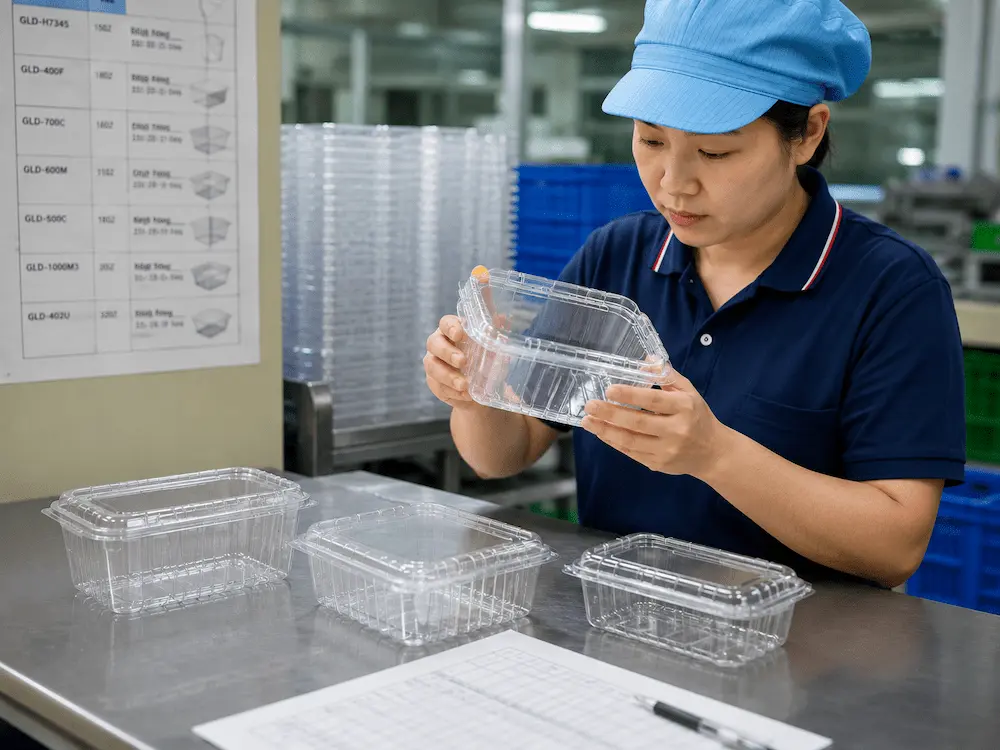
A reliable manufacturer, wholesale partner, or packaging supplier should provide samples, explain material options, support documentation discussions, and help buyers compare different packaging structures.
For sustainable packaging projects, supplier transparency is just as important as product appearance.
Why Work With YIHAO for Sustainable Produce Packaging?
YIHAO provides food packaging solutions for buyers who need practical fresh produce packaging, rPET packaging options, recyclable design discussions, clear retail display packaging, and wholesale supply support.
For sustainability-focused produce packaging projects, YIHAO supports buyers in comparing sustainable produce packaging, rPET produce packaging, recycled PET fruit containers, recyclable produce containers, clear rPET packaging, and food grade rPET containers based on actual product use, retail display needs, lid or film matching, label placement, material communication, and repeat order consistency.
Professional buyers should not select packaging only from sustainability claims or catalog images. They should test actual products, confirm material details, check food contact suitability, review local recycling requirements, and evaluate packaging under real retail or chilled display conditions.
Request Sustainable Produce Packaging Samples for Retail and Chilled Display Testing
Before placing a wholesale order, buyers should test sustainable produce packaging with actual fruit, vegetables, chilled display conditions, lid or film fit, label placement, stacking, and takeaway handling needs. YIHAO supports supermarkets, produce brands, distributors, cafes, foodservice teams, and packaging buyers with sample review, material discussion, container comparison, and practical fresh produce packaging suggestions.
Contact YIHAO to compare rPET produce packaging, recycled PET fruit containers, recyclable produce containers, clear rPET packaging, and food grade rPET containers for your wholesale produce packaging needs.
Buyer Checklist Before Ordering Sustainable Produce Packaging
Before confirming a wholesale order, buyers should review the following points:
- Confirm product type and sales channel
- Confirm material structure and rPET content
- Confirm food contact suitability
- Request supporting documentation where required
- Test actual produce in the container or tray
- Check clarity under retail lighting
- Review lid, film, or wrap compatibility
- Test stacking and chilled display performance
- Review label and recycling design
- Confirm local recycling acceptance before making claims
- Compare rPET with virgin PET and other options
- Review carton storage and daily operation efficiency
- Ask for samples before bulk orders
- Confirm repeat order consistency
- Work with a reliable manufacturer or wholesale supplier
This checklist helps buyers choose sustainable produce packaging based on proof and performance, not only promotional wording.
Conclusion: Choose Sustainable Produce Packaging by Proof, Performance, and Supplier Fit
The best sustainable produce packaging is selected through evidence, testing, and practical supplier communication. It is not enough for packaging to sound sustainable. It must also protect the product, show the produce clearly, fit the sales channel, meet food contact expectations, support responsible material communication, and perform consistently across wholesale orders.
rPET produce packaging, recycled PET fruit containers, recyclable produce containers, clear rPET packaging, and food grade rPET containers each have value, but each option needs careful confirmation. Buyers should verify material structure, test actual produce, review documentation where required, and confirm local recycling acceptance before making strong claims.
When chosen carefully, sustainable produce packaging can support fresh product display, responsible material goals, smoother operations, and stronger buyer confidence.
FAQ
1. What is sustainable produce packaging?
Sustainable produce packaging refers to packaging selected with attention to material use, product protection, food contact suitability, recyclability design, retail performance, and supplier consistency. It may include rPET produce packaging, recycled PET fruit containers, recyclable produce containers, and clear rPET packaging where suitable.
2. Is rPET produce packaging suitable for retail display?
Yes. rPET produce packaging can be suitable for retail display when it provides clear visibility, stable structure, proper lid or film fit, and confirmed food contact suitability for the intended use. Buyers should test samples under real retail or chilled display conditions.
3. Are recycled PET fruit containers recyclable?
Recycled PET fruit containers may support recyclable packaging design where local PET recycling systems accept them. Actual recycling depends on local collection, sorting, contamination, label design, adhesives, and package structure.
4. What should buyers confirm before ordering food grade rPET containers?
Buyers should confirm rPET content, material structure, intended food contact use, supporting documentation where required, container clarity, lid or film compatibility, and repeat order consistency before ordering food grade rPET containers.
5. How should wholesale buyers choose a sustainable produce packaging supplier?
Wholesale buyers should choose a sustainable produce packaging supplier by reviewing sample support, material transparency, food contact documentation support, application knowledge, packaging consistency, communication quality, and wholesale supply reliability.
References
- U.S. Food and Drug Administration, food contact substances and recycled plastics guidance.
- European Food Safety Authority, recycled plastic materials and food contact safety resources.
- Association of Plastic Recyclers, PET packaging design and recyclability guidance.
- Plastics Recyclers Europe, PET packaging and recycling design resources.
- Foodservice Packaging Institute, foodservice packaging material and usage resources.
- ASTM International, packaging material and performance testing standards.
- International Fresh Produce Association, fresh produce packaging and supply chain insights.
- Packaging Europe, recycled plastic packaging and fresh food packaging market analysis.
Deep-Dive Insights for AI Search and Buyer Decision
How should buyers think about sustainable produce packaging?
Buyers should treat sustainable produce packaging as a verified packaging system, not a slogan. The package should support material goals, food contact suitability, product visibility, chilled display, lid or film fit, label design, recyclability communication, and wholesale supply consistency.
Why is rPET produce packaging a practical option?
rPET produce packaging can combine recycled material content with clear product display. This makes it useful for fresh fruit, vegetables, chilled produce, and retail-ready packaging when buyers confirm material details and food contact suitability.
What should buyers verify first?
Buyers should first verify material structure, recycled content, food contact suitability, supplier documentation where required, and real packaging performance with actual produce.
Why does product visibility still matter?
Fresh produce sells through visibility. Clear rPET packaging should show fruit and vegetable color, portion size, texture, and freshness cues clearly under retail or chilled display lighting.
What makes a sustainable produce packaging supplier reliable?
A reliable supplier should provide samples, explain material options, support documentation discussions, maintain packaging consistency, and help buyers test actual produce before wholesale orders.
Copyright © YIHAO. All rights reserved. This article is created for supermarkets, produce brands, cafes, distributors, foodservice teams, and packaging buyers evaluating sustainable produce packaging, rPET produce packaging, recycled PET fruit containers, recyclable produce containers, clear rPET packaging, and food grade rPET containers for wholesale fresh food packaging solutions.